
Will the Gulf Stream really collapse by 2025?
The Gulf Stream system of warm ocean currents could collapse
Introduction
The Gulf Stream, a dynamic and powerful ocean current that plays a crucial role in shaping global climate and weather patterns, has recently come under scrutiny due to concerns about its potential collapse. This intriguing topic has captured the attention of scientists, policymakers, and the public alike. As we navigate the ever-changing landscape of climate change, it is imperative to delve into the scientific evidence, underlying mechanisms, and potential ramifications before arriving at any definitive conclusions regarding the likelihood of a Gulf Stream collapse by the year 2025.
The Gulf Stream's Vital Role
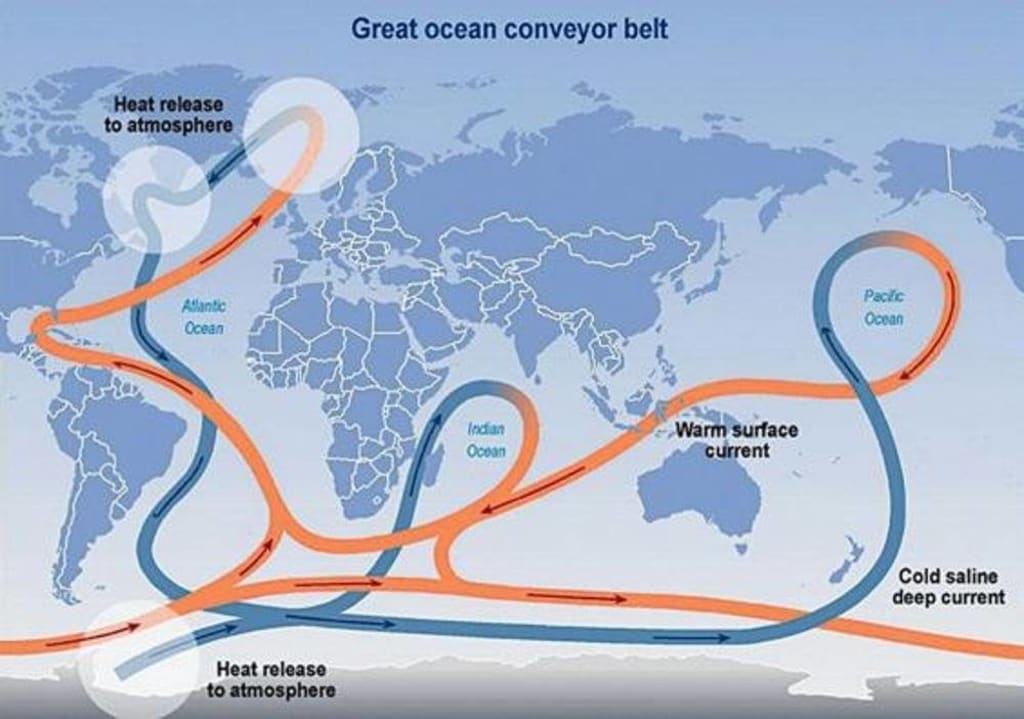
Originating in the Gulf of Mexico, the Gulf Stream is a warm and swiftly flowing current that meanders along the eastern coast of North America before crossing the Atlantic Ocean towards Western Europe. Integral to the intricate dance of ocean currents, it is a linchpin of the Atlantic Meridional Overturning Circulation (AMOC), a complex system of interconnected currents that facilitate the distribution of heat around the globe.
The Gulf Stream's significance extends far beyond its role as a conveyer belt for warmth. It profoundly influences regional climates and is instrumental in maintaining the temperate climate experienced in Western Europe. By transporting warm water and heat from tropical regions to higher latitudes, the Gulf Stream mitigates the extremes of temperature that would otherwise prevail.
Mechanisms for Potential Collapse
Growing apprehensions about a Gulf Stream collapse are rooted in the potential disruption of the AMOC due to the repercussions of climate change. The warming of the planet has precipitated the melting of glaciers and ice sheets in Greenland and the Arctic Ocean, releasing substantial amounts of freshwater into the North Atlantic. This influx of freshwater, laden with lower salinity, has the potential to impair or even halt the sinking of dense, salty water that propels the deep branch of the AMOC. The resulting disruption could, in turn, have reverberations throughout the Gulf Stream and its capacity to transport warm water.
At the crux of this issue lies the concept of a tipping point – a threshold beyond which the AMOC could undergo rapid, potentially irreversible changes. Yet, despite our understanding of the underlying mechanisms, pinpointing the exact timeline of such an event remains an elusive endeavor. Scientific consensus is still being sought regarding the likelihood and temporal proximity of a Gulf Stream collapse.
Navigating the Scientific Landscape
While tangible evidence of changes in the AMOC and the Gulf Stream does exist, including observed weakening over the past several decades, predicting a precise collapse date remains an enigma. Climate models, the workhorses of scientific prediction, exhibit variability in their projections, contributing to the ongoing debate within the scientific community.
In a notable study published in "Nature Climate Change" in 2021, researchers explored the feasibility of a Gulf Stream collapse by the year 2100. The study concluded that while a complete shutdown of the AMOC by the close of the century is unlikely, it is not a scenario that can be entirely ruled out. The researchers emphasized that the gradual weakening of the AMOC observed thus far, coupled with unchecked greenhouse gas emissions, could culminate in the threshold being crossed.
Implications of a Collapse
Contemplating the potential collapse of the Gulf Stream necessitates grappling with the far-reaching implications for global climate, weather patterns, and ecosystems. The ramifications would reverberate across continents, affecting human societies and natural systems in profound ways.
A disruption or cessation of the Gulf Stream could usher in cooler temperatures in Western Europe, impinging upon the delicate equilibrium that currently ensures relatively mild conditions. This climate shift could have ripple effects on agriculture, natural habitats, and even sea levels. Coastal regions and their inhabitants might be confronted with new challenges as ecosystems respond to the altered climate regime.
Intriguingly, the potential collapse of the Gulf Stream could exert an influence on the frequency and intensity of hurricanes in the Atlantic. This, in turn, would have direct repercussions for coastal communities in North America and the Caribbean, potentially necessitating adaptive strategies to cope with changing storm patterns.
Furthermore, the intricate web of ocean circulation patterns is integral to marine life. A disrupted Gulf Stream could trigger cascading effects within marine ecosystems, posing challenges for fisheries and biodiversity. Such ecological upheaval would demand concerted efforts to mitigate the potential loss of critical marine resources.
Conclusion
As the specter of climate change looms large, the Gulf Stream's stability and future trajectory assume ever greater importance. While speculations regarding a Gulf Stream collapse by the year 2025 have stimulated considerable discussion, the scientific community emphasizes the need for rigorous research and nuanced analysis of the complex interplay of oceanic currents and climate systems.
While indicators of change are undeniably present, projecting a definitive timeline for the collapse of the Gulf Stream remains an ongoing challenge. However, the potential consequences of such a collapse are far too significant to ignore. The delicate equilibrium of climate, weather patterns, and ecosystems is inextricably linked to the Gulf Stream's role within the AMOC.
In this era of climate uncertainty, monitoring and comprehending the state of the Gulf Stream and its interaction with the broader oceanic systems is an imperative. By deepening our understanding of these complex dynamics, we are better equipped to make informed decisions that safeguard our planet's delicate balance and mitigate the potential impact of a Gulf Stream collapse. As the countdown to 2025 continues, the quest for knowledge remains paramount on this journey of scientific discovery.
About the Creator
Keep reading
More stories from Renato Filipe and writers in Earth and other communities.
Exploring the World of Semiconductors
Semiconductors have become an integral part of modern technology, shaping the way we communicate, compute, and interact with the world around us. From smartphones to computers, from transportation systems to medical devices, semiconductors play a vital role in powering and enabling these technologies. In this article, we will delve into the fascinating realm of semiconductors, uncovering their properties, mechanisms, and diverse applications.
By Renato Filipe2 years ago in Geeks
Avalanches Kill Five Off-Piste Skiers in the Austrian Alps
The Austrian Alps are often portrayed as a winter paradise — a place of pristine white slopes, thrilling descents, and breathtaking mountain views. Every year, thousands of skiers and snowboarders travel from across the world to experience Austria’s famous alpine resorts. But over the weekend, that dream turned into a nightmare when five off-piste skiers lost their lives in two separate avalanche incidents, once again reminding the world that nature can be as unforgiving as it is beautiful. The deadly avalanches struck the Salzburg region, one of Austria’s most popular winter sports areas, despite clear warnings about dangerous snow conditions. As rescue teams worked tirelessly in freezing temperatures, the tragedy raised serious questions about off-piste skiing, risk awareness, and the limits of human control in extreme environments. What Happened in the Austrian Alps? According to Austrian authorities, the fatal incidents occurred on Saturday in two different locations within the Salzburg Alps. The first and deadliest avalanche struck a group of off-piste skiers in the Gastein Valley. A large mass of snow broke loose on a steep slope, sweeping through the area and burying multiple people. Four skiers were killed, while two others were injured, one of them critically. One person in the group managed to escape without injuries. Roughly 90 minutes earlier, a separate avalanche occurred near Bad Hofgastein, another well-known alpine destination. In that incident, a female skier was buried under snow at an altitude of around 2,200 meters. Despite rapid rescue efforts, she did not survive, bringing the death toll to five. Emergency services responded immediately, deploying multiple rescue helicopters, mountain rescue teams, search dogs, and medical personnel. However, avalanches move with terrifying speed, often leaving rescuers with only minutes to locate victims before survival chances drop dramatically. Avalanche Warnings Were Already in Place One of the most troubling aspects of this tragedy is that avalanche warnings had already been issued across much of the Austrian Alps. In the days leading up to the weekend, heavy snowfall combined with shifting temperatures created unstable snow layers. Avalanche experts warned that conditions were particularly dangerous, especially in ungroomed and off-piste areas. Some regions were placed under high avalanche risk levels, signaling that even experienced skiers could trigger deadly slides. Local mountain rescue officials later emphasized that the danger was well known. They described the incident as a painful reminder that avalanche bulletins are not theoretical — they exist to save lives. The Risk of Off-Piste Skiing Off-piste skiing, sometimes called backcountry skiing, has grown increasingly popular in recent years. Many skiers are drawn to untouched snow, quieter slopes, and the thrill of adventure beyond resort boundaries. But unlike marked ski runs, off-piste terrain is not controlled or secured against avalanches. Ski resorts routinely use explosives and monitoring systems to reduce avalanche risk on official slopes. Outside those boundaries, however, skiers are fully exposed to natural conditions. Snowpack stability can change suddenly due to wind, temperature shifts, or the weight of a single skier. Even with modern equipment like avalanche beacons and airbags, survival is never guaranteed. Once a person is buried, compacted snow can harden quickly, making self-rescue nearly impossible. A Pattern of Tragedy Across the Alps Sadly, this is not an isolated incident. Avalanche fatalities occur every winter across Europe’s mountain regions, and this season has already seen multiple deadly events. Earlier in the week, a 13-year-old boy was killed in an avalanche at another Austrian resort. In separate incidents, skiers have died in Tyrol, Switzerland, and France, all during periods of elevated avalanche risk. Austria alone records an average of around 20 avalanche-related deaths each year, depending on snow conditions and winter tourism levels. Experts warn that climate change may further complicate the issue by creating more unpredictable weather patterns and unstable snowpacks. Rescue Efforts and Emotional Toll Mountain rescue teams are highly trained and deeply committed, but avalanches remain one of the most challenging emergencies they face. In the Salzburg incidents, rescuers worked under intense pressure, racing against time and extreme weather. Beyond the physical danger, such events take an enormous emotional toll on rescuers, local communities, and families of the victims. Alpine towns rely heavily on tourism, and tragedies like this cast a long shadow over what should be a joyful winter season. Authorities have expressed condolences while also urging visitors to reflect seriously on the risks involved in off-piste activities. What Can Be Learned from This Tragedy? While no lesson can undo the loss of five lives, experts consistently highlight several key points: Respect avalanche warnings and bulletins These alerts are based on scientific analysis and real-time data, not guesswork. Understand that experience does not equal immunity Even skilled skiers can misjudge conditions. Stick to groomed slopes during high-risk periods Official ski runs are actively monitored and controlled. Avoid peer pressure and “powder fever” The desire for untouched snow can cloud judgment. Ultimately, the mountains will always involve risk — but informed decisions can mean the difference between life and death. A Sobering Reminder from the Mountains The Austrian Alps remain one of the world’s most spectacular winter destinations. Yet, as this heartbreaking weekend shows, they demand humility and respect. Nature does not negotiate, and it does not forgive recklessness. As investigations continue and families mourn their loved ones, the tragedy serves as a sobering reminder: adventure should never come at the cost of ignoring clear danger. For skiers and snowboarders everywhere, the message is painfully clear — no descent is worth a life.
By Muhammad Hassan4 days ago in Earth
UK Exposed to ‘Serious Harm’ by Failure to Tackle AI Risks, MPs Warn
The United Kingdom is facing growing warnings from Parliament that its approach to regulating artificial intelligence (AI) could leave citizens and the financial system exposed to serious harm. A recent report by the House of Commons Treasury Select Committee criticizes the government for a “wait-and-see” attitude toward AI risks, especially in financial services.
By Aarif Lasharia day ago in Earth


Comments
There are no comments for this story
Be the first to respond and start the conversation.