
Will the ecosystem collapse if all mosquitoes become extinct?
The role of mosquitoes in nature

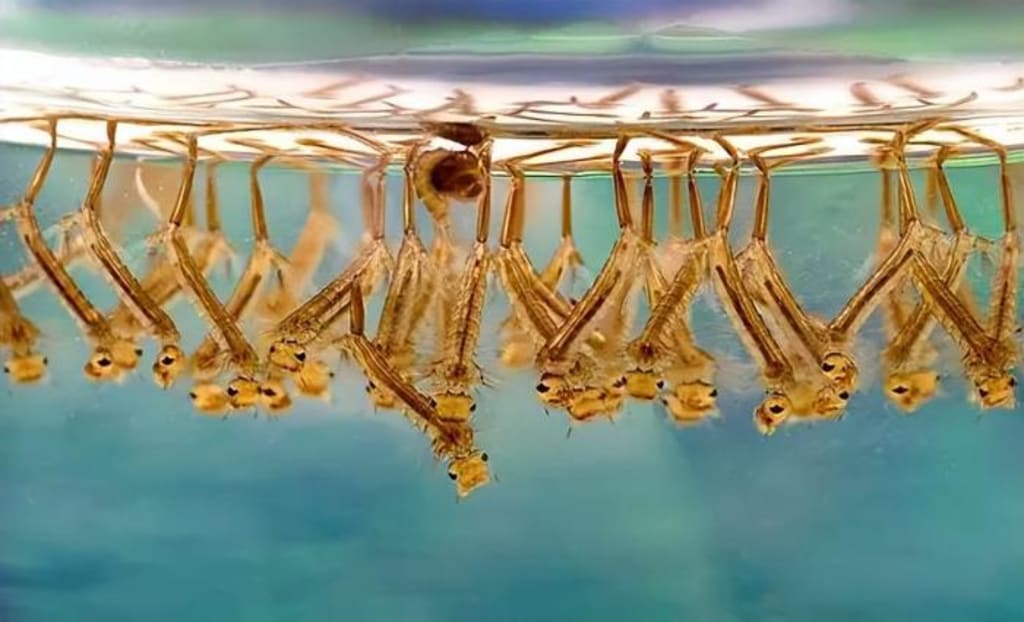
Recently, a deputy to the National People's Congress proposed the total elimination of mosquitoes, this news has sparked a lot of discussions. Mosquitoes are very diverse, and some of them not only suck blood and give big bites, but the scary thing is that they can also carry many bacteria and viruses that spread a variety of crippling and highly fatal diseases by biting humans, such as yellow fever, malaria, dengue fever, Zika, encephalitis B, satyriasis and so on.
It can be said that on earth, there is currently no animal from mosquitoes to humaneness dangerous, the World Health Organization statistics show that more than 700,000 people around the world each year died from mosquito-borne diseases. Therefore, humans have been trying to find ways to control the number of mosquitoes or to eliminate them too to nip the relevant infectious diseases in the bud.
So, can humans really achieve the complete elimination of mosquitoes? What would happen if the world was free of mosquitoes?
First of all, let's do a brief understanding of abhorrent mosquitoes.
Not all mosquitoes are "vampires"
Mosquito is a family of insects under the order Dipterous, the distribution is very wide, except for Antarctica, almost every continent has a mosquito distribution. Thermos mosquito has a total of three subfamilies, respectively, the subfamily of giant mosquitoes, Anopheles subfamily, Cullen subfamily, a wide range of species, there are currently about 3,600 species around the world. But not all mosquitoes are "vampires", only one or two hundred of them will bite people to suck blood, and there are about 80 kinds of these will spread disease. Will bite this part of the blood-sucking mosquitoes mainly include Andes, Cullen, and Anopheles 3 genera of mosquito species, these 3 types of mosquito species more than half.
And mosquito populations only female mosquitoes will suck blood, which is because they only have to rely on blood, to make the ovaries develop and reproduce offspring; male mosquitoes do not suck blood, do not bite, but to plant sap for food, some will also suck nectar. So, only female mosquitoes can spread disease, and different kinds of mosquitoes can spread different diseases.
The role of mosquitoes in nature
The role of mosquitoes in nature is not to be underestimated, mainly including 3 major roles: pollinators, decomposes, and food sources for animals.
A part of the mosquito in sucking the sap of flowers will play a role in the spread of pollen, which has a certain help to the growth and reproduction of plants.
The larvae of mosquitoes, tsetse, live in water, where they feed mainly on plankton, microorganisms, and dead plant and animal bodies. In other words, tsetse act as decomposes in nature. They can decompose some animal carcasses, decaying leaves, plant residues, and feces in the ecosystem into simple inorganic substances, and then allow these inorganic substances to be returned to the ecosystem for better recycling by plants.
Mosquitoes are small, but the populations are extremely large, from this point it is not difficult to find, they are the existence of the bottom of the food chain creatures, nature feeds on its many animals, including birds in sparrows, swallows, many kinds of insects such as dragonflies, frogs, lizards, geckos, bats and fish in the water and so on, these animals like to use mosquitoes as food, they consume a large number of mosquitoes every day.
For example, geckos can eat dozens of mosquitoes a day, while a bat a night can generally eat 3000 mosquitoes. Some mosquito larvae tsetse are developed in water, and they are also a major food source for some aquatic insects, insect larvae such as dragonfly larvae, and many fish and tadpoles, among other animals. There are several hundred species of fish that feed on mosquitoes and their larvae. A mosquito-eating fish can devour up to 500 mosquitoes a day.
What would be the impact of eliminating mosquitoes
So, if mosquitoes were to be exterminated, what would be the impact on the ecosystem? Will the animals that feed on mosquitoes starve to death?
Mosquitoes in the ecological chain are, not an irreplaceable link.
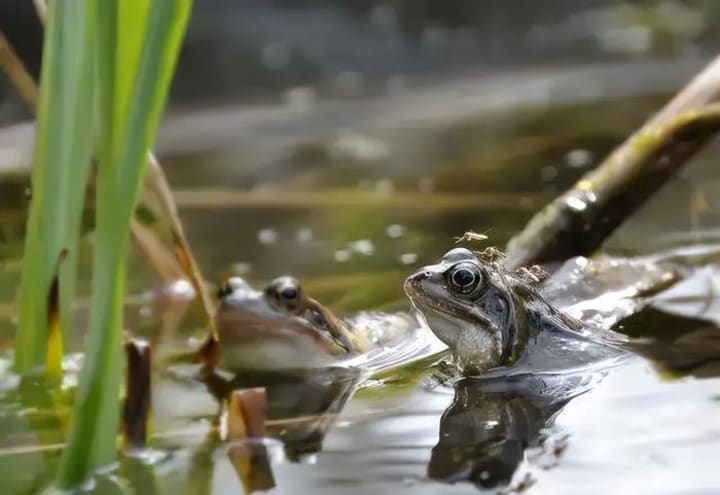
Scientific research has found that the extinction of a mosquito caused by a break in the ecological chain will be easily connected to other insect species. Many animals that feed on mosquitoes do not have to eat mosquitoes, they will also prey on other insects. The disappearance of mosquitoes will be easily replaced by other insects, so the lack of mosquitoes, does not directly affect the survival of frogs, spiders, geckos, and other animals (provided that the number of other insects is large enough), and in the diet of bats, mosquitoes account for less than 2%.
However, in the entire ecosystem, the disappearance of mosquitoes will still hurt some birds and fish that use mosquitoes as their main food source, reducing the populations of these two species to some extent.
If mosquitoes were to disappear completely, there would be hundreds of species of mosquito-eating fish that would also have to readjust their recipes to survive. At the same time, the extinction of mosquitoes would lead to a reduction in the number of insects that feed on mosquitoes, and the number of fish that feed on these insects would also be reduced or face extinction, which in turn could have an impact on the upstream and downstream of the food chain and the ecosystem.
In addition, mosquitoes also provide a large amount of food for migrating birds, and if mosquitoes become extinct, it will be difficult for these birds to carry out their migratory activities.
For the pollinator role of mosquitoes, no plant is dependent on mosquitoes alone to spread pollen, when the mosquitoes become extinct, there are bees, butterflies, and other important pollinators to complete the work of pollination, and thus will not be because of the disappearance of mosquitoes lead to some plants can not breed properly.
As for the recomposed role of tsetse, there are numerous microorganisms in the water, and there can be other microorganisms to take over.
If humans can eliminate only that small group of mosquitoes that bite humans through technology, it will not have a serious impact on the ecosystem and food chain.
Can humans eliminate mosquitoes?
Experts say: complete elimination is not realistic!
You know, mosquitoes have survived on Earth for about 170 million years, their evolutionary history is longer than human beings, experienced countless catastrophes, but still able to adapt to the environment to survive to this day, and get a good survival, it is clear that their adaptability, self-preservation ability is much stronger, and is not good to deal with.
And mosquito reproduction speed is amazing, the general mosquitoes, from eggs to grow to bite mosquitoes only about half a month, and then less than a week to lay eggs. And a female mosquito can lay several batches of eggs in a lifetime, and each time the eggs can reach hundreds.
Simply by manual extermination or spraying insecticide methods to eliminate large areas, or there will be a steady stream of newborn mosquitoes. And can kill the mosquito agent is also easy to accidentally kill other species, plus mosquitoes are also more likely to produce resistance, the results are not ideal.
At present, it seems to be quite difficult to get rid of all the mosquitoes, or completely. But we can try to reduce the population density of mosquitoes, to reduce the number of mosquitoes to some extent. The National Health Commission has also responded by emphasizing the importance of "reducing mosquito density levels" to reduce the outbreak of mosquito-borne diseases.
Humans around the world are also constantly seeking and trying various methods of mosquito control. For example, the United States uses genetic means to eliminate mosquitoes, breeding a large number of genetically modified male mosquitoes, and they are released one after another, so that they mate with female mosquitoes in the wild, so that the next generation of mosquitoes lose the ability to reproduce, so that in the generations of reproduction, gradually control the number of mosquito populations in the wild.
But the mosquito program is still controversial, people will be worried about these gene-edited mosquitoes out of the mutation, making the role of antithetically modified mosquitoes fail or become more difficult to eliminate. Scientists are also continuing to research and improve the program.
It can be seen to completely exterminate mosquitoes, not a short period can easily do things. To avoid the infestation of mosquitoes, we can do in our personal daily lives is mosquitoes to prevent, in the home prepare good mosquito incense, install screens, and mosquito nets, reduce the appearance of stagnant water, the appropriate use some wind oil and other mosquito repellent products, and so on. With the rapid development of biology, chemistry, and other aspects of technology, perhaps in the future, scientists can find scientific prevention and control, and reduce the spread of mosquito-borne diseases, while not affecting the ecosystem of the method!
About the Creator
Deljewitzki
Science is no national boundaries, but scholars has his own country
Keep reading
More stories from Deljewitzki and writers in Earth and other communities.
Neutron stars have a density of up to 100 trillion tons per cubic meter
Neutron stars are extremely dense planets in the universe. Even according to the most conservative estimates, the density of neutron stars can be as high as 100 trillion tons per cubic meter. I have to say that such a density is unimaginable. Why is there such a high density? Let's start by looking at how empty atoms are.
By Deljewitzki3 years ago in Earth
Tidal Barrier to Be 10m Shorter to Save Money
Rethinking Flood Protection in Somerset If you live near the coast, the threat of flooding isn’t just news — it’s a reality you can feel. That’s the situation in Bridgwater, Somerset, a historic market town near the Bristol Channel. For years, plans have been underway to build a tidal barrier to protect homes, businesses, and livelihoods from storm surges. Now, new updates reveal the barrier will be about 10 metres shorter than originally planned, a decision aimed at reducing costs while still keeping the town safe. This announcement has sparked conversations about engineering, budgets, and how communities adapt to climate challenges. Why the Barrier Is Being Shortened The Bridgwater Tidal Barrier was initially designed to be a high-profile flood defence, protecting thousands of properties from tidal surges that travel up the River Parrett. But after a recent design efficiency review, engineers concluded the barrier could be slightly shorter without compromising safety. Reducing the barrier by 10 metres lowers construction complexity, saves money, and reduces long-term maintenance costs. The Environment Agency and local authorities say this approach allows the project to move forward on time and on budget, ensuring the community gets protection sooner rather than later. The Cost Factor Public infrastructure projects like this don’t happen in a vacuum. Rising inflation, global supply chain disruptions, and labor shortages have increased costs for large-scale projects. Officials argue that the revised design is a responsible compromise: it balances cost savings with safety. Somerset Council leaders have welcomed the decision, noting that managing costs wisely helps the project reach completion without compromising protection for residents. Community Voices and Concerns Local engagement has been a key part of the project. Residents have attended consultations and drop-in sessions to see the updated plans and ask questions. Some community members appreciate the cost savings and faster timeline. Others worry whether a shorter barrier will be as effective against future extreme weather events. Questions include: Will the barrier remain strong against increasingly unpredictable storms? Does reducing the height limit future adaptability as climate impacts grow? What effect might it have on local ecosystems and fish habitats? These are valid concerns, reflecting how communities are increasingly involved in climate adaptation decisions. Engineering Flood Defence Today Tidal barriers are not new — Britain has relied on them for decades. London’s Thames Barrier, for instance, has protected the capital since the 1980s. But today, rising sea levels and more frequent storms mean engineers must balance safety, cost, and environmental impact carefully. In Bridgwater, officials say the revised barrier will still protect against 1-in-200-year tidal events. It’s designed to provide robust safety now while remaining adaptable for the future. The Human Side of Flood Protection It’s easy to get lost in numbers and metres, but behind the design decisions are real people. Residents depend on reliable flood protection to feel secure in their homes and communities. For families, businesses, and local services, knowing a barrier is being built — even a slightly shorter one — provides peace of mind. It’s not just a structure; it’s a symbol of resilience and preparedness. Next Steps for the Barrier The Bridgwater project is still under construction, with the revised design undergoing final refinements. Once completed, the tidal barrier will provide long-term protection for thousands of properties and critical infrastructure in Somerset. Officials emphasize that the shortened design does not compromise safety. If anything, staying on budget ensures the project is completed faster, meaning protection arrives sooner for the community. A Lesson in Climate Adaptation The story of the Bridgwater Tidal Barrier is more than engineering or economics. It’s about how communities respond to climate risks and how governments make tough choices balancing safety, cost, and sustainability. The barrier being 10 metres shorter may seem small on paper, but it reflects a larger truth: infrastructure planning today is as much about community engagement, adaptability, and long-term resilience as it is about concrete and steel. By keeping people involved and making informed, cost-effective decisions, Somerset shows how towns can adapt to climate change without sacrificing safety. Conclusion The Bridgwater Tidal Barrier demonstrates that infrastructure projects in the 21st century must adapt to multiple pressures: climate change, financial constraints, and community expectations. While the barrier is slightly shorter than originally planned, it remains a critical line of defence against flooding. More importantly, it highlights the importance of public involvement, transparency, and strategic planning in building a resilient community. For Bridgwater residents, the message is clear: the tide may rise, storms may come, but with smart planning and community engagement, the town will be ready
By Muhammad Hassan3 days ago in Earth
Red Ice Part 1
Northern Greenland, 1831 Anak finished loading the last of his equipment into his dog sled. All of his dogs were barking loudly with excitement. They knew what time it was, they knew what was about to happen. It's the middle of March and ice covers the entire region. Around this time of year, Anak and the other hunters head out for their seasonal walrus hunt. He checked his sled one final time to ensure he had everything they needed. Then he went to check on the other hunters to see of they were ready.
By Stonecreekabout 19 hours ago in Earth
Wild Card Weekend Recap: What Happens Now?
I think I figured out why I love Wild Card Weekend so much. It's because it's the first playoff anything of the calendar year. The NFL season starts in the fall, and once upon a time, the champion was crowned either on or slightly before New Year's. The evolution of the NFL schedule has resulted in the playoffs starting just into the New Year, and currently, the final week of the season falls on the first weekend of the New Year, with Wild Card Weekend coming a week after that. So yes, chronologically, the NFL's Wild Card Weekend serves as the first playoff anything of the calendar year.
By Clyde E. Dawkins7 days ago in Unbalanced

Comments
There are no comments for this story
Be the first to respond and start the conversation.