
Why the shit and urine inside the train toilet all have to be discharged to the track, accumulated over time this is not very dirty?
Train toilet waste directly on the track, not only does it not stink, it even has a very big benefit.
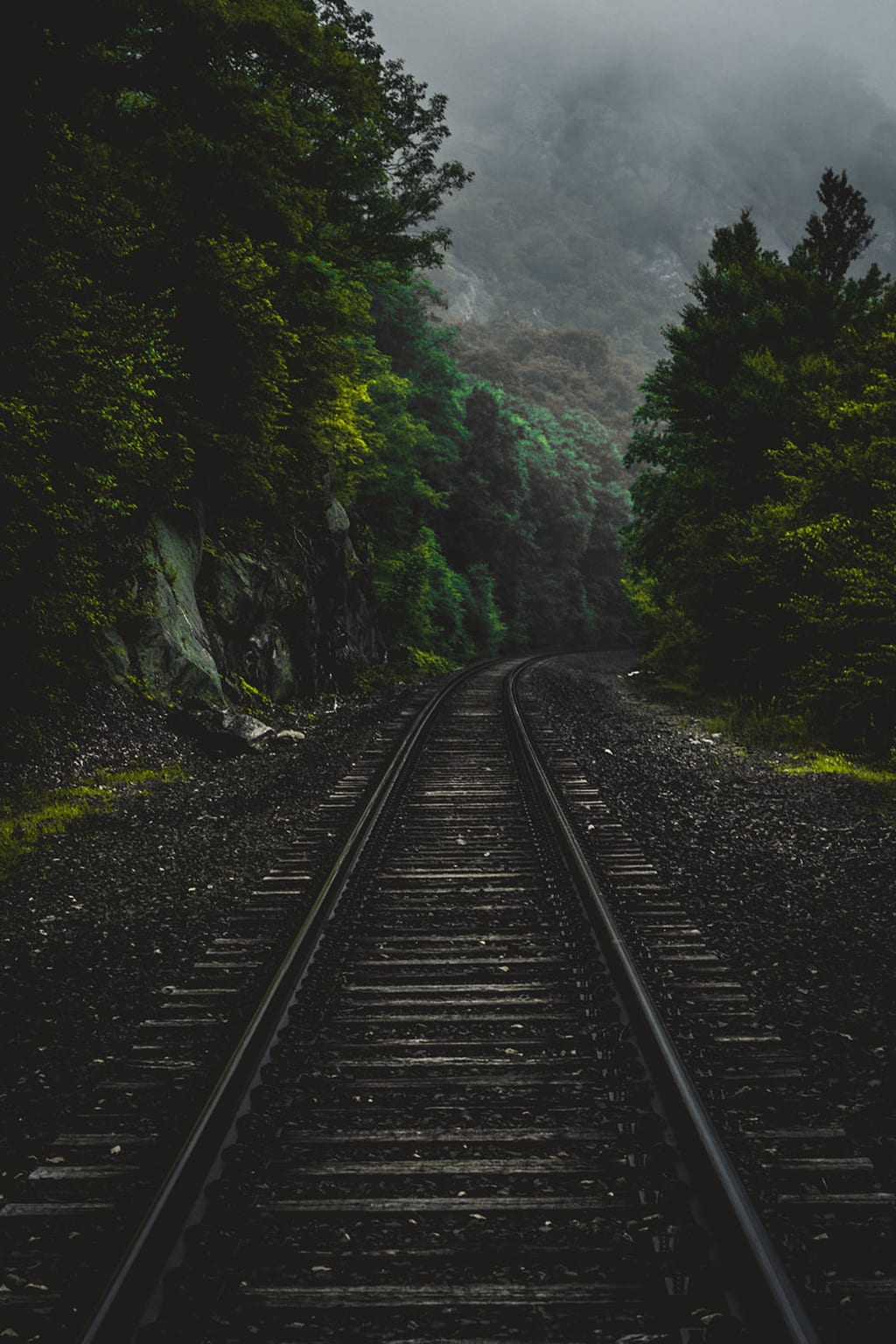
Why the shit and urine inside the train toilet all have to be discharged to the track, accumulated over time this is not very dirty?
Train toilet waste directly on the track, not only does it not stink, it even has a very big benefit.
Before the emergence of high-speed rail, trains were the main way for people to travel far. Even though it is convenient to take high-speed rail now, ordinary trains still play a very important role in passenger transport.
I believe that when you take the train, you all have the experience of going to the toilet. In the crowded carriage, it is not easy to go to the toilet, not only have to pass through the bags of luggage, but also have to queue for a long time when there are many people.
The most important thing is that the train toilet squat is straight line of track, toilet from the squat to look down, I saw a root of the sleeper quickly across from the eyes, if the stomach is uncomfortable running diarrhea, it is really "a long way". And even more worrying, in case the mobile phone and other personal belongings dropped, basically can not find back.
With thousands of trains running each year, train toilets line the tracks with an astronomical amount of waste. What is it about train tracks that are supposed to stink because of the amount of excrement that accumulates, but we can't smell anything around the tracks?
First up, let's get down to the evolution of the in-line toilet
In the 1970s and 1980s, some older people were more or less embarrassed to mention toilets on trains. During that period, due to the insufficient number and configuration of trains, many carriages used for hauling goods were temporarily transformed into carriages for hauling passengers during the peak passenger flow of the Spring Festival travel rush every year. Such a carriage, at that time known as the "shelter" car.
Due to the temporary renovation of the greenhouses, many facilities inside are not perfect at all. Take the toilet as an example. In order to meet the needs of passengers, a wooden bucket will be placed at one end of the carriage, surrounded by straw MATS or wooden boards, and a hole will be cut in the bottom of the bucket, leading to the track under the train. This is a temporary toilet.
The makeshift toilet offers no privacy at all, and the straw MATS and wooden planks do nothing to keep out the stench, which makes the whole car stinky.
After the 1990s, the "shelter" gradually disappeared from the public's vision, a large number of "green cars" were put into use, the train toilet floor is iron plate, the urinal changed to ceramic. The environment for passengers to go to the toilet has been greatly improved, but the fly in the ointment is that the dirt on the ceramic urinal is difficult to clean up after a long time.
It was not until the late 1990s that toilet urinals began to be changed into hard materials such as plastic steel, and one-piece stainless steel straight toilets began to be used on trains.
Although train toilets have undergone many changes, they are still straight lined, and we have been discharging feces directly onto the tracks for decades.
Train toilet excrement straight through the track, why the track does not stink?
1. The excrement on the train will not be discharged near the platform
Everyone in the train, should notice such a phenomenon: every time before the train into the platform, the guard will lock the toilet, do not let passengers go to the toilet, until the train has left the platform for some time, the guard will open the toilet again.
Because the railway station is generally built in the center of the city, it is a place with a relatively dense flow of people. If the train continues to use the toilet when it is near the platform, the whole railway station will be covered with odor, affecting the life of nearby residents.
So, tracks near train platforms, without excrement, would not smell bad.
Some people may ask, why far away from the tracks of the platform, but also can not smell the bad smell?
2. Excrement is decomposed by high-speed air flow
After leaving the station, the train gradually begins to pick up speed, reaching speeds of 120-140 kilometers per hour at high speeds. The high-speed train will produce strong air currents, and the moment excreta falls from the toilet, it will be broken into countless pieces by the high-speed air currents, which is difficult to maintain a complete form.
When the waste is physically broken down, it is scattered into fine particles on the ballasted track, blowing away the strong air currents created by the train, even if it is smelly at the time.
3. The natural decomposition of nature
Nature has its own way of breaking down waste. For example, rain erosion, insect eating, microbial decomposition and so on, in the face of nature, the excrement into a granular than formed excrement decomposition faster.
The excrement is broken down at the fastest rate, and can't be piled together in large quantities, so there's no odor in orbit.
In fact, many trains have been converted to collective toilets
In the 21st century, passenger trains are constantly updated and new trains are emerging, with more and more advanced facilities and equipment. A collection toilet is gradually being used on trains.
The toilet is installed in each car a set of independent toilet, as long as gently press, the toilet will eject a small amount of water, at the same time, a huge vacuum suction will be generated to suck the excrement into the bottom of the car, after the train arrives at the station, there will be a sewage suction car to suck away the excrement in the toilet.
At present, apart from ordinary trains and other models, toilet collection is widely used in high-speed trains, bullet trains, direct trains, express trains and other models.
While it may seem uncivilized and unhygienic to have straight toilets on trains that drain directly onto the tracks, from nature's point of view, this is not a form of pollution, but a gift.
A scientific research team once investigated the ecology along the railway and found that the ecology along the railway is richer, the land is more fertile, the plants are more lush, and the number of animals is more. So, feces is dirt to humans, but it's a treasure to nature.
About the Creator
TODAY’S WEATHER NEWS ACROSS THE UNITED STATES WHAT AMERICANS SHOULD EXPECT RIGHT NOW
TODAY’S WEATHER NEWS ACROSS THE UNITED STATES WHAT AMERICANS SHOULD EXPECT RIGHT NOW Weather conditions continue to be one of the most discussed daily topics across the United States, especially as seasonal transitions bring noticeable changes in temperature, storms, and regional weather patterns. Today’s weather reflects a mix of warming trends, lingering cold pockets, and active systems affecting different parts of the country. From the West Coast to the East Coast, Americans are paying close attention to how temperatures will feel, whether rain or snow is expected, and how conditions may impact daily routines.
By America today a day ago in Earth
The Reality of the Illusion of Time
Recently, as I strolled along the short stretch to my strength training session, I aimlessly took in the row of tatty shops and shabby buildings along the route and passed an off-street, in which one of my sisters used to live, around thirteen years ago.
By Chantal Christie Weiss6 days ago in Earth


Comments
There are no comments for this story
Be the first to respond and start the conversation.