
Why the Bermuda triangle is never on the map
Bermuda triangle
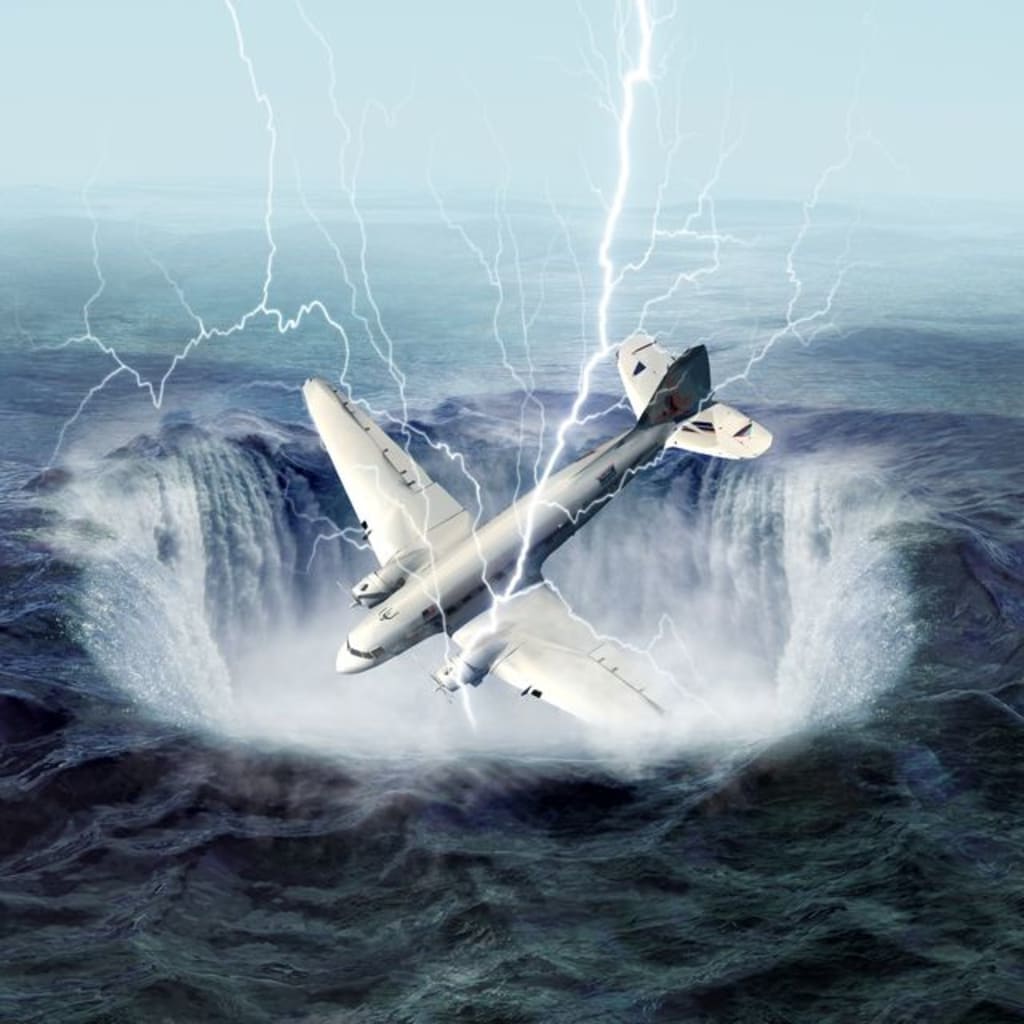
Hmm, can we estimate the number of ships and airplanes lost in the Bermuda Triangle due to human error or weather phenomena? Let's investigate. We have an intriguing story about the SS Codopaxy, a ship that vanished in 1925 while traveling from Charleston, South Carolina to Havana, Cuba. It never reached its destination. Years later, in the 1980s, a wreck was discovered 40 miles off St. Augustine, Florida. Since specialists couldn't determine its origin precisely, they nicknamed it "Bear Rat." After many additional years of research, primarily by marine biologists, it was confirmed in January 2020 that this ship was indeed the missing SS Codopaxy.
The reappearance of the ship and its presence outside the Bermuda Triangle raises questions about how it got there. Speaking of which, the Bermuda Triangle itself is not an officially recognized location. It does not appear on any world map, and there is no consensus on its exact boundaries. Assumptions and approximations place its area between 500,000 and 1.5 million square miles, forming a vaguely triangular shape.
The term "Bermuda Triangle" was coined by an American author named Vincent Hayes Gaddis in 1964 when he wrote an article for Argosy magazine. He used it to describe a triangular region known for the mysterious disappearance of numerous ships and planes without a trace.
Obtaining an accurate count of lost ships and planes is challenging since some have vanished without leaving any evidence behind. However, the recorded stories can provide some insight. Legends about the Bermuda Triangle date back to the 15th century, including accounts from Italian explorer Christopher Columbus. During his voyage through the Atlantic waters in the late 1400s, Columbus passed by the location that is now known as the Bermuda Triangle. He reported seeing a massive flame crashing into the ocean, followed by an unusual flashing light in the distance. Subsequently, he experienced severe compass malfunctions.
Another incident that contributed to the Bermuda Triangle legend was the disappearance of Flight 19, a Navy plane on a routine schedule in 1945. Lieutenant Charles Taylor, the commander, and his crew vanished in the triangle without a clear reason. Pilot error was initially blamed, but due to dissatisfaction with this explanation, it was later changed to "causes or reasons unknown" after further reviews. One surviving pilot, Bruce Gernon, claimed to have passed through an electronic fog while flying above the triangle, suggesting a time travel experience.
Various unusual phenomena have been reported within the Bermuda Triangle, including strange-looking clouds, unidentified flying objects, rogue waves, and hexagonal clouds generated by powerful winds. Additionally, the magnetic force within the triangle, where compasses point to true north instead of magnetic north, can cause navigational device malfunctions. This phenomenon is known as the agonic line. However, it should be noted that the agonic line's location changes over time and is currently situated through the Gulf of Mexico, rather than the Bermuda Triangle.
Furthermore, scientists have observed deep craters along the coast of Norway, created by methane gas eruptions from seabed deposits. This natural phenomenon could help explain why the Bermuda Triangle has claimed numerous ships.
Despite the mystery surrounding the Bermuda Triangle, it is still a heavily traveled area today. Many flights and shipping routes pass through it regularly, indicating that people do not actively avoid the region. The high traffic is likely due to the area's importance as a shipping lane and its vulnerability to tropical storms, hurricanes, and the influence of the Gulf Stream.
When examining statistics provided by the U.S. Coast Guard, the number of ships and planes that go missing in the Bermuda Triangle is not significantly different from other comparable regions in the Atlantic Ocean. Disappearances occur at a similar rate, and official records do not describe.
About the Creator
Keep reading
More stories from writers in Earth and other communities.
Why Earth is round why not plan?
For thousands of years, humans have wondered about the true shape of the world beneath their feet. Early civilizations imagined many possibilities: a flat disc, a giant mountain, or even a floating island. However, careful observation of nature, the sky, and the seas gradually revealed something remarkable — Earth is round. Not perfectly like a ball, but very close to a sphere, slightly flattened at the poles. This shape is called an oblate spheroid. The evidence for this conclusion comes from ancient observations, modern science, and direct images from space.
By USA daily update 3 days ago in Earth
Polar Vortex Collapse Forecast: What It Means and Why It Matters
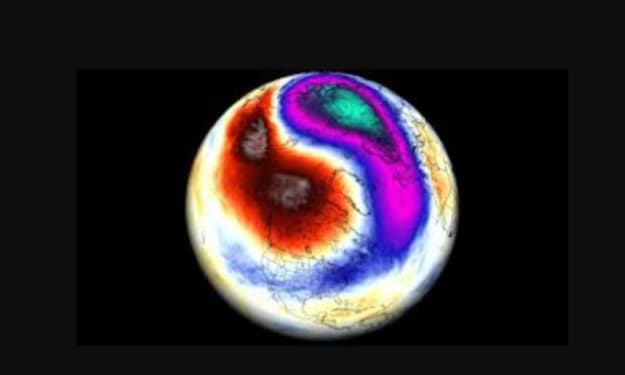
Understanding the Polar Vortex The polar vortex is a large area of low pressure and cold air that surrounds the Earth’s poles, particularly during winter. Under normal conditions, it remains relatively stable, keeping frigid Arctic air locked near the North Pole. However, when the polar vortex weakens or collapses, cold air can escape and plunge southward into populated regions. A polar vortex collapse, often linked to a sudden stratospheric warming (SSW) event, can dramatically alter weather patterns across North America, Europe, and parts of Asia. Meteorologists are now forecasting conditions that suggest such a disruption may occur, raising concerns among scientists and communities alike. What Is a Polar Vortex Collapse? A polar vortex collapse happens when temperatures in the stratosphere rise rapidly—sometimes by as much as 50 degrees Celsius in a matter of days. This sudden warming weakens the polar winds that normally contain Arctic air, causing the vortex to stretch, split, or collapse entirely. When this occurs, cold Arctic air masses can spill into mid-latitude regions, leading to extreme winter conditions far from the poles. These events do not just bring cold weather—they can create prolonged and disruptive patterns that affect millions of people. Why Scientists Are Watching Closely Climate scientists and meteorologists are closely monitoring current atmospheric conditions because recent data shows increased instability in the polar stratosphere. While polar vortex disruptions are not new, researchers note that they may be occurring more frequently or with greater intensity. Many experts believe climate change plays a role. As the Arctic warms faster than the rest of the planet—a phenomenon known as Arctic amplification—the temperature difference between the poles and lower latitudes weakens. This can destabilize the jet stream and make polar vortex disruptions more likely. Potential Weather Impacts If a polar vortex collapse occurs, the effects could be widespread and severe. Possible impacts include: Extreme cold spells across Europe, North America, and parts of Asia Heavy snowfall and ice storms, disrupting transport and infrastructure Energy supply strain, as heating demand spikes Dangerous conditions for vulnerable populations, including the elderly and homeless These events can last for weeks, not just days, making them especially challenging for communities to manage. How Communities Are Affected Polar vortex collapses are not just meteorological events—they are community-level crises. Sudden extreme cold can overwhelm local infrastructure, close schools and businesses, and place immense pressure on emergency services. Low-income households are often the hardest hit, as rising heating costs and power outages create immediate risks. Rural areas and coastal regions may face isolation due to blocked roads or frozen waterways, while cities struggle with homelessness and shelter shortages. Public health experts warn that prolonged cold exposure increases the risk of hypothermia, respiratory illness, and cardiovascular stress, especially among vulnerable groups. Economic and Infrastructure Consequences The economic impact of a polar vortex collapse can be substantial. Previous events have resulted in: Billions in economic losses due to business closures Supply chain disruptions, especially in food and fuel distribution Damage to water pipes, roads, and power grids Municipalities often face high repair costs, while governments must allocate emergency funding for relief and recovery. These events highlight the need for climate-resilient infrastructure and preparedness planning. The Role of Preparedness and Public Awareness Experts stress that early warning systems and public awareness are critical to reducing the impact of extreme cold events. When forecasts indicate a possible polar vortex collapse, governments and communities can take preventive steps such as: Opening warming centers and emergency shelters Advising residents on home insulation and energy conservation Preparing hospitals and emergency services for increased demand Communicating clearly and consistently with the public Community resilience depends not only on government action but also on public cooperation and preparedness. Polar Vortex and Climate Change: The Bigger Picture The growing attention on polar vortex collapses reflects a broader concern about climate instability. While global temperatures are rising, extreme cold events have not disappeared—in some cases, they have become more intense due to disrupted atmospheric patterns. Scientists caution that climate change does not simply mean warmer weather everywhere. Instead, it can lead to more extreme and unpredictable conditions, including heatwaves, floods, and sudden cold outbreaks. Understanding the polar vortex helps communities grasp how global climate systems are interconnected, and why long-term climate action is essential. What Happens Next? While forecasts suggest an increased risk of a polar vortex collapse, scientists emphasize that weather systems are complex, and exact outcomes remain uncertain. Ongoing monitoring will determine whether the vortex weakens significantly and how regional weather patterns respond. Regardless of the immediate forecast, experts agree that events like this underline the importance of investing in climate science, infrastructure resilience, and community preparedness. Conclusion: Why It Matters A potential polar vortex collapse is more than a weather headline—it is a reminder of how deeply climate systems affect everyday life. From household heating bills to public safety and national economies, the consequences reach far beyond snowfall totals. As scientists continue to track atmospheric changes, communities, governments, and individuals must stay informed and prepared. Understanding what a polar vortex collapse means—and why it matters—empowers society to respond more effectively to extreme weather in an increasingly unpredictable climate.
By Aarif Lashari3 days ago in Earth



Comments
There are no comments for this story
Be the first to respond and start the conversation.