
WHY IS BLUE SO RARE IN NATURE
Exploring the Rarity of Blue Hues in the Natural World
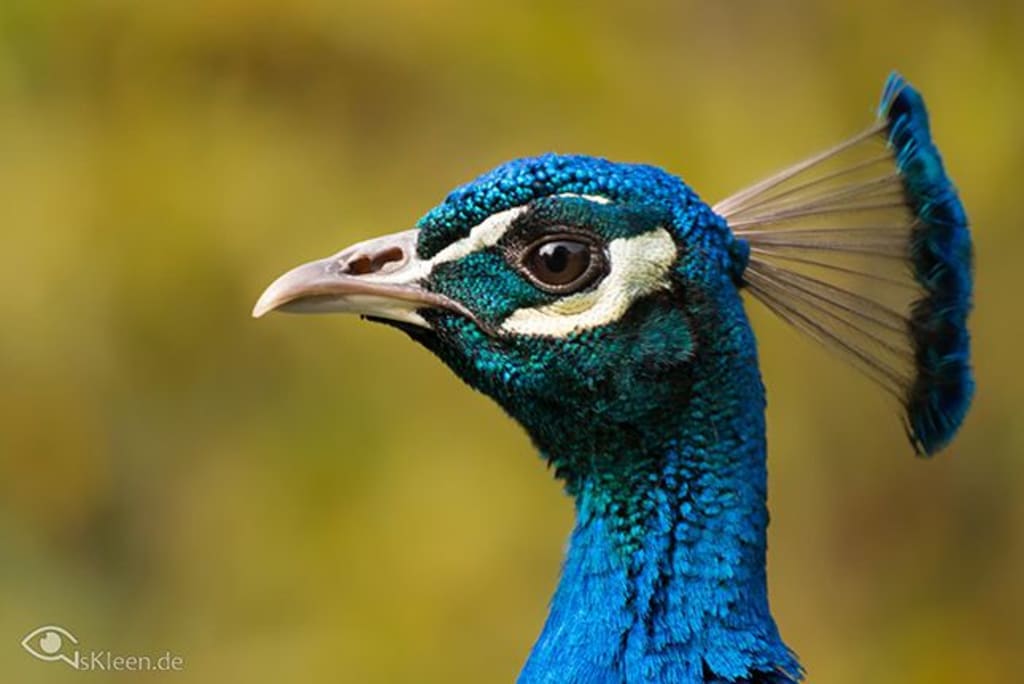
There are no blue tigers, bats, squirrels, or dogs. Even blue whales aren’t that blue! Animals come in pretty much every color, but blue seems to be the rarest. What’s cool is when we do find a blue animal, they’re really cool looking.
Nature does not traditionally mix blue and green together. But to understand why, we're going to journey through evolution, chemistry, and some very cool physics. But first we need to understand why animals are any color at all and to do that, we'll need to look at some butterflies - because butterflies are amazing. If you don't think so, you're wrong.
Some butterflies have brighter and more detailed patterns than other insects because they use light to communicate. When we look closely at a butterfly's wings, we see the colors come from tiny scales. The colors in butterfly wings are actually made up of organic molecules that only absorb certain colors. Our eyesight is the only thing that lets us see black scales as color.
Animals, including butterflies, birds, and humans, don't create these pigments from scratch; rather, they are formed from components in our diet. A prime example of this phenomenon is evident in flamingos: initially gray at birth, they adopt a pink hue due to the consumption of carotenoid pigments found in the crustaceans they feed on. Thus, the axiom "you are what you eat" holds true for these colors. However, the color blue deviates from this pattern. Unlike other hues, blue exhibits an intriguing behavior—its appearance shifts as the camera's perspective changes. This phenomenon, reminiscent of a hologram, arises because butterflies lack blue pigments. So, while they appear blue, their true nature is more nuanced. This paradox is particularly evident in Blue Morpho butterflies, widely considered among the most beautiful species. This fact is even reflected in the butterfly emoji, which prominently features their vivid blue shade. This stunning blue coloration, though, does not stem from traditional pigments.
Blue in nature isn’t due to pigments but rather the shape of wing scales, a discovery that amazed me when I learned about it. Zooming in on a blue wing scale reveals tiny ridges resembling Christmas trees. These branches’ arrangement grants Morpho wings their vivid blue.
When light enters, some reflects off the top while the rest passes through and reflects off the bottom. For most colors, these reflections cancel out, except for blue. Its wavelength aligns, allowing blue to reach our eyes through a hall of mirrors that captures only blue light. A base pigment absorbs stray red and green light, enhancing the blue’s purity.
This stunning iridescent blue arises from the wing’s microscopic structure, influenced by light’s behavior as it moves from air into another material. Filling the gaps with a substance like alcohol changes the index of refraction, causing blue light to lose its bend. But, once the alcohol evaporates, the color returns.
Despite living in rainforests, these butterflies maintain color as their wing scales are naturally water-resistant. Unlike the butterfly wing’s ordered structures, blue jay feathers scatter light with microscopic beads, canceling out all colors but blue.
Peacock tail feathers also gain their color from structure rather than pigment. These feather structures are more orderly, similar to crystals, creating brightness from specific angles. Even the coloration of certain animals, like monkeys, stems from light wave manipulation due to skin structures, not pigments.
Blue eyes, too, are colored by structures, not pigments. Remarkably, the bluest creatures, excluding marine life, use microscopic structures to achieve their colors, each with unique characteristics. Except for a rare butterfly species called olivewings, no vertebrate has evolved a blue pigment.
Nature’s preference for structural blue coloration may stem from evolution favoring the ability to perceive blue light before the ability to create blue pigments. This innovation allowed for improved communication and survival, bypassing the need for new chemistry.
What’s captivating is how these colors have intrigued curious minds for centuries. Early observers like Robert Hooke and Isaac Newton noticed the unusual blues, sparking ongoing scientific study driven by both fascination and beauty.
Thank you for read, and keep your curiosity alive.
About the Creator
Keep reading
More stories from Amina Mamud and writers in Earth and other communities.
AI Unveiled: Navigating the Transformative Impact of Artificial Intelligence
Chapter 1: The AI Odyssey Begins In the dawning era of “AI Unveiled,” we find ourselves at the precipice of a transformational journey. As humanity’s ingenuity converges with artificial intelligence, the fabric of our existence is set to undergo a profound metamorphosis. In this chapter, we take a plunge into the origins of AI, tracing its evolution from simple algorithms to the complex neural networks that now power autonomous vehicles, virtual assistants, and healthcare breakthroughs. We ponder over the early visionaries who sparked the flame of AI’s potential and set it on a course that would eventually reshape society.
By Amina Mamud2 years ago in Futurism
All Holidays Cancelled as UK Holiday Firm Goes Bust
Holiday Firm Collapse Sparks Chaos A major UK holiday company has gone bust, resulting in the cancellation of all booked holidays. The collapse has left thousands of travellers without trips, refunds, or alternative arrangements, sparking frustration and concern among affected customers.
By Aarif Lashari2 days ago in Earth
📢 Raise Your Voice Thread: 01/22/2026
Our “Raise Your Voice Threads” are hosted most alternating Thursdays at 12PM ET to offer creators more avenues to uncover exceptional stories on Vocal. As we are continuously searching for fresh creators and inspiring stories, this thread provides an opportunity to exchange and discuss the stories that have moved and motivated us on Vocal.
By Raise Your Voice by Vocal7 days ago in Resources



Comments
There are no comments for this story
Be the first to respond and start the conversation.