
Why Early Global Health Giving Education Matters for Medical Students
Why Medical Students Should Learn About Global Health Giving Early


Medical school is a time of intense learning, growth, and discovery. Students spend years studying the human body, diseases, and treatments. But to become truly effective doctors, they also need to understand how health works on a global scale. Learning about global health helps shape early-career health professionals' mindsets, skills, and sense of duty long before they begin practicing medicine. Today’s world is connected in many ways. Health problems in one place can quickly affect people in many other areas. When medical students learn about these global links early, they become more prepared, more aware, and more capable of serving diverse communities with compassion and respect.
Seeing the World Through a Wider Health Lens
Most students enter medical school thinking about local hospitals, clinics, and patient needs in their own community. But early education in global health gives them a wider lens through which to view the world. They learn that health is shaped not only by biology and medicine but also by geography, culture, and global events.
This type of learning helps students understand how diseases spread, how resources are shared, and how different countries handle medical challenges. They also learn how wars, natural disasters, climate change, and migration affect access to healthcare. These lessons show students that health is a shared global concern, not a problem limited to one place.
Learning Practical Skills That Improve Real-World Care
Medical students spend much of their time studying theories and clinical facts. But learning about global health gives them practical skills they might not get anywhere else. These skills help them become more adaptable, creative, and confident. Students learn how to make wise decisions even when resources are limited. They study how doctors in low-income areas treat patients without advanced machines or ample supplies. These examples help students learn to think quickly and use what they have effectively.
Students may also participate in virtual global health projects or join outreach programs. These experiences help them practice teamwork, compassion, and problem-solving. They learn how to work with other health professionals from around the world and how to listen to the needs of communities before taking action. These practical lessons build students' confidence and prepare them for real-life challenges beyond the textbook.
Understanding How Communities Shape Health
Health is not only about medicine. It is also about how people live. When medical students learn about global health through thorough age exposure, they begin to understand how everyday life affects health outcomes. They know that access to clean water, safe housing, education, and stable income all play significant roles in keeping people healthy. This knowledge helps students see the deeper causes of illness. Instead of focusing only on treating symptoms, they start thinking about how to prevent disease in the first place. They learn how community programs, public health efforts, and basic education can make a huge difference.
Early global health education also teaches students the value of listening to communities. They learn that successful health programs come from teamwork between medical professionals and local people. Communities often understand their own challenges best. When students learn how to listen with respect, they become better at creating solutions that actually work. By understanding the social side of health early on, students become doctors who care for the whole person, not just the disease.
Finding Inspiration and Direction for Future Careers
Early exposure to global health giving can inspire medical students in powerful ways. Many discover new interests and career paths they had not considered before. They may develop a passion for public health, global surgery, infectious disease work, or maternal care in underserved regions.
Learning about global health early also gives students a more profound sense of purpose. They see how their skills can bring hope to people worldwide. This understanding helps them stay motivated during the long and demanding years of medical school. They study with more focus because they know their work can make a real difference.
Some students may choose to volunteer abroad in the future. Others may bring their global knowledge back home to serve local communities in need. Many will use their training to create fair policies, support global health programs, or teach future medical professionals. Whatever path they choose, students who learn global health giving early carry a strong commitment to service and compassion.
Building Strong Ethics and a Deep Respect for Equity
A significant part of global health giving is learning about fairness and equity. Many people around the world lack access to basic healthcare. Some live far from hospitals. Others cannot afford treatment. Many face social or political barriers that prevent them from getting help when they need it. When medical students learn this early, they develop a strong ethical foundation. They know that every person deserves care and respect, no matter where they live or what resources they have. This belief becomes a guiding force in their future work.
This helps shape doctors who treat every patient with dignity and fairness. They become advocates for equal access to healthcare. They speak up for people who are ignored or underserved. Their early education in global health equips them to make choices guided by justice, respect, and compassion. Doctors who understand global health early become leaders who want a healthier world for everyone. Medical students who learn about global health gain valuable knowledge, skills, and values that shape their entire careers. They see health in an international context, develop practical tools for real-world care, understand the role of community, discover meaningful career paths, and build strong ethical foundations. These lessons prepare them to become doctors who bring positive change to both local and global communities.
About the Creator
Dr. Seth Eidemiller
The road to becoming an emergency physician took many turns for Dr. Seth A. Eidemiller. Before starting medical school, he built many practical skills that influence his approach to medicine today.
Portfolio: https://drsetheidemiller.com/
Keep reading
More stories from Dr. Seth Eidemiller and writers in Earth and other communities.
Renewing the Healer’s Spirit: How Acts of Service Can Combat Burnout and Compassion Fatigue
Burnout and compassion fatigue have become increasingly common among professionals who dedicate their lives to helping others. Healthcare workers, social service providers, educators, emergency responders, and volunteers all experience moments when emotional exhaustion and reduced empathy threaten their well-being. The weight of constant responsibility, exposure to trauma, and high expectations can slowly erode one’s sense of purpose.
By Dr. Seth Eidemiller2 months ago in Education
China’s Ambitious Satellite Plan: 200,000 Satellites and Counting
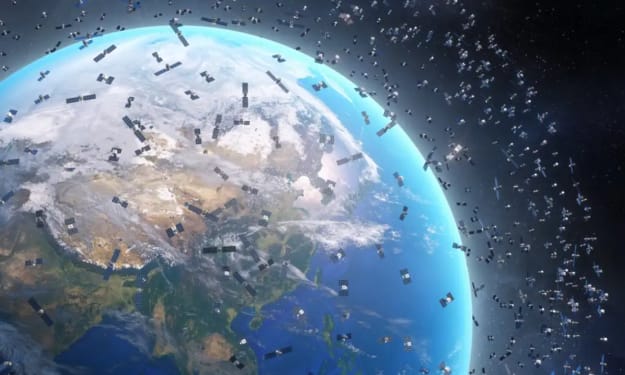
China has submitted an astonishing application to the International Telecommunication Union (ITU) to launch 200,000 satellites over the coming years. To put this into perspective, the entire world currently operates far fewer than this number. Even SpaceX’s Starlink project, one of the largest satellite networks globally, has plans for around 42,000 satellites. China’s proposal signals an unprecedented escalation in space activity and raises important questions: what are these satellites for, and what implications do they hold for global technology, security, and the environment? The Purpose Behind the Numbers At first glance, launching 200,000 satellites may seem excessive, but China’s goals are strategic and multifaceted. Experts suggest that these satellites could serve several purposes: 1. Global Internet Coverage China is aiming to build a massive low-Earth orbit (LEO) satellite network, similar to Starlink and OneWeb. By positioning thousands of satellites closer to Earth, they can provide high-speed internet to remote regions, rural areas, and even ships or aircraft in the oceans. This could help China expand its digital influence globally, offering connectivity in areas where traditional internet infrastructure is weak or non-existent. 2. Enhanced Military and Surveillance Capabilities A satellite network of this scale is also a game-changer for defense and surveillance. Satellites can monitor troop movements, track ships, and provide early warning systems. China’s military has been investing heavily in space-based technology, and these satellites could be a crucial part of modernizing its intelligence, surveillance, and reconnaissance (ISR) capabilities. 3. Scientific Research and Earth Observation Some of these satellites may be dedicated to Earth observation, collecting data on climate, agriculture, natural disasters, and urban development. With thousands of satellites constantly orbiting the planet, China could achieve near real-time monitoring of environmental changes and resource management, giving scientists and policymakers an unprecedented level of insight. 4. Competition in the Commercial Space Sector China’s plan is not purely for government use. The commercial potential of satellite networks is massive, from providing satellite internet services to supporting the burgeoning space economy. Companies under Chinese state and private ownership could leverage this infrastructure to offer services domestically and internationally, challenging Western tech giants in global space markets. The Scale of the Ambition Launching 200,000 satellites is not just ambitious; it’s historic. If approved and executed, China would operate more satellites than all other countries combined, fundamentally reshaping how space is utilized. However, there are serious logistical challenges. Manufacturing, launching, and maintaining hundreds of thousands of satellites requires enormous resources, advanced technology, and careful orbital planning to avoid collisions. China has made major progress in its space launch capacity, with frequent missions through the Long March rocket family and ongoing developments at the Wenchang and Jiuquan Spaceports. Yet, sustaining such a colossal fleet will test even the most advanced space programs. Global Implications The potential consequences of China’s satellite plan are profound, both technologically and geopolitically. 1. Space Traffic Management A network of 200,000 satellites could drastically increase the risk of collisions in orbit. Space debris is already a growing concern, and introducing tens of thousands of new satellites may exacerbate this problem. International cooperation and sophisticated traffic management systems will be essential to prevent catastrophic accidents in space. 2. Geopolitical Tensions China’s space ambitions may intensify global rivalry in space technology, particularly with the United States, Europe, and other spacefaring nations. Control over satellite networks can translate into strategic advantages, from military surveillance to dominance in global communications infrastructure. This may lead to a new phase of space competition reminiscent of the Cold War’s space race. 3. Impact on Astronomy Astronomers have already expressed concern over satellite mega-constellations interfering with observations. Thousands of bright satellites moving across the night sky can distort telescope images and hinder research into deep space phenomena. If China proceeds with 200,000 satellites, the challenge to professional and amateur astronomers will be enormous. 4. Global Connectivity Revolution On the positive side, if managed responsibly, China’s satellite network could revolutionize global connectivity, bringing internet access to millions of people who currently have none. It could accelerate digital development in underserved regions, support education, and foster global commerce in unprecedented ways. Regulatory Hurdles The ITU regulates global satellite usage, including frequency allocation and orbital slots. For China to launch 200,000 satellites, it must secure approval from the ITU, which evaluates whether such an immense network could interfere with other countries’ satellites or violate international agreements. This is not a mere formality—approval for a project of this scale could take years and may require negotiations with multiple nations. Conclusion: A Bold Step Toward the Future China’s application to launch 200,000 satellites is a bold statement about the future of space and global technology. It reflects the country’s ambition to dominate in digital infrastructure, military capability, and commercial space enterprise. While challenges abound—from space debris and regulatory hurdles to geopolitical tensions—the potential benefits are significant, particularly for connectivity and scientific advancement. As the world watches China’s next steps, one thing is clear: the age of satellite mega-constellations is here. How humanity navigates the risks and rewards of this new frontier will shape the future of communication, security, and our presence in space for decades to come.
By Muhammad Hassan3 days ago in Earth
How to Succeed at the Benson Directory®
Congratulations and welcome to the Benson Directory® employee #22391! As our newest call handler, you will have the privilege of speaking with dozens of unique and interesting people on a daily basis as well as the opportunity to earn bonuses for high performance. Contained within this handbook you will find a set of ease to follow instructions designed to help you settle in to your new role and begin paving the way to success.
By S. A. Crawforda day ago in Fiction



Comments
There are no comments for this story
Be the first to respond and start the conversation.