
Why Do We Love the Bad Guys? The Allure of Iconic Villains
From Loki to Darth Vader: How Flaws Make Villains Relatable

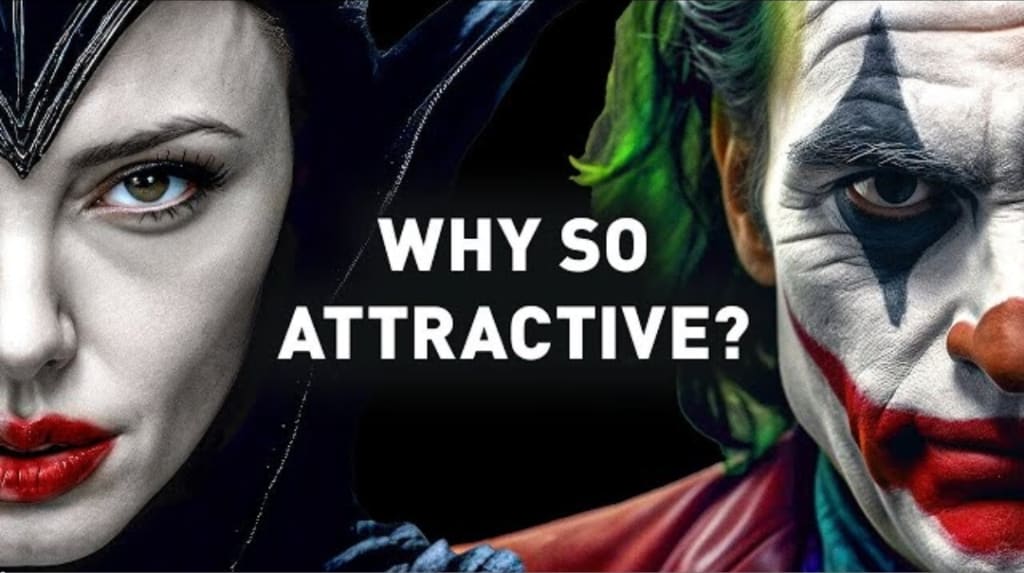
### What Makes a Villain So Compelling?
Let’s talk about villains—not the everyday bad guys, but the iconic antagonists in our favorite films. Think of Voldemort, Loki, Darth Vader, or the Joker. These characters share something intriguing: they make us question our feelings toward them. Why do we root for or empathize with these so-called “bad guys”?
---
### Empathy for Villains
It turns out, people are naturally drawn to villains. According to psychologists, we empathize with them because they represent impulses or desires we suppress. Watching them act out these forbidden instincts on screen can be cathartic. It allows us to explore darker sides of ourselves without real-world consequences, a concept psychologist Carl Jung refers to as connecting with our "shadow."
For example, imagine waking up in the Marvel Cinematic Universe. You grab your morning coffee when suddenly a building collapses nearby. Thor and Loki are battling in the sky. In that chaotic moment, you’d probably root for Thor, the "good guy," because your life is at stake. But if you’re watching from your couch, the dynamic shifts. Loki, with his charm and complexity, might suddenly seem more compelling.
---
### Why We Love Villains
Villains like Loki intrigue us because they operate in a morally gray zone. Loki is an underdog trying to prove himself to his brother, Thor. His methods—deceit, betrayal, and manipulation—are questionable, but his vulnerability makes him relatable. Add to this Tom Hiddleston’s undeniable charisma, and you’ve got a villain audiences can't help but love.
Similarly, Darth Vader, one of cinema’s most iconic villains, offers another layer of complexity. If you’ve seen the full "Star Wars" saga, you know his backstory as Anakin Skywalker. His descent into villainy stems from a fatal flaw: his fierce loyalty to those he loves. This flaw turns him from a hero to a tragic villain, and we can't help but empathize.
---
### Misbehavior and Redemption
In storytelling, characters often have a "misbehavior," or a defining flaw. For heroes, the plot usually revolves around correcting this flaw. Villains, however, present a counterweight to heroes, forcing them to confront their own beliefs and values.
While some villains, like Darth Vader, are redeemable, others remain steadfastly evil. Yet even the most despicable characters can become compelling when their motivations are explored. The Joker, for instance, is a chaotic and violent figure in the Batman universe, but his standalone film reframes him as a victim of societal injustice, earning the audience’s sympathy.
---
### Anti-Heroes vs. Anti-Villains
It’s important to distinguish between anti-heroes and villains. Anti-heroes, like Walter White from "Breaking Bad" or Harley Quinn, are protagonists with questionable morality. We root for them because their flaws make them relatable.
On the other hand, some villains fall into the category of "anti-villains." These characters are antagonists but have morally driven motives. Take Thanos from "Avengers: Infinity War." His goal—creating balance in the universe—is noble in theory, but his methods (eradicating half of all life) are horrifying. This complexity forces viewers to grapple with their own moral judgments.
---
### Villains as Protagonists
Modern cinema has increasingly focused on sympathetic villains, making them the stars of their own stories. Films like "Joker," Disney’s "Maleficent," and "Cruella" explore the origins of these characters, allowing audiences to see them as victims of circumstance rather than pure evil.
For example, Maleficent was once a beloved fairy whose betrayal turned her bitter. Similarly, "Cruella" reimagines the iconic "101 Dalmatians" villain as a misunderstood genius driven by ambition and personal loss.
---
### Why Stories Need Villains
Villains are essential to storytelling. They challenge heroes both physically and philosophically, forcing them to confront their own limitations and beliefs. Without Captain Hook, Peter Pan’s adventures would be dull. Without Scar, Simba’s journey in "The Lion King" would lack tension.
Moreover, villains often steal the show with sharp dialogue, charismatic performances, and over-the-top antics. Who can forget Scar’s sinister wit or the Joker’s chaotic unpredictability?
---
### The Duality of Villains
Ultimately, villains captivate us because they represent the duality of human nature. They’re flawed, complex, and, at times, deeply relatable. Whether it’s through their backstories, motivations, or sheer charisma, they remind us that no one is entirely good—or entirely evil. And that’s what keeps us coming back for more.
About the Creator
Nora Ariana
Empowering through stories and sound igniting purpose, sparking growth, and awakening the power within.
Keep reading
More stories from Nora Ariana and writers in Earth and other communities.
A goal is a dream with a deadline
A goal is a dream with a deadline. This powerful quote reminds us that without action, dreams remain just that wishes floating in our imagination. But when we set a timeline and commit to achieving them, they evolve into goals, bringing clarity, direction, and purpose. Many people go through life holding on to dreams, hoping they will come true someday. But someday is not a day on the calendar. Dreams without structure often fade with time or get buried under the weight of daily responsibilities. Turning a dream into a goal is what separates those who achieve from those who continue to wish.
By Nora ArianaExclusive • 9 months ago
Europe Amniotic Membrane Market Size & Forecast 2025–2033
Europe Amniotic Membrane Market Outlook The Europe Amniotic Membrane Market is undergoing a significant transformation as regenerative medicine gains momentum across clinical disciplines. According to Renub Research, the market is projected to grow from US$ 788.42 million in 2024 to US$ 1,892.79 million by 2033, expanding at a CAGR of 10.22% during 2025–2033.
By jaiklin Fanandishabout 8 hours ago in Earth
Wild Card Weekend Recap: What Happens Now?
I think I figured out why I love Wild Card Weekend so much. It's because it's the first playoff anything of the calendar year. The NFL season starts in the fall, and once upon a time, the champion was crowned either on or slightly before New Year's. The evolution of the NFL schedule has resulted in the playoffs starting just into the New Year, and currently, the final week of the season falls on the first weekend of the New Year, with Wild Card Weekend coming a week after that. So yes, chronologically, the NFL's Wild Card Weekend serves as the first playoff anything of the calendar year.
By Clyde E. Dawkins6 days ago in Unbalanced



Comments
There are no comments for this story
Be the first to respond and start the conversation.