
When the Sun Turns Dangerous: A Story of Heat, Change, and Responsibility
A powerful look at how rising heat is changing our lives — and what we must do about it

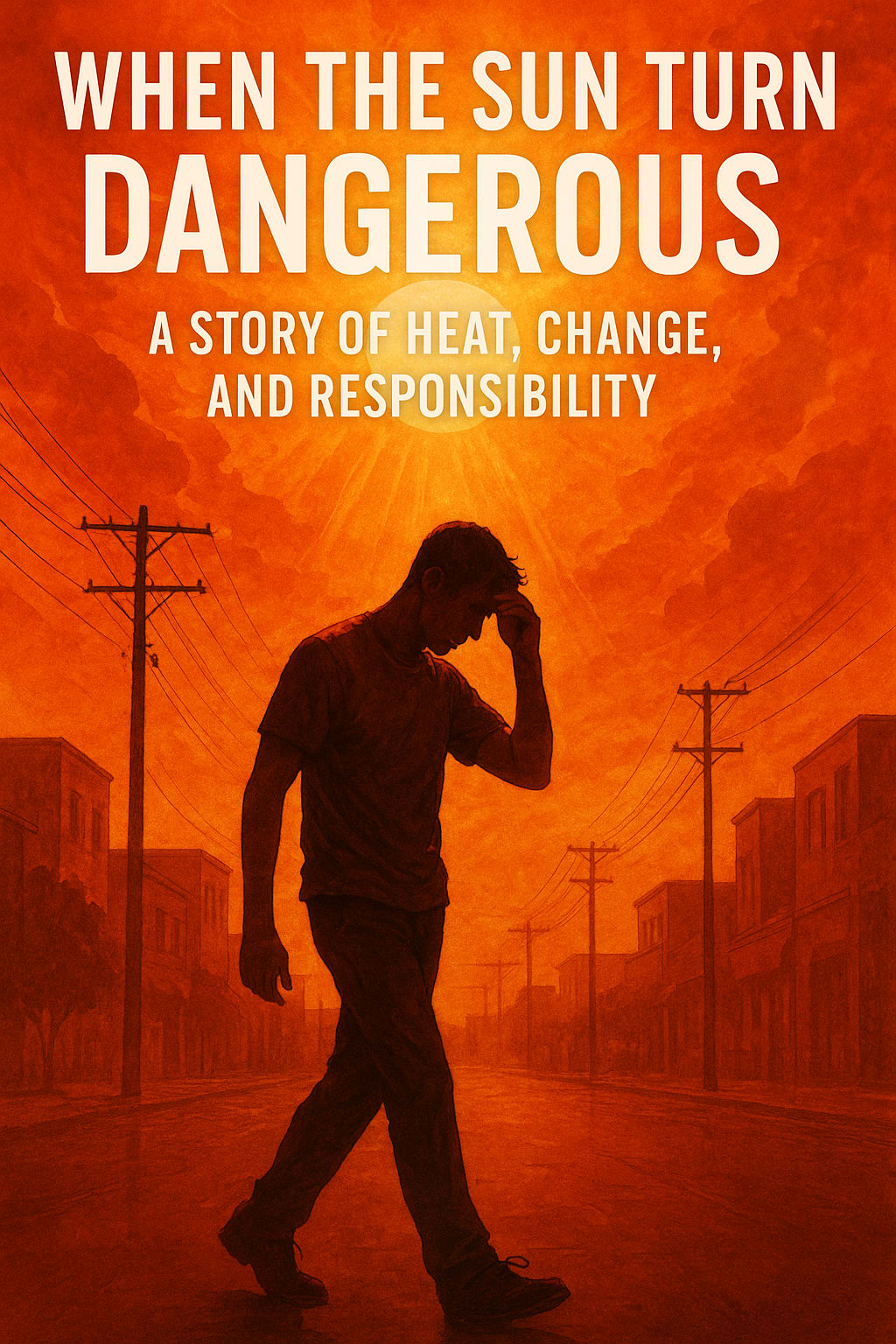
Summer was once freedom. It was once taking long walks, ice cream running down our hands, kids playing until the horizon was orange, and laughter echoing from the sidewalks. But now it's something different—something more.
It was 39°C (102°F) today in Alcobendas. Hot, but hazardous as well. The streets were deserted by noon. People darted about under the sun as if it was chasing them. Even the birds were subdued, seeking shade under trees that were barely offering relief.
As I stepped outside, air hit me like a wall. Heavy. Muted. My shirt clung to me in minutes. The sun, once a sign of joy, now looked menacing. The sidewalk radiated heat. The city was still, as if out of breath.
It isn't just another sweltering day. It's a warning.
⸻
The Heat Hits Us All
For the rest of us, it's a transient annoyance—sweaty commutes, sleepless nights, icy showers that don't quite cut it. But for some, it's much, much worse.
The elderly who live alone. Outdoor laborers who can't just "stay indoors." Kids in non-air-conditioned homes. Abandoned pets on balconies. Every degree the temperature goes up is one more threat to someone's health, comfort, and dignity.
Hospitals see increased cases of heatstroke, dehydration, and exhaustion. Wildfires erupt in dry regions. Power grids strain with the burden of air conditioners working overtime. Nature itself chokes—plants become limp, and animals disappear from sight.
⸻
Why Is the Temperature Rising Every Year?
World temperatures are increasing as a consequence of climate change — largely caused by human activities.
When we use fossil fuels like coal, oil, and gas (to warm our homes, power our cars, and fuel factories), they release greenhouse gases like carbon dioxide (CO₂) into the atmosphere. They trap heat — such as a blanket wrapped around the Earth.
Urbanization recklessly, over-use, and pollution just exacerbate the situation. The planet is warming up, and every year we break more and more records.
This is no longer tomorrow's problem. It's today — here.
⸻
How Bad Is This Heat?
The effects of extreme heat reach far beyond sunburn and perspiration:
Cognitive ability decreases, especially in children and the elderly.
Cardiovascular strain increases — heart attacks and strokes.
Crops are killed, affecting food prices and food security.
Cities become heat islands, especially low-income areas with little green space.
• ???? Ecosystems break down, endangering animals and plants that are unable to adapt.
And when heat is mixed with air pollution, the loss is even worse.
⸻
What Can We Do as Individuals?
We are not helpless. Every small step helps.
???? Make Greener Choices
• Use public transport, cycle, or walk when you can.
• Cut back on eating meat.
• Save electricity. Switch off lights and AC when not required.
???? Plant and Protect Trees
Trees lower the temperature of our cities and clean the air. One planted tree does a great job even.
???? Raise Awareness
Talk about climate change. Share facts. Speak to your friends and neighbors.
♻️ Consume Mindfully
Say no to plastic. Reuse where you can. Spread local and sustainable products.
⸻
What Is Our Responsibility?
We coexist on this planet — and its future — with others, and with others. It is our moral obligation to take care of it.
We can't just complain about the heat. We must understand its cause, recognize our part in it, and be willing to change.
Little steps make great change. One person can inspire a family. A family can inspire a community. A community can inspire change in a city.
⸻
What Should the Government Do?
Governments play a gigantic role. Here's what we should demand from them:
⚖️ Pass Climate Policies
Stringent emissions laws, renewable energy requirements, and greener urban planning.
Protect the Health of People
Heatwave warning systems, vulnerable populations' heat shelters, and heatwave emergency response training.
???? Invest in Clean Power
Solar, wind, and hydroelectric power are clean and renewable. Balance fossil fuel subsidies with renewables.
Educate People.
Be supportive of educational programs on climate change, energy efficiency, and sustainability.
Lead by Example
Governments need to reduce their own carbon output, invest in research, and cooperate globally.
⸻
Last Thoughts
The sun hasn't shifted, but our summers have.
We once adored the season. Today we suffer through it. But through all the droplets of perspiration and all the white-knuckle seconds, we remember: we are connected — to each other, and to the earth.
We can't cool the weather down overnight. But we can cool our act, our decisions, and our priorities. And by cooling them down, we can create a cooler, kinder world.
The next time the heat is on, don't just ask, "How hot is it going to be?"
Ask: "What can I do to cool the planet down?
Summary:
As temperatures soar across cities like Alcobendas, heatwaves are no longer a seasonal inconvenience — they are a growing threat to our health, lifestyle, and future. This story explores how extreme summer heat is reshaping daily life, why global temperatures are rising year after year, and what we — as individuals and communities — can do to stay safe and take responsibility. From practical survival tips to the urgent role of governments, it’s time to face the heat with awareness, action, and accountability.
About the Creator
Amer Khan✍️
✍️ Creative & Artistic
1. Turning thoughts into stories and silence into poetry.
2. Writer of moments, dreamer of worlds.
3. Where words fall, I rise.
4. Just a soul chasing metaphors.
5. My pen bleeds truth and fiction in equal measure.
Keep reading
More stories from Amer Khan✍️ and writers in Earth and other communities.
The Power and Responsibility of Influencers in Our Society
In today’s interconnected world, public figures have assumed a variety of roles, and some individuals are recognized as influencers in our society. Names such as Tariq Pathan, Aleem Shah Khilji, Qaim Ali Shah, Afsar Afghan, Shahid Anwar, and Wakeel Khan have become household names, with many people listening intently to their words and following their guidance. However, the central question remains: Is the influence exerted by these figures always positive? In this article, we take a serious, balanced look at both the benefits and drawbacks of influencers in our society.
By Amer Khan✍️7 months ago in The Swamp
Tidal Barrier to Be 10m Shorter to Save Money
Rethinking Flood Protection in Somerset If you live near the coast, the threat of flooding isn’t just news — it’s a reality you can feel. That’s the situation in Bridgwater, Somerset, a historic market town near the Bristol Channel. For years, plans have been underway to build a tidal barrier to protect homes, businesses, and livelihoods from storm surges. Now, new updates reveal the barrier will be about 10 metres shorter than originally planned, a decision aimed at reducing costs while still keeping the town safe. This announcement has sparked conversations about engineering, budgets, and how communities adapt to climate challenges. Why the Barrier Is Being Shortened The Bridgwater Tidal Barrier was initially designed to be a high-profile flood defence, protecting thousands of properties from tidal surges that travel up the River Parrett. But after a recent design efficiency review, engineers concluded the barrier could be slightly shorter without compromising safety. Reducing the barrier by 10 metres lowers construction complexity, saves money, and reduces long-term maintenance costs. The Environment Agency and local authorities say this approach allows the project to move forward on time and on budget, ensuring the community gets protection sooner rather than later. The Cost Factor Public infrastructure projects like this don’t happen in a vacuum. Rising inflation, global supply chain disruptions, and labor shortages have increased costs for large-scale projects. Officials argue that the revised design is a responsible compromise: it balances cost savings with safety. Somerset Council leaders have welcomed the decision, noting that managing costs wisely helps the project reach completion without compromising protection for residents. Community Voices and Concerns Local engagement has been a key part of the project. Residents have attended consultations and drop-in sessions to see the updated plans and ask questions. Some community members appreciate the cost savings and faster timeline. Others worry whether a shorter barrier will be as effective against future extreme weather events. Questions include: Will the barrier remain strong against increasingly unpredictable storms? Does reducing the height limit future adaptability as climate impacts grow? What effect might it have on local ecosystems and fish habitats? These are valid concerns, reflecting how communities are increasingly involved in climate adaptation decisions. Engineering Flood Defence Today Tidal barriers are not new — Britain has relied on them for decades. London’s Thames Barrier, for instance, has protected the capital since the 1980s. But today, rising sea levels and more frequent storms mean engineers must balance safety, cost, and environmental impact carefully. In Bridgwater, officials say the revised barrier will still protect against 1-in-200-year tidal events. It’s designed to provide robust safety now while remaining adaptable for the future. The Human Side of Flood Protection It’s easy to get lost in numbers and metres, but behind the design decisions are real people. Residents depend on reliable flood protection to feel secure in their homes and communities. For families, businesses, and local services, knowing a barrier is being built — even a slightly shorter one — provides peace of mind. It’s not just a structure; it’s a symbol of resilience and preparedness. Next Steps for the Barrier The Bridgwater project is still under construction, with the revised design undergoing final refinements. Once completed, the tidal barrier will provide long-term protection for thousands of properties and critical infrastructure in Somerset. Officials emphasize that the shortened design does not compromise safety. If anything, staying on budget ensures the project is completed faster, meaning protection arrives sooner for the community. A Lesson in Climate Adaptation The story of the Bridgwater Tidal Barrier is more than engineering or economics. It’s about how communities respond to climate risks and how governments make tough choices balancing safety, cost, and sustainability. The barrier being 10 metres shorter may seem small on paper, but it reflects a larger truth: infrastructure planning today is as much about community engagement, adaptability, and long-term resilience as it is about concrete and steel. By keeping people involved and making informed, cost-effective decisions, Somerset shows how towns can adapt to climate change without sacrificing safety. Conclusion The Bridgwater Tidal Barrier demonstrates that infrastructure projects in the 21st century must adapt to multiple pressures: climate change, financial constraints, and community expectations. While the barrier is slightly shorter than originally planned, it remains a critical line of defence against flooding. More importantly, it highlights the importance of public involvement, transparency, and strategic planning in building a resilient community. For Bridgwater residents, the message is clear: the tide may rise, storms may come, but with smart planning and community engagement, the town will be ready
By Muhammad Hassan2 days ago in Earth
Red Ice Part 1
Northern Greenland, 1831 Anak finished loading the last of his equipment into his dog sled. All of his dogs were barking loudly with excitement. They knew what time it was, they knew what was about to happen. It's the middle of March and ice covers the entire region. Around this time of year, Anak and the other hunters head out for their seasonal walrus hunt. He checked his sled one final time to ensure he had everything they needed. Then he went to check on the other hunters to see of they were ready.
By Stonecreekabout 12 hours ago in Earth


Comments
There are no comments for this story
Be the first to respond and start the conversation.