

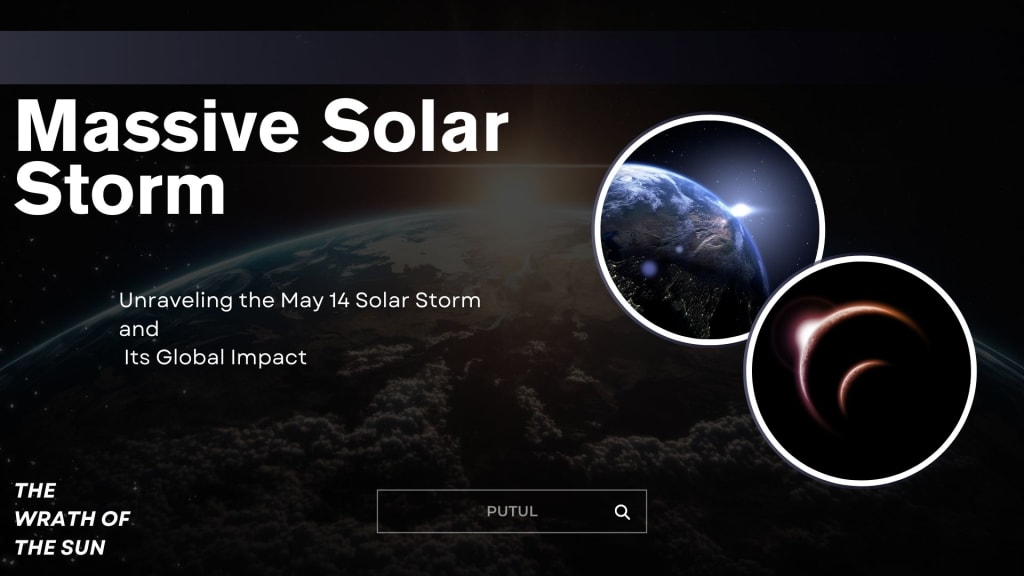
It began as a whisper in the silence of space—a flicker on the Sun’s surface that few noticed at first. But far away, deep in the control room of the Solar Dynamics Observatory, Dr. Alina Rahman stared at her screen in disbelief. The sunspot she was tracking had grown monstrously large—ten times the size of Earth, its dark mass boiling and twisting with unstable energy. Then, without warning, it erupted. A coronal mass ejection, or CME, burst from the Sun’s surface like a solar cannonball, hurling billions of tons of plasma straight toward Earth. It was moving faster than anything they had seen in decades. “Estimated impact: 48 hours,” Alina said quietly to her team. Around her, alarms began to ring. The race against time had begun. In a quiet town in northern Canada, twelve-year-old Maya looked up at the sky that evening. It was unusually bright for that time of night. Strange colors—green, purple, crimson—twirled across the stars. “Northern lights?” she asked her grandfather, who nodded, though his eyes were filled with worry. What Maya didn’t know was that those lights, beautiful as they were, marked the arrival of something much larger—a geomagnetic storm with the power to cripple the planet’s technology. Back in space, the storm struck with fury. Earth’s magnetic field shook violently as the solar wind smashed into it. Satellites drifted off course. GPS signals flickered and failed. High-frequency radio communications fell silent. At 38,000 feet, pilots scrambled to reroute planes from polar routes where communication had gone dark. Power grids in several countries trembled under the stress—voltage fluctuations threatened widespread blackouts. On the International Space Station, Commander Elena Zhao received urgent instructions from Earth. “Get into the shielded chamber. Solar particles incoming.” She and her crewmates floated quickly into the protected area, hearts pounding, knowing full well what exposure could mean. Down below, cities buzzed in confusion. Phone calls dropped. Bank systems slowed. Tractors in the fields, guided by GPS, started veering off course. In some places, the power flickered and went out completely. People turned to the skies to see auroras where there had never been any—Italy, India, Texas—places too far south for such displays. Maya stood outside with her grandfather, mesmerized. "The sky’s on fire," she whispered. And in a way, it was. Despite earlier warnings, most governments hadn’t been prepared for something of this magnitude. Days before, Alina and other scientists had issued alerts, urging caution. But space weather often gets ignored, buried beneath news of storms and politics. After all, how dangerous could sunlight be? Now, the answer was burning in the atmosphere. As the storm raged on, emergency meetings were held across the globe. Satellites were switched into safe mode, airlines grounded certain flights, and military systems double-checked their backup networks. The K-index, which measures geomagnetic disturbances, hit the maximum level of 9. Scientists hadn't seen that in over 20 years. Alina sat in her lab, exhausted, but unable to look away from the data streaming in. She knew this was not the worst the Sun could do—just a glimpse of its true fury. By the third day, the storm began to ease. Earth’s magnetic field, though bruised, held strong. Slowly, satellites were restored. Flights resumed. Electricity returned. Humanity had endured, but the scars remained—not physical, but intellectual. “We got lucky,” Commander Zhao said in a post-mission interview. “The next time, we might not be.” In the aftermath, action finally stirred. Governments pledged funding to improve solar monitoring. Power companies began reviewing how to harden the grid against solar events. Scientists pushed for better global coordination. Even the public—once oblivious to space weather—began to ask questions. What if a stronger storm hit? What if it lasted longer? Back in Canada, Maya opened her notebook and began to draw the lights she’d seen. “Was it dangerous?” she asked her grandfather. He nodded. “Yes. But we learned something.” “What did we learn?” “That the sky can warn us,” he said. “And we should always listen.” Epilogue:The May 2025 solar storm came and went like a cosmic dragon—fiery, breathtaking, and dangerous. It gave the world a moment of awe and a moment of fear. It reminded us that the Sun, our eternal flame, is not only the source of life—but sometimes, a messenger of chaos. And high above, in the quiet corridors of space, the Sun burns on—its next secret already building beneath its surface.
About the Creator
Putul
Storyteller by craft, writer by choice. Putul specializes in creating content that informs and sparks thought, one article at a time.
Life Only Rewards Action Takers, Not Idea Makers
In today’s fast-paced and competitive world, ideas alone are not enough. People have amazing aspirations, creative ideas, and clever solutions to problems everywhere you look. Yet, despite all these brilliant ideas, only a handful of people manage to turn them into reality. Why? Because life doesn’t reward those who merely think or talk about doing something—it rewards those who take action. This truth, though sometimes uncomfortable, is a powerful reminder that success lies in execution, not imagination. Everyone has had a great idea at some point. Perhaps you thought of a new app, a unique product, or a business model that could revolutionize an industry. Maybe you dreamed of writing a book, starting a YouTube channel, or getting fit and healthy. But how many of those ideas did you actually act on? How many of them turned into something real? Chances are, very few. That’s because the journey from idea to result is long and often difficult—and only those willing to walk that path reap the rewards. Ideas are cheap. In fact, they’re everywhere. Everybody is always talking about what they "could" do. “I had that idea years ago,” someone says when a new company succeeds. But here’s the thing—having an idea doesn’t make you successful. Taking action does. The person who turned the idea into a business, built the team, faced the challenges, and stayed consistent is the one who deserves the reward. Fear is a major reason why people don't act on their ideas. Even the most gifted minds can be paralyzed by fears of failure, rejection, and judgment. They convince us to wait, to overthink, to keep planning without ever starting. But what most people don’t realize is that failure is not the enemy—inaction is. You can learn from failure, adapt, and improve. But if you do nothing, there’s nothing to grow from. Action is what teaches you. It’s how you gain experience and get better. Another common barrier is perfectionism. Many people want everything to be just right before they begin. They wait for the perfect time, the perfect plan, or the perfect conditions. But perfection is an illusion. There is no perfect moment. What matters is starting—imperfectly, awkwardly, even messily—and improving along the way. The most successful people in the world didn’t wait to be perfect. They just began, and they figured it out as they moved forward. Confidence, or the lack of it, also holds many people back. They think, “Who am I to do this?” or “I’m not qualified enough.” But here’s the secret: confidence grows through action. The more you do, the more you learn. The more you learn, the more capable you feel. And the more capable you feel, the more confident you become. It’s a cycle—but it starts with action. The world is full of people with potential. But potential doesn’t pay the bills. Potential doesn’t build companies or write books or change lives. Only action does. If you want results, you have to move. Even small steps matter. Writing one page a day, recording one video a week, saving a little money each month—these things add up over time. Progress doesn’t have to be dramatic; it just has to be consistent. Let’s look at some real-life examples. Thomas Edison didn’t just imagine the lightbulb—he tested thousands of materials until he found the right one. Elon Musk didn’t just dream of electric cars—he invested his own money and worked 100-hour weeks to build Tesla and SpaceX. J.K. Rowling didn’t just come up with the idea of Harry Potter—she wrote the books while facing poverty and rejection. What made them successful wasn’t their ideas alone—it was their willingness to act, to persist, and to overcome obstacles. When you take action, amazing things happen. First, you gain clarity. You start to notice what doesn't work and what does. Theory becomes practice. Second, you increase your speed. One step leads to another, and soon you’re further than you thought possible. Third, you earn respect—from others and from yourself. People admire doers. Most importantly, you begin to see results, albeit modest at first but undeniable. So, how can you learn to take action? Start by breaking your big idea into small, manageable tasks. Don’t aim to finish everything in one day—just begin. Set deadlines for yourself. Make a schedule. Take one step every single day, no matter how small. Embrace mistakes—they are proof that you’re trying. Surround yourself with people who take action too; their energy will inspire you. And most importantly, believe in yourself enough to begin. Also, keep in mind that the world doesn’t care about what you’re planning to do. It cares about what you’ve done. People don’t invest in ideas—they invest in action. Employers hire people who deliver. Readers read what’s published, not what’s imagined. Customers buy finished products, not concepts. Until you take action, your idea has no real value in the world. One of the hardest truths you’ll ever accept is this: No one is coming to push you. It’s your job to act. Your job to show up every day and put in the effort. Motivation is not the issue; commitment is. And when you commit to action, life rewards you in ways you never expected. New opportunities appear. Unexpected support shows up. Confidence grows. And step by step, your idea becomes reality. In conclusion, having a great idea is only the beginning. What truly matters is what you do with it. Life is a field of action, not a fantasy. You can think, plan, dream, and hope all you want, but without action, none of it will matter. So take that first step. Start messy. Be bold. Make the effort. Because at the end of the day, life only rewards action takers—not idea makers.
By Putul8 months ago in Motivation
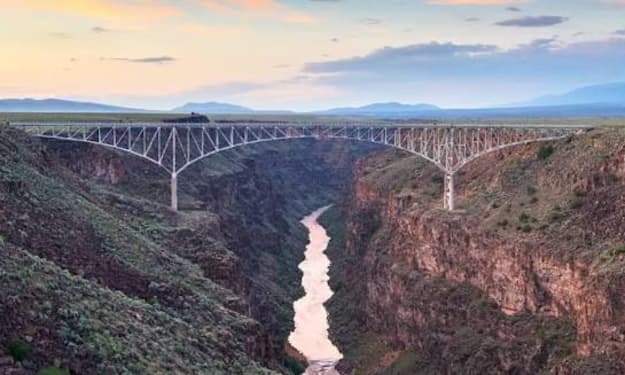
New Study Issues Dire Warning About Worsening Conditions in Major US River: ‘The Outlook … Does Not Look Good’
A recent study examining one of the United States’ most critical waterways has raised alarm bells for environmentalists, policymakers, and communities that rely on it for drinking water, agriculture, and commerce. The research, conducted by a consortium of scientists from leading universities and federal agencies, indicates that the river’s health is deteriorating at an unprecedented pace, and without immediate intervention, the consequences could be catastrophic.
By Fiaz Ahmed Brohi6 days ago in Earth
Understanding the Insurrection Act and the Role of Federal Officers in the United States
**Understanding the Insurrection Act and the Role of Federal Officers in the United States** The Insurrection Act is one of the most powerful and controversial laws in the United States, granting the president authority to deploy federal forces inside the country under specific circumstances. In recent years, public interest in this law has grown significantly, especially during periods of civil unrest, political tension, and nationwide protests. Questions about federal officers, presidential power, and constitutional limits have become central to public debate.
By America today 4 days ago in Earth


Comments
There are no comments for this story
Be the first to respond and start the conversation.