
When the Guadalupe Roared—and the Rumors of “Weather Editing” That Followed
The Historic Flood on July 4th, 2025


On July 4, 2025, Central Texas residents expecting typical Independence Day river relays were met instead with a scene of raw power and devastation. A series of slow-moving storm cells dumped between 5 and 10 inches of rain over the upper Guadalupe watershed in under six hours. The normally placid Guadalupe River rose from near-normal to more than 12 feet at Comfort—well above major-flood stage—sweeping away picnic tables, riverfront cabins and, tragically, claiming two lives. As floodwaters receded and communities rallied to rebuild, a persistent current of speculation emerged: Was this disaster “natural,” or the product of clandestine weather-editing programs?
The Emergence of Conspiracy Theories
Almost as soon as videos of submerged vehicles and frantic rescues made the rounds on social media, posts claiming the flood had been engineered began to proliferate. The most-shared narratives argued that one or more of the following had occurred:
- HAARP Manipulation: The U.S. military’s High-Frequency Active Auroral Research Program (HAARP) is accused of beaming focused energy into the upper atmosphere to steer storms.
- Cloud-Seeding Experiments: Private firms or government agencies allegedly seeded clouds with silver iodide or other agents to induce extreme rainfall, purportedly testing cutting-edge climate-control techniques.
- Geoengineering Run Amok: Large-scale efforts to cool the planet—by injecting reflective aerosols into the stratosphere or dispersing particles from high-altitude platforms—are blamed for misdirecting moisture over Texas.
A particularly viral post invoked a quote attributed to President Lyndon B. Johnson: “He who controls the weather, will control the world.” This phrase, though lacking definitive historical sourcing, has become a rallying cry for those convinced that weather control technology is real and malevolent.
Popular Weather-Control Narratives in Detail
- HAARP and Ionoshaping: According to proponents, by heating or “stirring” regions of the ionosphere, HAARP can create high-pressure zones that attract moisture. Critics note that HAARP’s original design—studying the ionosphere for radio communications—has no demonstrated capacity to trigger localized flooding.
- Cloud Seeding on Steroids: Traditional cloud seeding uses aircraft or ground generators to introduce ice-nucleating particles, encouraging raindrop formation in marginally supercooled clouds. Conspiracy theorists argue that modern programs can amplify this by orders of magnitude, despite no peer-reviewed research supporting such scale.
- Stratospheric Aerosol Injection Backfire: Part of the broader geoengineering debate, this theory holds that attempts to reduce global temperatures by dispersing reflective particles inadvertently altered wind and moisture patterns, dumping excessive rain on Texas. Scientists emphasize that any real aerosol-injection trials are in the earliest conceptual stages and limited to computer models.
Why Experts Urge Caution
- Absence of Credible Evidence: No declassified documents or published studies substantiate claims of large-scale weather modification resulting in extreme floods.
- Physical Constraints: The energy required to alter regional weather patterns on the scale of the July 4 flood far exceeds what any known facility or program could muster.
- Established Meteorological Drivers: Forecasters point to a stalled frontal boundary, intense Gulf moisture influx and the hill-country’s orographic lift as a coherent, documented explanation for the rapid-onset flood.
The Cost of Misdirected Focus
- While conspiracy theories can be captivating, they risk distracting communities and policymakers from pressing, practical needs:
- Early-Warning Enhancements: Upgrading river-gauge networks and automating flood alerts could save lives in fast-rising events.
- Infrastructure Resilience: Reinforcing low-water crossings and improving drainage systems in flood-prone areas can limit damage.
- Community Preparedness: Continued public education on evacuation routes, emergency kits and real-time weather monitoring empowers residents to act swiftly.
Staying Grounded in Facts
When you encounter sensational claims about weather-editing behind the Guadalupe’s flood, ask:
- Who is making the assertion, and do they cite primary sources—peer-reviewed journals, official disclosures or reputable institutions?
- Is there a simpler, well-understood meteorological explanation—stalling fronts, tropical moisture surges and terrain effects—rather than positing secret high-tech interventions?
- Have local emergency managers or leading atmospheric scientists endorsed any link between the flood and geoengineering experiments?
Conclusion
The July 4, 2025, Guadalupe River flood stands as a stark reminder of nature’s power when familiar climatic forces converge, rising to 37.52ft. While it’s tempting to invoke visions of clandestine weather labs wielding global power—summed up in the apocryphal invocation, “he who controls the weather, will control the world”—the most effective path forward is rooted in evidence and preparedness. As Central Texas rebuilds—clearing debris, restoring riverbanks and reinforcing infrastructure—our collective strength lies in accurate forecasts, robust warning systems and a community united by facts, not speculation. By focusing on tangible solutions instead of unverified theories, we honor both the spirit of Independence Day and our responsibility to keep rivers, roads and families safe from the next storm.
About the Creator
Keep reading
More stories from Briar Rose and writers in Earth and other communities.
Restoring Native Species: A Crucial Step for Environmental Recovery
In the face of habitat destruction, climate change, and biodiversity loss, restoring native species has become an urgent environmental priority. Native species, which have evolved over time in specific ecosystems, play a crucial role in maintaining the delicate balance of their habitats. However, deforestation, urbanization, pollution, and the introduction of invasive species have severely disrupted these natural systems, often leading to population declines or even extinctions.
By Briar Rose11 months ago in Earth
How Much Do You Need in an ISA for a Passive Income That Beats the State Pension?
For many people in the UK, the State Pension is expected to form the backbone of retirement income. But with rising living costs and growing uncertainty about the future, more savers are asking a crucial question: Can I build a passive income that beats the State Pension — and how much would I need in an ISA to do it?
By Aarif Lashariabout 12 hours ago in Earth
Tiny Lion Cubs Struggle To Keep Up With Mom
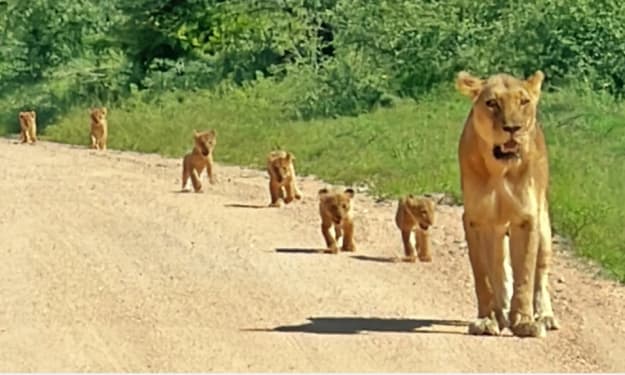
In the heart of the African savannah, life is a constant lesson for young animals. Few scenes are as endearing — or as heartwarming — as tiny lion cubs trying to keep pace with their mother. These little bundles of fur face a world full of challenges, from learning to hunt to avoiding dangers, all while depending on the guidance and protection of their experienced mom. Watching cubs wobble and tumble as they attempt to keep up with their mother reminds us that growing up, even in the wild, is a journey full of struggle, determination, and adorable missteps. The Early Days of Lion Cubs Lion cubs are born blind and helpless, usually in litters of two to six. For the first few weeks, they rely entirely on their mother for warmth, food, and safety. Even after opening their eyes and beginning to explore, the cubs are far from independent. The first months are crucial. Cubs learn social cues, hunting basics, and survival skills simply by watching their mother and the pride. But as anyone who has observed them knows, there’s often a huge gap between observation and action. Tiny cubs often struggle to match their mother’s pace, especially when she moves through long stretches of savannah or leads the family on patrols. A Mother’s Role in the Wild For a lioness, raising cubs is a full-time commitment. She hunts, defends her territory, and teaches her young, all while staying alert to predators such as hyenas, leopards, and even rival lions. The cubs, meanwhile, attempt to mimic her every move — often with clumsy yet charming results. A mother lion’s patience is remarkable; she frequently slows down, nudges them along, or stops to ensure no cub is left behind. These moments, while stressful for the tiny cubs, are vital learning opportunities. Struggling to Keep Up: Why It’s So Hard There are several reasons why tiny lion cubs have trouble keeping pace with their mother: Short Legs, Big Steps: Lion cubs’ legs are tiny and their coordination is limited, making it difficult to cover the same distance as an adult lioness. Curiosity: Cubs are naturally curious. A single butterfly or rustling bush can distract them, leaving mom to pause repeatedly. Energy Levels: Young lions tire quickly. Even with frequent naps, the cubs’ stamina is far lower than their mother’s. Learning Through Play: Play is not just fun; it teaches hunting, balance, and social skills. Running off to pounce on a sibling or chase an insect is all part of their education. Despite these challenges, the cubs’ determination to keep up demonstrates their resilience and growing understanding of the wild world. Lessons in Teamwork and Survival Every cub struggling to keep up is also learning crucial survival skills. The journey across the savannah is more than a test of speed — it’s a lesson in: Coordination: Cubs learn how to move efficiently across different terrains. Patience: They begin to understand the rhythms of adult life and the pace required for survival. Social Skills: Staying with the group teaches cubs how to interact with siblings and the pride, which is essential for their future roles. Observation: By following their mother, cubs study hunting techniques, territorial behavior, and predator awareness. Even the moments when cubs stumble or lag behind are essential for their development. These experiences prepare them for independence, which comes sooner than many might expect. The Cutest Moments in the Wild Anyone who has watched tiny lion cubs knows that their struggles are often irresistibly cute. Video clips from wildlife reserves frequently show cubs toddling along, tumbling over each other, or getting distracted mid-step. Observers often comment that these little stumbles reveal personality, determination, and playfulness, making them one of nature’s most heartwarming spectacles. While their mother is serious and focused, the cubs inject a sense of humor and lightness into life on the savannah. Why This Matters The struggles of lion cubs aren’t just adorable — they’re vital for understanding wildlife behavior. Conservationists and animal behaviorists use these moments to study growth patterns, social structures, and survival strategies in lion populations. These observations also highlight the importance of preserving natural habitats. Cubs must learn in a safe environment to survive; habitat loss, poaching, and climate change make these early struggles even more dangerous. Protecting the African savannah ensures that future generations of lions can experience the same lessons and playful tumbles. The Road to Independence Within a year, these tiny cubs will be more agile, faster, and more confident. By the time they reach two to three years old, males may begin to leave the pride, while females often stay and become caretakers themselves. Every misstep, tumble, and lagging moment is part of the journey toward strength, coordination, and independence. Watching them now gives us a glimpse of the challenges they will overcome, and the survival skills they will carry for life. A Celebration of Motherhood Ultimately, these scenes remind us of the incredible bond between mother and cubs. Her patience, vigilance, and teaching are the foundations of their future. The cubs’ struggles highlight the trials of growing up, while their determination showcases the resilience and beauty of wildlife. For those observing, it’s a powerful lesson in care, guidance, and perseverance, not just in lions but in the natural world as a whole. Final Thoughts Watching tiny lion cubs try to keep up with their mother is both entertaining and enlightening. It’s a story of growth, struggle, and resilience — a reminder that even the fiercest creatures start small, learning step by step. These little lions capture hearts while teaching life lessons: patience, determination, teamwork, and the importance of guidance. As they tumble and waddle across the savannah, they show us that growth is a process, one adorable misstep at a time. For wildlife enthusiasts, animal lovers, and anyone enchanted by nature, these tiny cubs are proof that even in the wild, love, care, and persistence are universal truths.
By Aarif Lashariabout 13 hours ago in Earth



Comments
There are no comments for this story
Be the first to respond and start the conversation.