
When Dads Give Birth: The Remarkable Reproductive Role of the Male Seahorse
In the underwater world of seahorses, it's the fathers who carry the babies — and give birth. Here's how nature flipped the parenting script.

A Quiet Dance Beneath the Waves
Beneath the calm ripples of warm, shallow waters, a unique dance unfolds—a dance of courtship, cooperation, and curiosity. Among coral reefs and seagrass meadows, two seahorses gracefully sway, mirroring each other’s movements in perfect harmony. Their tails entwine for a moment as if acknowledging an agreement. This is not just a performance—this is a prelude to something extraordinary.
In the world of seahorses, nature flips the script of what many perceive as traditional parenting. Here, it’s not the female who carries the offspring. It’s the male.
Turning the Tables on Reproduction
In the animal kingdom, the concept of pregnancy is usually associated with females. But in the case of seahorses (genus Hippocampus), evolution has taken a creative detour. Male seahorses are the ones who become pregnant and give birth—a phenomenon that continues to fascinate biologists and animal lovers alike.
This incredible process starts with the female transferring her eggs into a specialized brood pouch located on the male’s abdomen. It’s not just a shallow cavity—this pouch functions almost like a uterus. Once the eggs are inside, the male releases sperm into the pouch to fertilize them.
From this point on, the male becomes the sole caretaker of the developing embryos. His body provides a controlled environment, regulating temperature, salinity, and even oxygen levels, much like a placenta would in mammals.
A Pregnancy Like No Other
Depending on the species and environmental conditions, the pregnancy can last anywhere from 10 days to 6 weeks. Inside the pouch, the fertilized eggs begin to grow into tiny, curled baby seahorses. Their father nourishes them, protects them, and ensures they have the best chance at survival once born.
When the time comes, the male undergoes muscular contractions to expel the fully developed young from his pouch. It is a remarkable sight—dozens or even hundreds of miniature seahorses burst forth, swimming off into the world. There’s no parental guidance after birth; survival is up to each baby from the moment they emerge.
Despite their father's efforts, most won’t make it to adulthood. Predators, currents, and competition all present threats. But nature plays the numbers game—some species release up to 2,000 babies at once, hoping that a few will make it.
Why Did Nature Choose This Path?
The idea of male pregnancy might seem like a whimsical twist of evolution, but it serves a strategic purpose. By dividing the reproductive duties, seahorses can reproduce more efficiently. While the male is gestating, the female can rest and prepare more eggs, making the species more productive over time.
This system also gives males a more active role in the reproductive process, which is relatively rare in the animal kingdom. It provides both a fascinating case study for evolutionary biologists and a striking reminder that nature doesn't always follow the rules we expect.
A Vulnerable Marvel
Despite their enchanting biology, seahorses face significant threats. Their delicate habitats—mangroves, coral reefs, and seagrass beds—are under pressure from pollution, climate change, and destructive fishing practices. In some places, seahorses are caught for use in traditional medicine or as aquarium pets, further shrinking their numbers in the wild.
Because of their unique reproductive system, the decline of either sex can severely affect population growth. Conservationists argue that protecting these animals is not just about saving a species—it’s about preserving one of nature’s most unusual biological wonders.
A Symbol of Role Reversal
The image of a pregnant male, cradling life in his pouch, invites reflection on the diversity of life on Earth. In the gentle movements of a seahorse father-to-be, we find a quiet challenge to assumptions about parenting and gender roles in nature.
It’s a reminder that biology is not always binary, and that life has evolved in countless astonishing forms to ensure survival. The seahorse doesn’t ask permission to be different—it simply is.
Final Thought
The story of the male seahorse is more than just an oddity—it is a testament to nature’s creativity and adaptability. In a world where survival often depends on cooperation and innovation, this tiny marine creature showcases a role reversal that is both beautiful and efficient. As they float gently in the currents, seahorses remind us that life doesn’t always follow expected patterns, and sometimes, the quietest creatures carry the most remarkable stories.
Hungry for More?
If this glimpse into the reproductive secrets of the seahorse has sparked your curiosity, there's a whole ocean of weird and wonderful animal facts waiting to be explored. From squid with three hearts to beetles that "bleed" as a defense mechanism, nature is bursting with stories that turn ordinary assumptions upside down. Stay tuned for more fascinating journeys into the extraordinary world of animals!
About the Creator
Tidal Barrier to Be 10m Shorter to Save Money
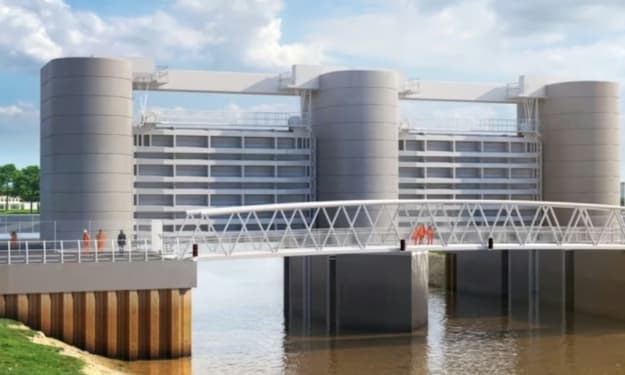
Rethinking Flood Protection in Somerset If you live near the coast, the threat of flooding isn’t just news — it’s a reality you can feel. That’s the situation in Bridgwater, Somerset, a historic market town near the Bristol Channel. For years, plans have been underway to build a tidal barrier to protect homes, businesses, and livelihoods from storm surges. Now, new updates reveal the barrier will be about 10 metres shorter than originally planned, a decision aimed at reducing costs while still keeping the town safe. This announcement has sparked conversations about engineering, budgets, and how communities adapt to climate challenges. Why the Barrier Is Being Shortened The Bridgwater Tidal Barrier was initially designed to be a high-profile flood defence, protecting thousands of properties from tidal surges that travel up the River Parrett. But after a recent design efficiency review, engineers concluded the barrier could be slightly shorter without compromising safety. Reducing the barrier by 10 metres lowers construction complexity, saves money, and reduces long-term maintenance costs. The Environment Agency and local authorities say this approach allows the project to move forward on time and on budget, ensuring the community gets protection sooner rather than later. The Cost Factor Public infrastructure projects like this don’t happen in a vacuum. Rising inflation, global supply chain disruptions, and labor shortages have increased costs for large-scale projects. Officials argue that the revised design is a responsible compromise: it balances cost savings with safety. Somerset Council leaders have welcomed the decision, noting that managing costs wisely helps the project reach completion without compromising protection for residents. Community Voices and Concerns Local engagement has been a key part of the project. Residents have attended consultations and drop-in sessions to see the updated plans and ask questions. Some community members appreciate the cost savings and faster timeline. Others worry whether a shorter barrier will be as effective against future extreme weather events. Questions include: Will the barrier remain strong against increasingly unpredictable storms? Does reducing the height limit future adaptability as climate impacts grow? What effect might it have on local ecosystems and fish habitats? These are valid concerns, reflecting how communities are increasingly involved in climate adaptation decisions. Engineering Flood Defence Today Tidal barriers are not new — Britain has relied on them for decades. London’s Thames Barrier, for instance, has protected the capital since the 1980s. But today, rising sea levels and more frequent storms mean engineers must balance safety, cost, and environmental impact carefully. In Bridgwater, officials say the revised barrier will still protect against 1-in-200-year tidal events. It’s designed to provide robust safety now while remaining adaptable for the future. The Human Side of Flood Protection It’s easy to get lost in numbers and metres, but behind the design decisions are real people. Residents depend on reliable flood protection to feel secure in their homes and communities. For families, businesses, and local services, knowing a barrier is being built — even a slightly shorter one — provides peace of mind. It’s not just a structure; it’s a symbol of resilience and preparedness. Next Steps for the Barrier The Bridgwater project is still under construction, with the revised design undergoing final refinements. Once completed, the tidal barrier will provide long-term protection for thousands of properties and critical infrastructure in Somerset. Officials emphasize that the shortened design does not compromise safety. If anything, staying on budget ensures the project is completed faster, meaning protection arrives sooner for the community. A Lesson in Climate Adaptation The story of the Bridgwater Tidal Barrier is more than engineering or economics. It’s about how communities respond to climate risks and how governments make tough choices balancing safety, cost, and sustainability. The barrier being 10 metres shorter may seem small on paper, but it reflects a larger truth: infrastructure planning today is as much about community engagement, adaptability, and long-term resilience as it is about concrete and steel. By keeping people involved and making informed, cost-effective decisions, Somerset shows how towns can adapt to climate change without sacrificing safety. Conclusion The Bridgwater Tidal Barrier demonstrates that infrastructure projects in the 21st century must adapt to multiple pressures: climate change, financial constraints, and community expectations. While the barrier is slightly shorter than originally planned, it remains a critical line of defence against flooding. More importantly, it highlights the importance of public involvement, transparency, and strategic planning in building a resilient community. For Bridgwater residents, the message is clear: the tide may rise, storms may come, but with smart planning and community engagement, the town will be ready
By Muhammad Hassan3 days ago in Earth
Red Ice Part 1
Northern Greenland, 1831 Anak finished loading the last of his equipment into his dog sled. All of his dogs were barking loudly with excitement. They knew what time it was, they knew what was about to happen. It's the middle of March and ice covers the entire region. Around this time of year, Anak and the other hunters head out for their seasonal walrus hunt. He checked his sled one final time to ensure he had everything they needed. Then he went to check on the other hunters to see of they were ready.
By Stonecreekabout 20 hours ago in Earth



Comments
There are no comments for this story
Be the first to respond and start the conversation.