
What Would Happen if the Earth Suddenly Stopped Spinning?
The Catastrophic Consequences of a Halted Planet

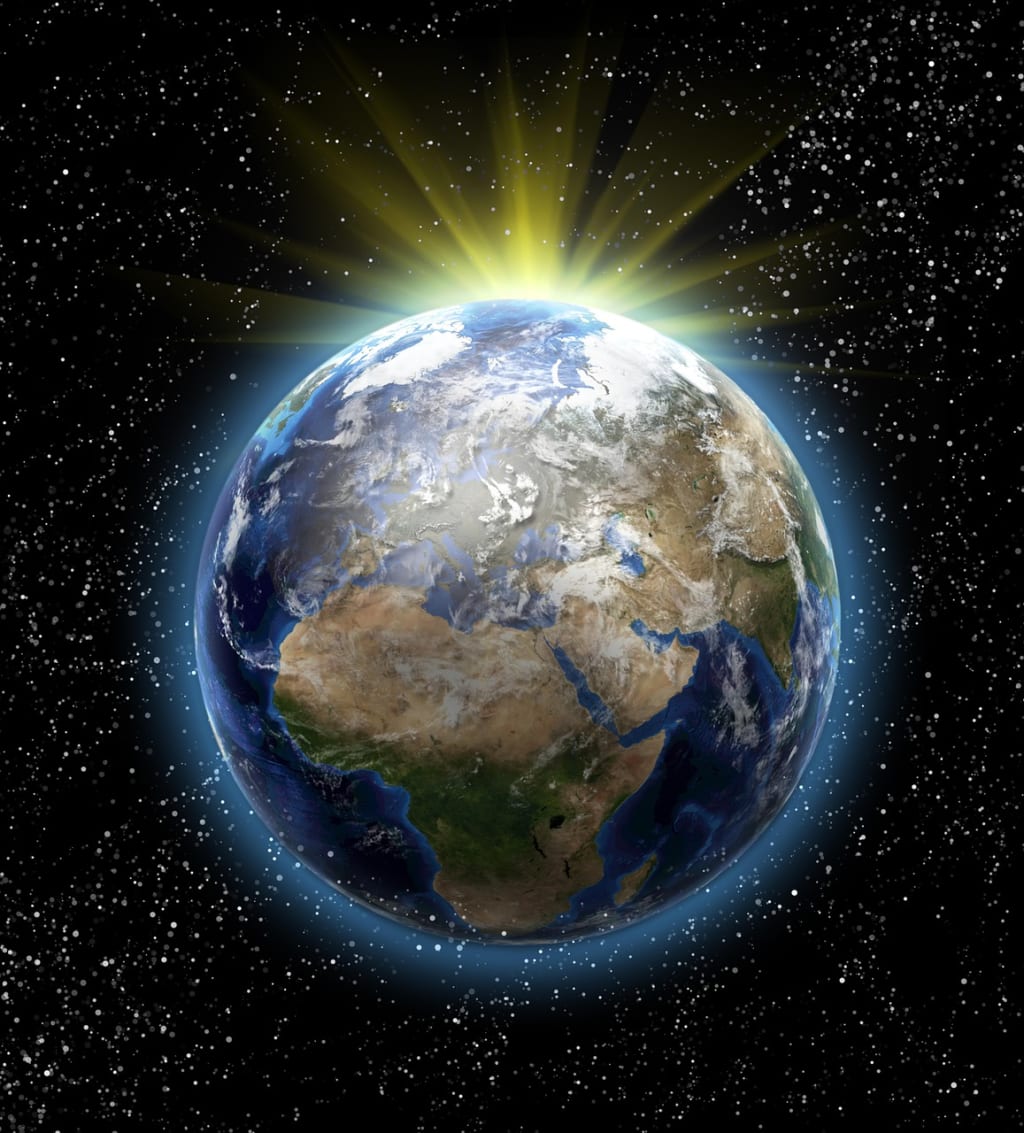
Imagine a world where the Earth suddenly comes to a stop. No gradual deceleration, no warning – just an abrupt cessation of its spin. It may sound like a sci-fi nightmare, but the consequences would be far from fictional. Everything we know about our planet's weather, climate, and even life itself would be turned upside down. Let's explore what would happen, from the immediate effects to the long-term devastation.
The Immediate Impact: Chaos and Destruction
At the very moment the Earth stops spinning, the effects would be immediate and catastrophic. If you were at the equator, you'd experience the sudden deceleration in the most violent way possible. Earth’s rotation at the equator is roughly 1,000 miles per hour. So, when the planet halts, you – along with any objects not securely anchored – would continue traveling at that speed. In an instant, you'd be hurtled across the planet, potentially miles away from your original location, while a massive amount of debris – cars, buildings, animals – would be sent flying across the landscape. You would be spared from being launched into space due to Earth's gravity, but surviving this initial catastrophe would be a miracle in itself.
Interestingly, the situation would be different if you were located at one of the poles. At the North or South Pole, you would experience no immediate movement. This is because at these points, Earth’s rotational velocity is effectively zero. In a sense, it’s like standing on the tip of a spinning top – you don’t feel the spin. So, if you were at the poles, you wouldn’t even notice Earth had stopped at first.
However, the situation would quickly escalate from bad to worse.
The Atmospheric Chaos: Winds, Storms, and Destruction
When the Earth stops spinning, its atmosphere would continue to move. This would create an unimaginable windstorm, with air speeds of up to 1,000 miles per hour, especially near the equator. The winds would be devastating, capable of destroying almost anything in their path, far stronger than any hurricane in recorded history.
The speed of the wind would gradually decrease as you move toward the poles, but it would still be lethal. The strongest winds recorded on Earth today, such as those from tornadoes or hurricanes, barely reach speeds of 250 miles per hour. So, imagine a windstorm that is four times stronger, ripping apart buildings and landscapes.
Beyond just the wind, the atmospheric disturbances would lead to an overall shift in the planet's weather patterns. The Coriolis effect, which is caused by Earth’s rotation, drives many of the Earth’s natural weather systems. Without the planet’s spin, hurricanes, cyclones, and other weather phenomena would cease to exist. However, this would not be a blessing, as the loss of these systems would lead to unpredictable and erratic global weather patterns.
The Oceanic Tsunamis: Flooding the Land
Perhaps the most dramatic and terrifying result of the Earth stopping is the movement of the oceans. Right now, the Earth's rotation causes water to bulge at the equator due to centrifugal force. If the Earth stopped spinning, the water would continue moving due to inertia, resulting in colossal tsunamis and waves hundreds of feet high sweeping across the continents.
For a brief moment, it would be as though Earth had transformed into a water world. Coastal cities would be submerged, and vast stretches of land would become part of the ocean. The seas would shift, with large volumes of water rushing toward the poles, submerging them in the process.
Earthquake and Volcano Apocalypse
While the oceans are rearranging, the Earth's tectonic plates would also be in motion. These plates, which currently float atop the Earth's semi-fluid mantle, would continue to move at their current speeds after the Earth's spin halts. This would cause massive earthquakes, and in some places, tectonic plates would collide with such force that volcanic eruptions would occur, spewing molten lava across the globe.
The resulting destruction would be global, with vast parts of the Earth’s surface torn apart by the upheaval. Entire continents could experience catastrophic shifts as tectonic activity continues unchecked. The planet’s crust would crack, releasing volcanic ash and gases into the atmosphere, further darkening the sky and causing temperatures to plummet in certain regions.
Long-Term Effects: A Year-Long Day
While the immediate destruction would be enough to obliterate much of life on Earth, the aftermath would bring its own set of challenges. The most significant change would be the length of the day. Without the Earth spinning, day and night would no longer alternate every 24 hours. Instead, the day would last an entire year – six months of daylight followed by six months of darkness.
In the areas exposed to the unrelenting sunlight for six months, temperatures would soar to extreme levels, likely reaching over 212 degrees Fahrenheit (100 degrees Celsius), hot enough to melt anything on the surface. The heat would cause the oceans to evaporate, and the land would become a barren desert, scorched by relentless rays. On the opposite side of the planet, where it would be dark for six months, temperatures would plummet, causing freezing conditions that could result in widespread ice storms and snow accumulation.
The Collapse of Life
Life on Earth evolved in a 24-hour day-night cycle, and such a drastic change would have devastating effects on the planet's biology. Circadian rhythms – the natural cycles that govern everything from sleep to hormone production – would be thrown into chaos. Most living creatures would struggle to adapt to this new reality, and many would die off in the aftermath of the immediate catastrophes.
However, not all hope would be lost. Certain species that already survive in extreme conditions, such as polar organisms like penguins or deep-sea creatures living near hydrothermal vents, might stand a better chance of surviving. These extremophiles, which thrive in environments of perpetual darkness or high heat, could continue to persist. But without Earth’s rotation, the core of the planet – which drives the magnetic field protecting us from solar radiation – would eventually stop. Without this shield, harmful solar radiation would begin bombarding the surface, accelerating the extinction of life.
The Future: Will Earth Ever Stop Spinning?
Is it even possible for the Earth to stop spinning? While the idea seems far-fetched, there are scenarios where it could happen. One possibility is if a massive object, such as a planet or asteroid, collided with Earth, imparting enough force to halt its rotation. Such an event would be so catastrophic that the details of what follows would pale in comparison.
The Earth is already slowly losing its rotational momentum due to the gravitational pull of the Moon. This deceleration occurs at a rate of about 1.4 milliseconds every 100 years, meaning that, over millions of years, the Earth’s rotation will gradually slow down. However, we’re talking about a timescale of hundreds of millions of years before any significant changes in the length of the day occur. The more immediate threat to life on Earth is the eventual fate of the Sun. In about 5 billion years, the Sun will expand into a red giant, likely engulfing the Earth and rendering the planet uninhabitable long before any changes to its rotation would have a meaningful impact.
Conclusion: Surviving a Stopped Earth
While it’s an unlikely event, the consequences of the Earth suddenly halting its spin are profound and catastrophic. Immediate chaos, extreme weather, massive oceanic shifts, and tectonic upheavals would reshape the planet in ways we cannot fully predict. Long-term survival would be nearly impossible for most life forms due to the dramatic changes in temperature, radiation, and the collapse of ecosystems. Yet, even in such dire circumstances, life might find a way to adapt—albeit in ways we can barely imagine.
About the Creator
Lisa Ann Bastiaan
Fueled by curiosity and a passion for truth, I delve into mysteries, science, and human psychology. Through storytelling, I uncover the unknown, spark discovery, and ignite meaningful conversations about the fascinating.
Keep reading
More stories from Lisa Ann Bastiaan and writers in Earth and other communities.
Water's Wild Side: Unveiling the World's Strangest Aquatic Phenomena
Water, the lifeblood of our planet, often presents itself as a calm and predictable substance. Yet, beneath its familiar surface lies a world of bizarre and bewildering phenomena. From trees that "leak" to oceans that glow in the dark, water can defy expectations and astound us with its strange behavior. Prepare to be amazed as we dive into some of the weirdest, most wonderful, and occasionally dangerous water phenomena on Earth.
By Lisa Ann Bastiaan12 months ago in Earth
Philippines Carbon Black Market: Industrial Demand, Manufacturing Activity & Environmental Considerations
Philippines Carbon Black Market Overview The Philippines carbon black market is developing steadily as industrial production, automotive demand and manufacturing activity continue to expand. The Philippines carbon black market size reached USD 80.55 Million in 2024. Looking forward, the market is projected to reach USD 109.73 Million by 2033, exhibiting a growth rate (CAGR) of 3.14% during 2025-2033. This growth reflects consistent demand from downstream industries rather than rapid structural change.
By Manisha Dixita day ago in Earth
"NASA satellites confirm that China’s Great Green Wall is effectively slowing desert expansion and reshaping entire regions
NASA satellite data has confirmed what scientists, policymakers, and local communities in China have hoped for decades: the Great Green Wall is working. Designed to slow the relentless expansion of deserts across northern China, this ambitious ecological project is not only reducing desertification but also reshaping entire regions—environmentally, economically, and socially. Often compared to Africa’s Great Green Wall, China’s version is one of the largest environmental engineering projects in human history. Officially known as the Three-North Shelter Forest Program, it stretches across northern, northeastern, and northwestern China, covering an area larger than many countries. Launched in 1978, the project aims to combat desert expansion, reduce sandstorms, protect farmland, and stabilize local climates through large-scale tree planting and vegetation restoration. For years, critics questioned whether planting trees in arid and semi-arid regions was sustainable. Some argued that trees would consume scarce groundwater, while others doubted whether satellite images could capture meaningful ecological change. Now, decades later, NASA’s satellite observations provide compelling evidence that the Great Green Wall is having a measurable and positive impact. According to satellite data, vegetation cover across northern China has increased significantly. Areas once dominated by shifting sand dunes now show stable plant growth, reduced soil erosion, and improved land productivity. These changes are not isolated; they span vast regions, indicating that the project is influencing ecosystems on a continental scale. Desert expansion, once advancing at alarming rates, has slowed dramatically in several high-risk zones. One of the most visible benefits has been the reduction in sandstorms. Cities like Beijing, which once endured frequent and severe dust storms originating from nearby deserts, have seen noticeable improvements in air quality. NASA imagery reveals that wind-blown dust has decreased as vegetation acts as a natural barrier, anchoring soil and reducing airborne particles. This has direct public health benefits, lowering respiratory illnesses and improving overall quality of life for millions of residents. Beyond environmental gains, the Great Green Wall is reshaping regional economies. Stabilized land allows farmers to reclaim fields once lost to encroaching deserts. In some areas, agroforestry—combining trees with crops—has created new income streams while maintaining ecological balance. Satellite data shows that these mixed-use landscapes are more resilient to drought and climate extremes than monoculture farming systems. The project has also influenced local climate patterns. Increased vegetation helps regulate surface temperatures and moisture levels. NASA observations indicate slight increases in local rainfall and reductions in surface heat in reforested zones. While these changes may seem modest, over large areas they contribute to more stable weather patterns and reduced vulnerability to climate shocks. However, the success of the Great Green Wall is not uniform. Satellite analysis also reveals areas where tree survival rates are low or where non-native species struggle to adapt. In response, China has adjusted its strategy, shifting from mass tree planting to ecosystem-based restoration. This includes planting native grasses and shrubs, restoring wetlands, and allowing natural regeneration where possible. The evolving approach reflects lessons learned from decades of experimentation. Another key factor behind the project’s effectiveness is long-term commitment. Unlike short-term environmental campaigns, the Great Green Wall spans generations. NASA’s ability to track changes over decades has been crucial in demonstrating progress that would be invisible on shorter timelines. This long-view perspective underscores an important lesson for global climate efforts: meaningful ecological recovery takes time, patience, and sustained investment. Internationally, China’s experience is drawing attention. Countries facing desertification—from parts of Africa to the Middle East and Central Asia—are studying the Great Green Wall as a model. NASA’s confirmation adds scientific credibility, showing that large-scale land restoration can work when supported by data, adaptive management, and local participation. Still, challenges remain. Climate change continues to intensify droughts, heatwaves, and extreme weather events, threatening fragile restored ecosystems. Experts caution that the Great Green Wall is not a permanent solution but a dynamic system that requires continuous monitoring, maintenance, and adaptation. Satellite technology will remain essential in identifying stress points and guiding future interventions. In the end, NASA’s findings do more than validate a single project—they reshape how we think about humanity’s relationship with nature. The Great Green Wall demonstrates that environmental degradation is not always irreversible. With science, long-term planning, and political will, even vast deserts can be slowed, reshaped, and partially healed. As the world searches for solutions to climate change and land degradation, China’s Great Green Wall stands as a powerful example: proof that large-scale environmental action, guided by data from space, can transform landscapes on Earth.
By Fiaz Ahmed 7 days ago in Earth
Smart phones, Humans and Aliens.
WARNING. I will be tapping into one of your favorite creative tensions: The absurdity of humans worshipping their glowing rectangles as if they were tiny oracles. There’s something deliciously poetic about that contradiction, and it lends itself beautifully to an instructive proviso.
By Novel Allen7 days ago in Poets


Comments
There are no comments for this story
Be the first to respond and start the conversation.