
What Is TDU for Oil Sludge Treatment
A Comprehensive Overview
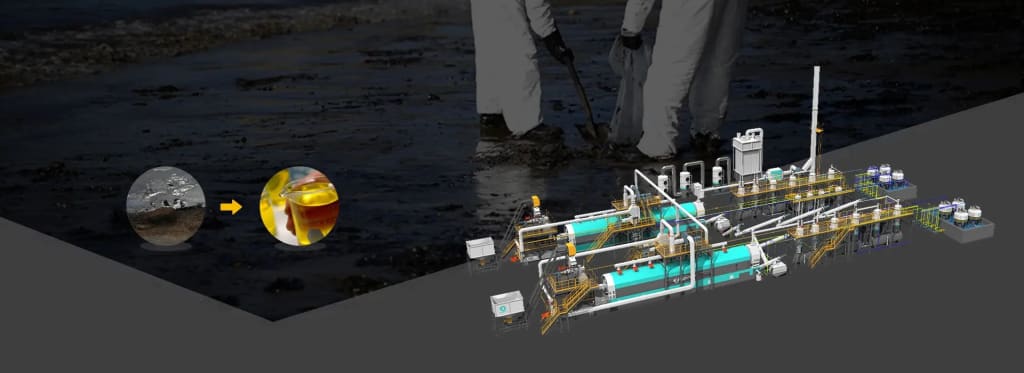
In the oil and gas industry, oil sludge is a common by - product that poses significant environmental and economic challenges. Oil sludge contains a complex mixture of hydrocarbons, heavy metals, and other contaminants. If not properly managed, it can contaminate soil, water, and air, and also lead to a loss of valuable resources. Thermal Desorption Unit (TDU) has emerged as an effective solution for treating oil sludge, offering a way to recycle and detoxify this hazardous waste.
What is a Thermal Desorption Unit (TDU)?
A thermal desorption unit is a specialized piece of equipment designed to remove contaminants from materials such as oil sludge through the application of heat. It operates based on the principle that different substances have different boiling points. By heating the oil sludge to a specific temperature range, the hydrocarbons and other volatile contaminants in the sludge can be vaporized, leaving behind a relatively clean solid residue.
Working Principle of TDU for Oil Sludge Treatment
1. Feeding Stage
The first step in the TDU process is the feeding of oil sludge into the system. The oil sludge, which can vary in consistency from a thick slurry to a semi - solid mass, is typically transported using conveyors, screw feeders, or bucket elevators. The type of feeding mechanism depends on the physical properties of the oil sludge. For example, if the sludge has a high moisture content and is more fluid - like, a bucket elevator might be suitable. On the other hand, for drier, more earthy - textured oil sludge, a screw conveyor could be used. The feeding system is designed to ensure a continuous and controlled flow of the sludge into the desorption chamber.
2. Heating and Desorption
The desorption chamber is the core of the TDU. Here, the oil sludge is heated to a temperature typically in the range of 200 - 600 °C, depending on the composition of the sludge and the contaminants targeted for removal. In most TDUs, the heating is indirect. For instance, in a rotary kiln - type TDU, the outer shell of the kiln is heated, and the heat is transferred to the oil sludge inside through conduction as the kiln rotates. This slow and uniform heating helps to vaporize the hydrocarbons and other volatile contaminants without causing thermal degradation of the non - volatile components in the sludge. As the temperature rises, the contaminants with lower boiling points start to turn into vapor, separating from the solid matrix of the oil sludge.
3. Off - gas Treatment
As the contaminants are vaporized, they form an off - gas stream. This off - gas contains a mixture of volatile organic compounds (VOCs), water vapor, and sometimes other pollutants. To prevent these harmful substances from being released into the environment, an off - gas treatment system is an essential part of the TDU. The off - gas treatment system usually consists of several components. Condensers are used to cool the off - gas, causing the VOCs and water vapor to condense. The condensed liquid can be further processed to separate the recovered hydrocarbons from water. Scrubbers may also be employed to remove any remaining pollutants, such as acidic gases or particulate matter, by passing the off - gas through a liquid solution that can absorb or react with these contaminants. In some cases, filters are used to capture fine particles in the off - gas.
4. Residue Management
After the desorption process, the solid residue left in the desorption chamber is relatively clean compared to the original oil sludge. The residue may still contain some non - volatile components and a small amount of residual hydrocarbons. However, its level of contamination is significantly reduced. The residue is discharged from the desorption chamber and can be further processed. In many cases, it can be used in applications such as construction materials. For example, it can be mixed with other materials to make bricks or used as a component in road - building materials, provided that it meets the relevant quality and environmental standards. In some situations, the residue may also be landfilled, but this is usually a last - resort option after ensuring that it poses no significant environmental risks.
Applications of TDU in Oil Sludge Treatment
1. Petrochemical Industry
In the petrochemical industry, oil sludge is generated from various sources such as the bottom of grease traps, flotation tank scum, and excess activated sludge. TDUs are used to treat this sludge, recovering valuable hydrocarbons that can be reused in the production process or sold as fuel. The treated residue can be safely disposed of or repurposed, reducing the environmental impact of petrochemical operations.
2. Iron Smelting Industry
The iron smelting industry often produces oil - contaminated soil. TDUs can be used to clean this soil by removing the hydrocarbon contaminants. The recovered hydrocarbons can be processed and used as an energy source, while the cleaned soil can be either returned to the site or used for other purposes, minimizing the environmental footprint of the iron smelting activities.
3. Ship Repair Factories and Shipyards
During ship repair and manufacturing, heavy oil is used, which can lead to the contamination of coastlines, river margins, and coastal sludge. TDUs play a crucial role in treating this oil - contaminated sludge. The hydrocarbons recovered from the sludge can be refined and reused, and the treated sludge can be disposed of in an environmentally friendly manner, helping to protect the marine environment.
Advantages of Using TDU for Oil Sludge Treatment
1. Resource Recovery
One of the major advantages of TDUs is the ability to recover valuable hydrocarbons from oil sludge. These hydrocarbons can be sold as fuel or used as feedstock in various industries, such as cement factories, glass factories, and power plants. This not only reduces the need for virgin fossil fuels but also provides an additional revenue stream for the operators.
2. Waste Reduction
TDUs significantly reduce the volume of waste that needs to be disposed of. By vaporizing the contaminants, the solid residue left behind is much smaller in volume compared to the original oil sludge. This reduces the costs associated with waste disposal, such as landfill fees, and also minimizes the environmental impact of waste management.
3. Environmental Compliance
TDUs are designed to meet strict environmental regulations. The off - gas treatment system ensures that harmful emissions are minimized, and the treated residue meets the required environmental standards. This helps companies in the oil and gas and related industries to operate in an environmentally responsible manner and avoid potential fines and legal issues.
4. Versatility
TDUs can handle a wide range of oil sludge types, regardless of their origin or composition. Whether the sludge is from oil wells, refineries, or other sources, the TDU can be adjusted to effectively treat it. This makes TDUs a versatile solution for different industries facing oil sludge management problems.


Comments
There are no comments for this story
Be the first to respond and start the conversation.