
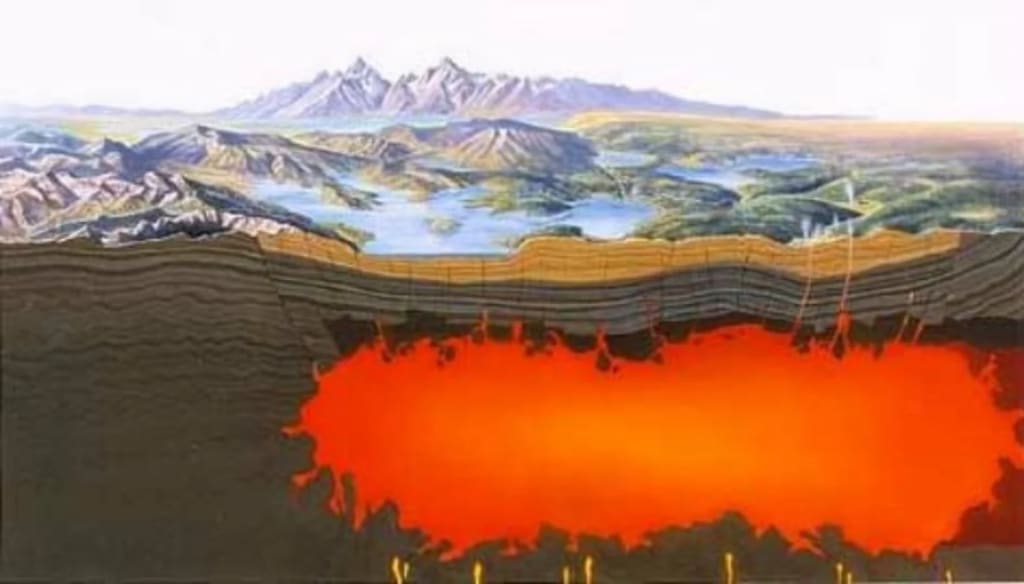
The Yellowstone volcano, located in Wyoming, United States, is known as one of the world's largest and most dangerous volcanoes. With its potential to unleash a catastrophic eruption, often referred to as a supervolcanic eruption, it has garnered attention and raised concerns about its potential impact on the surrounding areas and the world. While the chances of such an eruption occurring in the near future are extremely low, let's explore what would happen if the Yellowstone volcano were to erupt tomorrow.
Yellowstone's distinction as a supervolcano stems from its massive size and the magnitude of its potential explosion. Unlike typical volcanic eruptions that involve the spewing of hot molten lava, a supervolcano eruption would release an enormous amount of airborne ash particles. These tiny scorching fragments of jagged rock would blanket the landscape, causing widespread devastation.
If Yellowstone were to erupt, the immediate impact would be felt within a radius of approximately 1,000 kilometers (620 miles). Tens of millions of people in the United States and Canada residing within this range would face dire consequences. Breathing in the ash particles would be inevitable, and the fine particles would form a cement-like mixture in the lungs, leading to suffocation. Additionally, the weight of the ash would pose a significant threat to buildings, as just 30 centimeters (12 inches) of ash accumulation can cause roofs to collapse.
The effects of the eruption would extend far beyond the immediate vicinity. Even areas outside the 1,000-kilometer range, such as the east coast of the United States, would experience the fallout. A thin layer of ash, approximately 1 centimeter (0.4 inches) in depth, would cover these regions, posing a severe risk to human health. Europe would also see some ash deposition, albeit in lighter amounts.

The global impact of a Yellowstone eruption would be substantial, primarily due to the ash particles lingering in the atmosphere. These particles would block out the Sun's rays, resulting in a significant drop in global temperatures. Experts estimate that the global temperature would decrease by 10 degrees Celsius (18 degrees Fahrenheit) for a prolonged period, possibly lasting up to a decade. Such a temperature drop would bring about profound weather changes and impact ecosystems worldwide.
The consequences of the eruption wouldn't be limited to temperature changes. The ash fallout would adversely affect agriculture, posing a threat to crops and livestock. It would also impact water supplies, contaminating lakes, rivers, and other freshwater sources. The disruption caused by the eruption would have far-reaching implications for the Western world, affecting various aspects of life and infrastructure.
While the immediate aftermath of the eruption would be devastating, the long-term consequences would also reshape the world. Survivors would face the challenges of living in a colder, harsher environment with altered weather patterns and reduced sunlight. The disruption to ecosystems would impact wildlife and vegetation, leading to significant changes in biodiversity.
Despite the alarming scenario painted by a Yellowstone eruption, it's essential to note that the likelihood of such an event occurring in our lifetime is extremely low. The previous major eruption occurred approximately 600,000 years ago, and since then, the volcano has experienced smaller lava flow eruptions without causing casualties. The more plausible eruption scenarios involve hydrothermal eruptions, primarily releasing steam and rocks, which, while still dangerous, would not pose the same level of threat as a supervolcanic eruption.
In conclusion, a supervolcanic eruption at the Yellowstone volcano would have catastrophic consequences for the immediate vicinity and significant global impacts. The release of airborne ash particles, the collapse of structures under the weight of ash, and the resulting temperature drop would reshape the world for years to come. However, it is crucial to remember that the probability of such an event occurring in the near future is incredibly low, allowing us to take comfort in
About the Creator
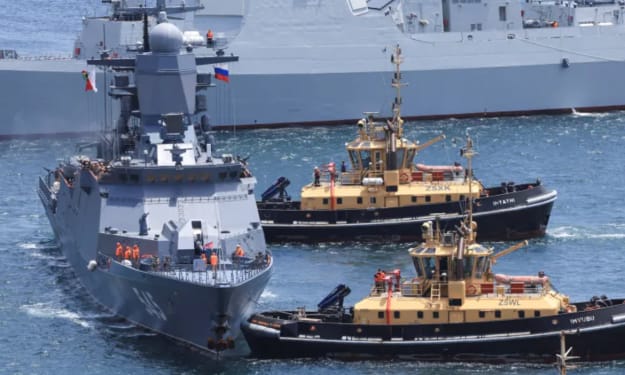
BRICS Wargames: Why They Matter — And Why India Chose to Sit Out
BRICS — the economic and political bloc comprising Brazil, Russia, India, China, and South Africa — has long been seen as a counterweight to Western-dominated global institutions. Over the years, it has expanded its influence in finance, trade, and diplomacy. Yet, in recent times, BRICS has begun exploring another domain that grabs headlines and sparks speculation: military cooperation, including large-scale wargames. These exercises are designed to simulate joint operations, test interoperability, and send a signal of strength. For members like Russia and China, wargames serve as both a show of force and a tool to deepen military collaboration within the bloc. However, India’s decision to opt out of recent BRICS wargames has raised questions: why does this matter, and why is India taking a different path from its BRICS partners? The Rise of BRICS Military Exercises Historically, BRICS has been portrayed as primarily economic, focused on initiatives like the New Development Bank (NDB) and trade agreements aimed at reducing Western dominance. But recent years have seen an evolution. Military drills among BRICS members are increasingly prominent, especially in the context of global tension and regional conflicts. These wargames are about more than just tactical drills. They serve multiple purposes: Strategic signaling: By conducting joint exercises, BRICS countries demonstrate unity and military capability to the rest of the world. Operational readiness: Countries test their ability to coordinate in complex scenarios, from humanitarian missions to potential combat operations. Diplomatic leverage: The exercises send subtle messages to other global powers, indicating that BRICS members can collaborate beyond economic forums. For nations like Russia, recently facing sanctions and international scrutiny, these exercises are particularly important. They showcase the ability to maintain partnerships and project power despite global isolation. For China, it is a way to cement strategic influence in Asia and beyond. Why BRICS Wargames Matter Globally The significance of these exercises extends beyond the bloc itself. Analysts note several key implications: Challenge to NATO and U.S. influence: BRICS wargames signal that alternative power centers exist outside Western-led military alliances. Regional security dynamics: Countries bordering BRICS members, particularly in South Asia, Africa, and Latin America, must monitor these developments carefully. Economic-military linkages: Military coordination among major emerging economies could shape security considerations in trade corridors, energy supply routes, and resource-rich regions. In essence, BRICS wargames are not just about soldiers and tanks, but about the broader geopolitical landscape: signaling, strategy, and shaping perceptions of influence. India’s Calculated Decision to Opt Out While Russia, China, Brazil, and South Africa have shown interest in participating actively, India has strategically chosen to abstain from the most recent wargames. This decision may appear surprising, given India’s economic and political stake in BRICS, but several factors explain it. Geopolitical balancing: India maintains complex relations with both China and Russia. While it has defense and historical ties with Russia, its relationship with China has grown tense due to border disputes and regional competition. Joining a wargame with China could be politically and militarily sensitive. Alignment with Western partnerships: India has strengthened ties with Western-led coalitions, including the Quad (U.S., Japan, Australia, India). Participating in BRICS military drills could conflict with these alliances, potentially sending mixed signals. Strategic autonomy: India has long emphasized a policy of strategic autonomy — making decisions based on national interest rather than bloc pressure. Opting out allows India to maintain flexibility in foreign policy and avoid entanglement in exercises that may not align with its regional objectives. Domestic perception: Indian public opinion and political narratives favor cautious engagement with China and Russia on military matters. Skipping the wargames minimizes domestic criticism of appearing too closely aligned with either of the more assertive BRICS powers. What India Gains by Sitting Out Choosing not to participate does not mean India is disengaged from BRICS. Economically and diplomatically, it remains a key player in the bloc. By skipping the wargames, India can: Maintain regional credibility in South Asia while avoiding the perception of aligning militarily with China. Signal strategic independence, reinforcing its image as a nation that prioritizes national security over bloc politics. Focus on bilateral and multilateral exercises elsewhere, such as those with the U.S., Japan, and Australia, which are more aligned with India’s current security priorities. In short, opting out allows India to navigate the delicate balance between its BRICS commitments and broader global strategic interests. Implications for BRICS and Global Security India’s abstention also reflects broader trends within BRICS: the bloc is not monolithic. While economic cooperation is often strong, military integration faces political and strategic limits. Differing national interests, historical rivalries, and regional tensions prevent uniform alignment. For global observers, this is crucial. It shows that while BRICS wargames are important, they are not necessarily indicative of a fully unified military bloc. The exercises are as much about optics as operations, and India’s absence underscores the challenges of aligning countries with divergent security priorities. Conclusion BRICS wargames matter because they are a window into the bloc’s evolving strategic ambitions. They signal power, test cooperation, and demonstrate emerging global influence. Yet India’s decision to opt out highlights that even within this growing coalition, national interests remain paramount. For India, the choice reflects a calculated approach: engage where it benefits national interest, avoid where risks outweigh gains, and maintain strategic flexibility. For the rest of the world, it is a reminder that BRICS, while increasingly important, is not a military monolith. Ultimately, BRICS wargames are as much about geopolitics and signaling as they are about military maneuvers — and India’s careful stance illustrates how emerging powers navigate this complex global chessboard.Start writing...
By Muhammad Hassan7 days ago in Earth
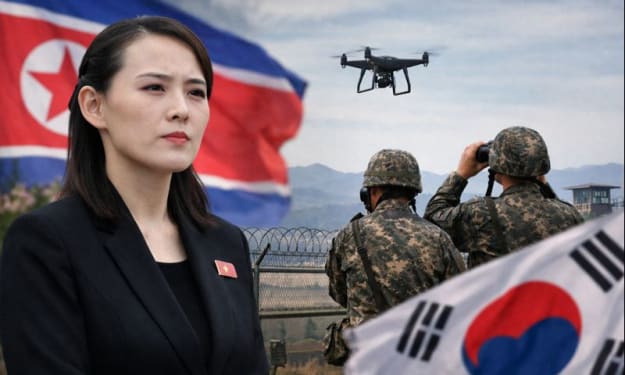
Tensions in the Sky: North Korea Calls on South Korea to Probe Drone Incidents
Tensions between North and South Korea have once again made international headlines after North Korea accused its southern neighbor of sending drones into its airspace. At the center of the issue is Kim Yo Jong, the influential sister of North Korean leader Kim Jong Un, who has urged South Korea to investigate the alleged drone incidents and provide a clear explanation. While drones may seem small, the political impact of this dispute is anything but minor.
By dua fatima8 days ago in Earth


Comments
There are no comments for this story
Be the first to respond and start the conversation.