
What if the Worst Asteroids From the Past Hit Earth Tomorrow?
Well let's find out..
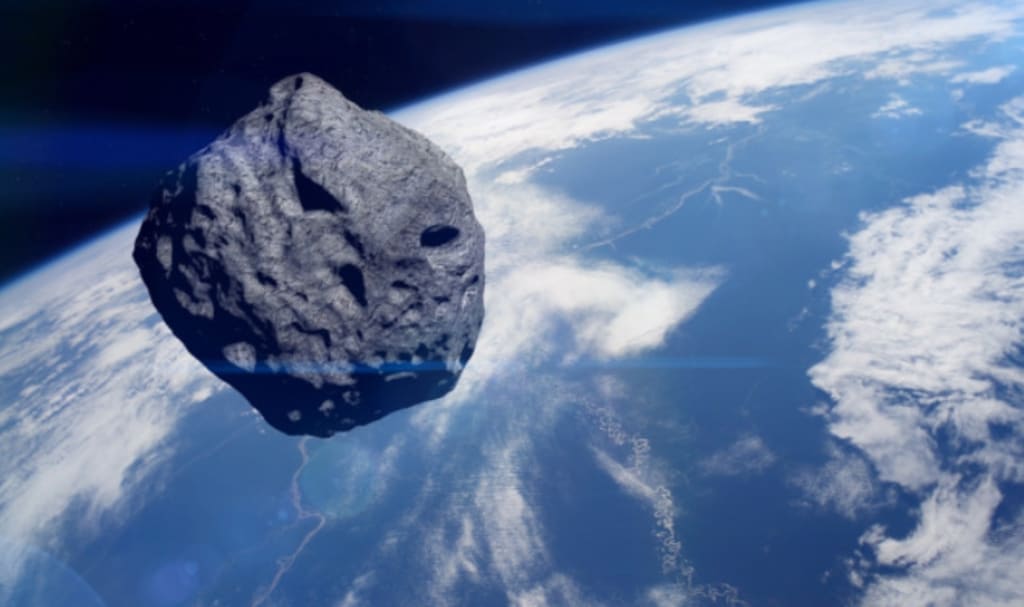
Have you ever wondered what would happen if a massive asteroid collided with Earth? While it might sound like a scenario straight out of a science fiction movie, the potential consequences are something that scientists take seriously. Let's take a moment to imagine a situation where the worst happens – an enormous asteroid striking our planet tomorrow. Prepare yourself for a journey into a world of potential catastrophe and devastation.
First and foremost, the size of the asteroid plays a crucial role in determining the magnitude of the impact. For smaller asteroids, around 25 meters (82 feet) in diameter, the outcome might resemble a powerful explosion. However, we're here to talk about the big ones, the kilometer-wide (0.62 miles) space rocks. If an asteroid of this colossal size were to collide with Earth, it would release an unimaginable amount of energy upon impact – equivalent to billions of nuclear bombs detonating all at once.
Now, let's delve into the immediate aftermath. The collision of a massive asteroid with Earth would create a crater of staggering proportions, likely spanning a diameter of around 10 to 20 kilometers (6 to 12 miles) and penetrating the surface by several kilometers. The impact's shockwaves would ripple through the ground, leading to widespread destruction. Think massive earthquakes, tsunamis that could reach unimaginable heights, and landslides reshaping entire landscapes. The sky would fill with debris, dust, and gases, forming a thick veil that would block out sunlight for weeks, if not months. This would give rise to a phenomenon known as a "nuclear winter."
Now, picture an asteroid plummeting into one of our oceans. This situation introduces an entirely new level of chaos. The impact would generate colossal tsunamis, unleashing waves that could soar to hundreds of meters in height, mercilessly engulfing coastlines and everything in their path. Coastal cities would be decimated, and the destruction could extend far beyond the immediate impact zone.
Yet, the turmoil doesn't end there. Remember the debris and dust that the impact hurls into the atmosphere? These particles would circulate in the upper layers, causing sunlight to scatter away from Earth's surface. The result? A dramatic drop in temperatures globally. Agricultural systems would falter, leading to widespread famine. Plants, struggling to perform photosynthesis due to reduced sunlight, would impact the entire food chain. This would mark a radical shift in the world as we know it.
But the ominous conditions could give birth to a "volcanic winter." The disruption in Earth's climate might rouse dormant volcanoes from their slumber, spewing forth ash and gases that would further contribute to the darkened skies and the overall dire situation.
As the days turned into weeks and then months, survival would become an immense challenge. Access to clean water and food would become scarce, potentially leading to conflicts over dwindling resources. Communication and transportation networks would crumble, hindering the efforts to provide aid to affected areas. The global landscape would descend into chaos, with governments struggling to maintain order and provide assistance to their citizens.
And the long-term consequences are just as daunting. A sufficiently impactful asteroid could potentially alter Earth's orbit or tilt its axis, setting the stage for even more dramatic shifts in climate and weather patterns. The recovery process would be gradual, marked by years, if not decades, of painstaking efforts.
Fortunately, scientists are actively monitoring the skies for potential asteroid threats. While the probability of a large asteroid directly impacting Earth remains relatively low, the possibility still looms. That's why experts are dedicatedly working on strategies to either deflect or mitigate the effects of such potential events. And they're not tackling this challenge alone – international collaboration is paramount in addressing a risk that spans across the globe.
So, in the grand scheme of things, if a worst-case scenario unfolds and an immense asteroid collides with Earth tomorrow, the aftermath would be nothing short of catastrophic. It serves as a stark reminder of the delicate nature of our planet and underscores the significance of ongoing endeavors to safeguard against potential cosmic disasters.
Stay curious, stay informed, and always remember that throughout history, humanity has shown its remarkable resilience in the face of monumental challenges – even when those challenges seem as vast and astronomical as the space itself.
About the Creator
Neutraceutical Packaging Market Size and Forecast 2025–2033
Neutraceutical Packaging Market at a Glance The Neutraceutical Packaging Market is projected to expand from US$ 4.92 billion in 2024 to US$ 7.63 billion by 2033, growing at a CAGR of 4.99% from 2025 to 2033. This steady growth reflects the accelerating global demand for dietary supplements, functional foods, herbal products, and wellness beverages. Rising health awareness, aging populations, sustainability expectations, the rapid growth of e-commerce, and evolving regulatory frameworks are reshaping how nutraceutical products are packaged, protected, and presented.
By jaiklin Fanandish2 days ago in Earth
Man Shot Dead by Police After Aiming Bow and Arrow at Officers
A man has been shot dead by police after allegedly aiming a bow and arrow at officers, authorities have confirmed. The fatal encounter has triggered public debate over police use of force, crisis response protocols, and how law enforcement handles situations involving unconventional weapons.
By Aarif Lashari2 days ago in Earth




Comments
There are no comments for this story
Be the first to respond and start the conversation.