
What Happened to Mars' Ocean? It's Still Trapped There
What Happened to Mars' Ocean? It's Still Trapped There
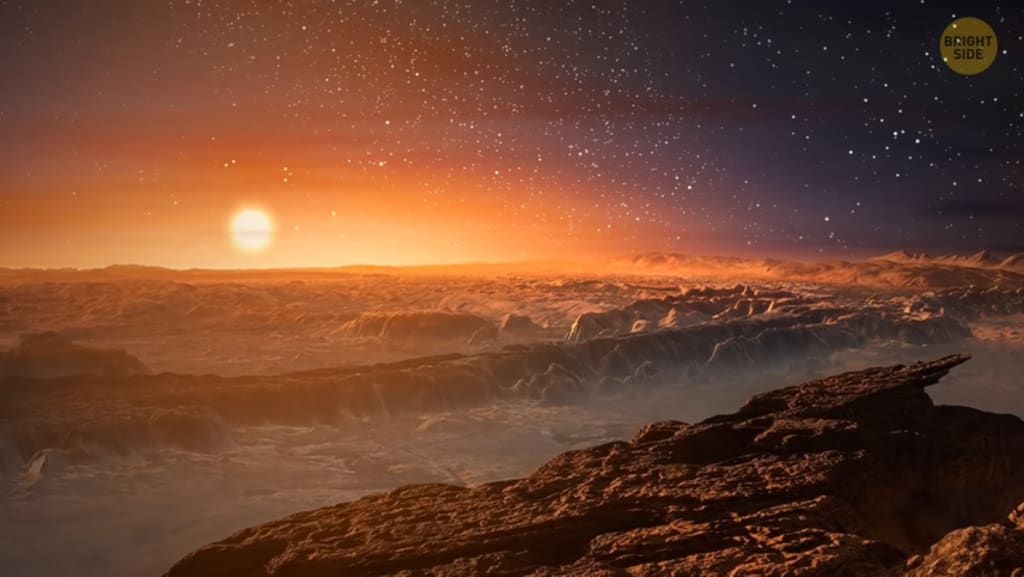
The soil beneath your feet is red and dry, the place freezing cold. Rusty-colored dust floats in the air, making each step a challenge as your feet sink into the thick layer of dust. Welcome to Mars, a world that, despite its current desolate appearance, may hold secrets of a vastly different past.
Recent scientific discoveries have sparked intrigue, revealing that Mars, often dubbed the "red planet," might have been home to a colossal ocean approximately 3.5 billion years ago. Satellite images meticulously studied by researchers have unveiled formations, spanning over 4,000 miles, suggesting the presence of rivers and channels that may have once crisscrossed the Martian surface.
The Mars Reconnaissance Orbiter, launched in 2007, played a crucial role in this exploration, providing valuable data for scientists. They focused their attention on Aolis Dorsa, a topographical depression on Mars, discovering evidence of dynamic changes that hint at the planet's watery past. The boundary separating the Southern Highlands from the smooth lowlands resembles a shoreline, strongly suggesting the existence of an ancient ocean.
This revelation not only sheds light on Mars' climate evolution but also fuels speculation about the potential for past life on the red planet. The presence of a substantial ocean raises questions about the ancient Martian climate, indicating a time when the planet was warmer, with a thicker atmosphere capable of supporting liquid water.
However, the fate of this ancient Martian ocean remains a mystery. Some theories propose it may be frozen beneath a layer of rock debris and dust, while others suggest the water could have been lost to the atmosphere and space over time through atmospheric sputtering.
Despite ongoing debates among scientists, one undeniable fact is that Mars is currently a cold world, with an average temperature of 80°F. Its rocky surface is adorned with dry lake beds, craters, volcanoes, and canyons, painting a stark contrast to the potential watery spectacle of its past.
Mars is not just about its mysterious ancient ocean; the planet boasts other captivating features. Dust storms, depicted in movies as formidable forces, do occur, but their impact is less dramatic than portrayed. Global dust storms, occurring once every three Martian years, encircle the entire planet. While massive, their wind speeds, limited by Mars' thin atmosphere, are unlikely to cause significant harm to astronauts or equipment.
Another intriguing formation on Mars resembles an eye when viewed from a distance. This giant crater, nearly 19 miles in diameter, suggests a history of water filling its depths, leaving it darker than the surrounding landscape. Valles Marineris, an immense canyon system along Mars' equator, surpasses Earth's Grand Canyon in size and depth, possibly formed during the planet's cooling phase.
Olympus Mons, the largest shield volcano in the solar system, dominates Mars' landscape. Its colossal size, 370 miles in diameter and 16 miles in height, challenges scientists to unravel the mysteries behind its formation. The absence of tectonic plates on Mars, unlike Earth, may explain the extraordinary size of Olympus Mons.
Lastly, an enchanting Martian phenomenon occurs after sunset—a mysterious glow across the Martian sky. Visible only in ultraviolet light, this night glow results from chemical reactions taking place miles above the Martian surface, creating a surreal spectacle for any potential explorers.
In conclusion, Mars, with its ancient secrets and awe-inspiring features, continues to captivate scientists and space enthusiasts alike. As we unravel the mysteries of the red planet, each discovery opens new windows into the history and potential of this intriguing neighbor in our solar system.
Thank you for you reading !
About the Creator
Medicinal herbs of the Carpathians
According to popular beliefs, the Carpathians are considered a healing "place of power" and there is no mysticism in this. Air with a unique composition and medicinal Carpathian herbs can work real miracles. Since ancient times, the Hutsuls have used them to treat various diseases. Today, herbal medicine in the Carpathians is experiencing its revival, attracting more and more attention from both locals and tourists.
By Olaf Podolskia day ago in Earth


Comments
There are no comments for this story
Be the first to respond and start the conversation.