
What Can We Do to Save our Environment?
Saving our Planet

More than you think!
With each passing day, our natural resources are being depleted at an alarming rate. Who is doing it? The short answer is that we are all doing it and it will require a herculean effort to minimize and reverse this process.
Growing up, in New York City's public housing projects during the 1970s, it always irked me that our refuse incinerators burned their trash several times per week. This often generated a cloud of smoke that would engulf our lungs and neighborhood. The ashes from this process would then be placed in steel trash bins that were dumped into Sanitation trucks before being delivered to city landfills.
I remember desperately telling my mother, "Isn't it a shame that we can't recycle more of this stuff instead of burning it up and hurting our health." Her response was always, "If it was easy, they would have done it a long time ago." Yet, each time that I inhaled those fumes while walking to school, or hanging out with my friends, it always aggravated my asthma symptoms. Still, I couldn't stop hoping that we would someday find a way to make widespread recycling a reality or as Economists like to say, "economically feasible."
The good news is that I didn't have to wait long to see a glimmer of light. Just a few weeks after having this open conversation with my mom, a local newspaper announced that a nearby establishment was now recycling aluminum cans and offering a penny for every two cans that were brought in. Using the latest CPI statistics from the BLS dating back to 1970, this translates into approximately 3.5 cents per aluminum can at current prices.
Although the recycling prices didn't offer a strong economic incentive for everyone, for me it was personal. I jumped to recycle every aluminum can I encountered and also pivoted to convince most of my friends to join my crusade.
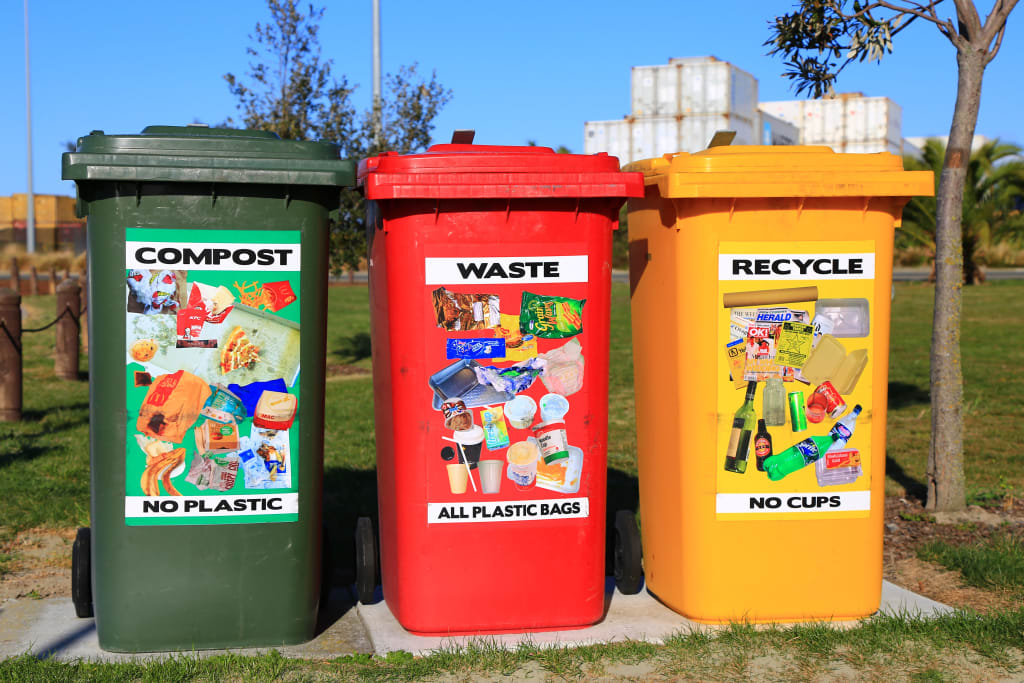
Fast-forwarding to today, the progress that I have witnessed is nothing short of miraculous! In a recent report released by the Environmental Protection Agency (EPA) report (November 2019) they revealed that the U.S. recycling rate has increased from less than 7% in 1960, to about 32%. Most importantly, we are now recycling a broader portfolio of items, including paper, glass bottles, plastics, batteries, cell phones, computers, and many other things.
Given that we are using sand which is being depleted at an alarming rate from our oceans, and hurting our ocean habitat in the process, I have always lived in older buildings to minimize how much my footprint extracts from the environment since new construction requires newly produced cement.
The world produces 4.1 billion tons of cement each year for new construction that require 41 billion tons of sand. At this rate, we need to find ways to recycle anything that uses sand and do everything possible to lengthen the use of our existing buildings to minimize how much new cement has to be produced each year.
We are making great progress, but our job will not be finished until we find a way to recycle 100% of everything we extract from our environment. But the good news is that recycling is equally good for the environment and the economy as well. According to the EPA, the recycling industry employs about 681 thousand people and generates approximately $37.8 billion in wages every year.
I hope that after reading this article, many will realize that "we" have come a long way from the days of recycling aluminum cans. Today, we have successfully broadened our portfolio of items available for recycling in our quest to preserve the environment for future generations.
So, the next time that anyone asks what "we" can do to help our environment, the answer is simple. We have already done more than many ever imagined and will be able to do even more if we continue to work together towards eliminating our carbon footprint!
About the Creator
Anthony Chan
Chan Economics LLC, Public Speaker
Chief Global Economist & Public Speaker JPM Chase ('94-'19).
Senior Economist Barclays ('91-'94)
Economist, NY Federal Reserve ('89-'91)
Econ. Prof. (Univ. of Dayton, '86-'89)
Ph.D. Economics
Keep reading
More stories from Anthony Chan and writers in Earth and other communities.
Fleeting Leaves
Autumn leaves drift down, Beauty fades as time rushes Life, too, feels so brief.
By Anthony ChanExclusive • 6 months ago
Kidnapping Victims Forced to Send Disturbing Videos to Relative, Say Spanish Police
Spanish police are investigating a disturbing kidnapping case after two men allegedly sent videos to a relative showing one of them bloodied and being threatened with a knife. According to authorities, the footage was intended to pressure the family, raising concerns about organized criminal tactics and the growing use of digital intimidation.
By Aarif Lasharia day ago in Earth
Pearl
1980 something. we all hung out at Pearl and you and i were nothing special, or so i thought. i mean we all danced, drenched in our own sweat, our own saline solution of fear, too many beers, shots, laughter, tears, fucks in the bathroom and i don't know when we began to be afraid. do you?
By ROCK aka Andrea Polla (Simmons)3 days ago in Fiction


Comments
There are no comments for this story
Be the first to respond and start the conversation.