
Welcome Home, Leviathan
What the comeback of lake sturgeon in Wisconsin means to me

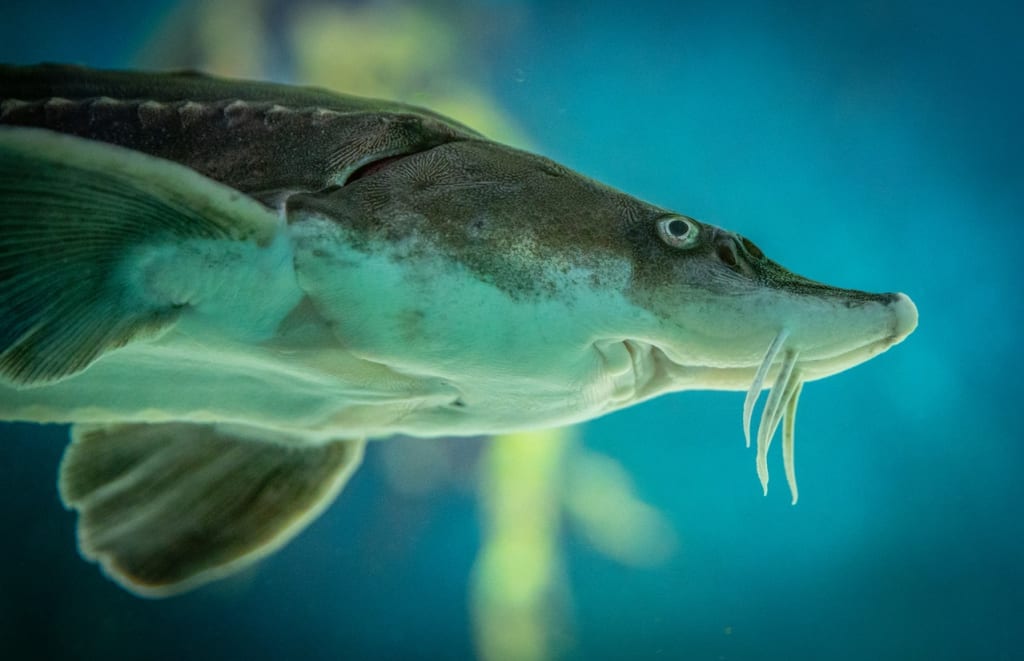
In April of this year sensors in the Milwaukee River detected five lake sturgeon moving upriver. These are some of the first adult sturgeon returning since restocking began in 2006 as part of a multi-year effort to return the sturgeon to Wisconsin rivers and lakes. In 2021, a 100-year-old, 240-pound sturgeon was caught in the Detroit River in Michigan. Both of these rivers were once much more polluted than they are now.
The story of the return of the lake sturgeon gives me hope on so many levels.
I love the fish that live near the bottom of the lake. You drop your bait down, down, down out of sight and you blindly jig, hoping the action of the lure will attract a big one. When I was a kid, I would spend many hours casting or trolling and hoping to pull an amazing fish out of the lake. Sometimes I did.
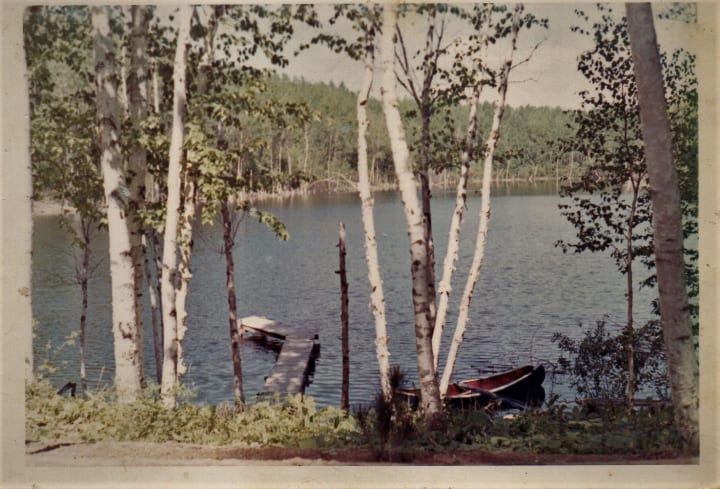
I have never fished in a place where sturgeon live, but I celebrate the return of this fish to my home state of Wisconsin and I especially celebrate the reasons for this return. The sturgeon are back because of the combined efforts of the Great Lakes States and the tribal nations who live here. They are back not just so white people like me can have the thrill of catching one, but for the healthy recovery of a non-human kin species in the ecosystem.

Before European traders and settlers came to this area, lake sturgeon had lived in the waters since before the appearance of the Great Lakes at the end of the ice ages. Sturgeon as a class of fish have existed largely unchanged for at least 200 million years (by contrast, the genus Homo has been around for about 2.5 to 3 million years). Sturgeon swam in the waters during most of the time when the dinosaurs walked the Earth, and they certainly look prehistoric. They are a cartilaginous fish, like sharks, and they have bony protective plates called “scutes” on their backs that look like dragon scales. They feed on the lake and river bottom and have sensitive “barbels” that tell them when to suck up food species unlucky enough to be in their path. Lake sturgeon can live to be over a hundred years old and can get to be hundreds of pounds and over seven feet long. Historically, sturgeon were a very big part of the Great Lakes ecosystems. Scientists estimate that before European settlers arrived, up to 90% of the biomass of the Great Lakes was composed of sturgeon.
For almost all of the time that humans have lived in the Great Lakes region, the sturgeon had been considered kin by the Indigenous people living here. The spawning runs were said to contain so many fish that a person could walk across rivers on the backs of the sturgeon. The Menominee nation in northeast Wisconsin has a rich history of celebrating the spawning run with community gatherings and the “fish dance.” Within the Menominee and also the Ojibwe (Anishinaabe), specific clans are identified with the sturgeon, which marks the sturgeon as one of the most important kin animals. The sturgeon is the spiritual protector of wild rice, the key food plant for the Menominee and Ojibwe. The spiritual importance of the sturgeon could not be overstated, but the sturgeon also is an important traditional food animal for the Menomonee and the Ojibwe, who use every part of the animal. Think of how important the bison are to the Dakota people, and we are in the realm of the importance of the sturgeon for the Great Lakes people.
When European traders first came to the region, one of the things they traded for was sturgeon meat, which was plentiful at the time. Later, when European settlers came, they built dams on many of the river systems in order to facilitate the logging and sawmill operations that systematically removed all of the old-growth forests. These dams disrupted the spawning patterns of the sturgeon and other fish. By the 1860s commercial fishing came to many of the places where the sturgeon lived. The commercial fishing methods used nets to catch smaller fish, and the sturgeon, which could grow to hundreds of pounds and had knife-like fins that could destroy the nets, were considered a nuisance fish, so the commercial fishing policy was to kill all the sturgeon in order to make their harvest easier. They would catch sturgeon and throw them on the sides of the rivers. When these sturgeon would die and dry up on the banks of the rivers, they were so plentiful that boat captains would collect them to use for fuel in their steamboats. Eventually, starting in the 1870s and 1880s, the fishing industry learned the value of sturgeon and they started harvesting sturgeon for meat and caviar and isinglass at alarming rates (up to 8.5 million pounds in a peak year!).
Between the dams, the removal by and for commercial fishing, and later, pollution from industry, the once-plentiful lake sturgeon became an endangered species in Wisconsin, the heart of its home range.
The image of using a 100-year-old fish as fuel for a boat is just one example of just how exploitative and wasteful the waves of white settlers were. Between the fur trade for white markets and the settlers themselves, they killed all the remaining bison and elk in Wisconsin, and they hunted out the turkey and killed almost all of the white-tail deer. They killed all the wolves, mountain lions, and almost all of the beavers, cranes, and bears. They made the passenger pigeon, which had once darkened the skies of Wisconsin by the millions, go extinct through hunting. They dramatically altered habitats: by logging, by digging up prairies, by stopping the burn cycles that had been maintained by the Indigenous people, by damming rivers, by building roads and railroads, and by introducing non-native invasive plants and animals.
When I say “they,” I should be saying “we” because I am an ancestor of European settlers, and I continue to live in the world they made, with some of the same extractive practices.
To the Indigenous people of this place, this wanton destruction of plant and animal life was a form of genocide. On one level it was a denial of food sources to the people who had depended on those sources for generations. For example, near where I live there was a famous “fish trap” where the Namekagon River (“Nme” means sturgeon in some of the Algonquin languages like Anishinaabeg) flows into the St. Croix River. The trap used a system of weirs to funnel spawning sturgeon into a place where people could easily catch them in baskets. That trap and others like it were destroyed by settlers in the name of river navigation and logging. On a second level, it was an attack on living beings who are considered kin. What happens to the people who live in the sturgeon clan, when there are no more sturgeon in the rivers and lakes? In that sense, it was a spiritual genocide, and we are still living in the aftermath of that attack.
Non-Indigenous folks have slowly come around to the idea of protecting wild animals and habitats. When Aldo Leopold was writing in the mid-1900s, the white-tail deer was almost gone from Wisconsin. He wrote as someone who wanted to promote conservation. He suggested that we study the deer population and limit hunting in order to grow and manage the population. By only allowing hunting late in the fall, and only killing a limited number of male deer, the population of deer could grow. As a result of these practices, the deer population of Wisconsin has reached a level where now hunters are encouraged to take does in order to limit the population. This type of protection and management of populations of wild animals has become the norm across the country. It came to include the reintroduction of species that had been lost to the area, like turkeys, whooping cranes, and elk. It was enhanced with the passage of the Endangered Species Act in 1973. Wolves returned to northern Wisconsin, as have mountain lions and sandhill cranes. Bear and beaver populations have rebounded, and many fish species are thriving.
Even as conservation efforts have brought back some species’ populations from the brink of extinction or extirpation, it is not always an easy or straight-line path. For example, the wolf’s return has been fought by livestock ranchers. And trophy hunters have recently decimated the Wisconsin wolf population, taking nearly double the quota set by the DNR, in an ill-advised 2020 hunt that was vehemently opposed by Indigenous groups.
The return of the sturgeon has been slow. Lake sturgeon grow slowly, and females do not spawn until they reach 25 years of age. In addition, they require waterways free of dams in order to reach their spawning grounds. And that water and the sediments on the rivers need to be clean because these fish feed on the bottom. Despite those issues, tribal nations and the state have worked together to foster the growth of the sturgeon population, and populations have reached a point where there can be tightly controlled fishing seasons for non-Indigenous people and self-monitored managed fishing for Indigenous people (who have treaty rights to fish out of season).
A possible impediment to the return of the sturgeon is poachers. The sturgeon are rare enough that their roe can be quite valuable for caviar. In the early days of protecting sturgeon in Wisconsin, rivers had to be watched during the spawning season by volunteers in coordination with the authorities, and fines had to be raised. A single poacher could take many sturgeon and derail decades of conservation efforts. 2022 was the first year that the state has not managed the watcher program, both because poachers are not as common anymore and because the sturgeon population has recovered from the brink, as well as difficulty finding volunteers.
One of the partnerships that have aided the sturgeon’s return is the work that the Menominee Nation has done to assist the sturgeon in getting past dams in order to spawn on the Menominee Reservation once more. This Reservation site was chosen by the tribe partly because of its importance for the sturgeon. It was a cruel irony that dams blocked the sturgeon and prevented the Menominee from continuing that relationship with their spiritual kin. Now the sturgeon have begun to return, and the Menominee celebrate the fish dance in the company of real sturgeon once more.
Why do I care about the return of the lake sturgeon?
It is interesting to me that Wisconsin currently holds the highest concentration of lake sturgeon in the world, and yet estimates are that this current population is only 1% of the pre-European settler sturgeon populations. I dream about what a full recovery of sturgeon and other species might look like.
There is a voice inside me that yearns for the recovery of wild species and ecosystems. I love hearing sandhill cranes fly overhead and I live for other stories of species in recovery, like the bald eagle and the lake sturgeon. This voice is calling to me to be part of that recovery process. I think it goes back to when I would go fishing as a child. I would imagine there was a whole world down there in the deep, beyond the realms where I could see.
Even today, 40 years later, I have frequent dreams about going fishing in a deep lake and or finding whole cities or other amazing places underwater. There is something about fishing that tugs at my psyche. If I had to say what that tug is, I would say that my surface awareness knows there is more to me than my moment-to-moment thoughts and worries, but most of that depth is inaccessible or incomprehensible to my daily-life self. I am fascinated by my own depth, even as it is a mystery. Perhaps that is why fish and fishing live so vividly in my imagination. Fish travel in the depths, and to catch one is to capture and hold something from another world.
To lose a species of fish is a loss not just for the ecosystem, but it is a loss for the depths of our collective souls. We need the deep lakes and the oceans to continue to be alive with travelers. Without that deep life, we would have no mirror for our own depths of our souls, and we might fall into danger of losing our own depths. My desire for the recovery of species like the sturgeon is a longing for recovery of my own depth and my own connections to the natural world.
I mourn the loss of sharks in the ocean due to fishing for shark fin soup. I have existential dread over the loss of the coral reef ecosystems to coral bleaching, as a side effect of climate change. I cannot handle the reports of how massive super-trawlers drag nets along the bottom of the ocean and pull up and kill tons of by-catch. The Pacific Garbage Patch physically hurts my heart. The dead zone in the Gulf of Mexico is a crime. That is why any news story about the recovery of a fish species gives me more than hope. It repopulates my own depth of self. I am complete when the world is whole and thriving.
It might seem ironic that trophy fishing and Indigenous kin relationships work together to bring back a threatened species, but fishing can be a gateway to loving nature and caring for and protecting the species that one is fishing for. With fishing, there is a connection to nature that speaks to the soul and a connection to friends, family, and community that cannot be measured.
The other piece that gives me hope is the persistence of this ancient fish. The sturgeon that are here now have lived through catastrophe. That they are returning gives me hope that we can support the recovery of people and cultures, including myself.

I was inspired to find out more about lake sturgeon when I stumbled across a video of a white sturgeon in British Columbia on Facebook Reels. It was in shallow water and the massive fish looked unreal and prehistoric. My Facebook app shows me random reels interspersed with posts of friends. They must be watching which reels make me stop and watch because now about half of the short videos are of people fishing or drone footage of ocean life. Does anyone else like watching people cast and catch fish?
-------
This story was first published on May 17th, 2022 on Medium. Follow me on Medium for more essays and stories.
About the Creator
Andrew Gaertner
I believe that to live in a world of peace and justice we must imagine it first. For this, we need artists and writers. I write to reach for the edges of what is possible for myself and for society.
Keep reading
More stories from Andrew Gaertner and writers in Earth and other communities.
Throw Away Your Old Phone
Two of my favorite writers recently inspired me on Medium. In January, Cory Doctorow shared his essay about how the Luddites were forerunners of science fiction writers. The Luddites were artisanal weavers known for burning mills and resisting the Industrial Revolution. In my college years, I considered myself an Earth First neo-Luddite, so his essay caught my eye. Doctorow argues that it wasn’t the machines that they hated, but the consequences of the way the machines are used. Luddites could imagine the future, and their movement was an act of resistance to that future. In that sense, Luddites were like today’s science fiction authors; when we imagine the future, it is not about the machines per se, but rather about the moral choices caused by the introduction of those machines.
By Andrew Gaertner4 years ago in Futurism
“If You’re Flushing the Toilet with Grey Water, People Should Know”: How China Turned Rain into an Asset
Water scarcity is one of the most pressing challenges facing the world today, and China is confronting it with bold, large-scale innovations. From sprawling cities to rural communities, the country has been transforming rainwater and grey water — wastewater from baths, sinks, and washing machines — into usable resources, addressing shortages while boosting sustainability. The approach is as much about engineering ingenuity as it is about public transparency and social trust. As one Chinese water engineer put it: “If you’re flushing the toilet with grey water, people should know.” This candid acknowledgment captures the essence of China’s strategy: utilize every drop of water efficiently while educating and involving the public. The Scale of China’s Water Challenge China faces a unique set of water challenges: Rapid urbanization, leading to increased demand for potable water Uneven distribution of water resources, with the north of China significantly drier than the south Industrial expansion, which consumes enormous quantities of freshwater Traditional water systems, reliant solely on rivers, lakes, and underground aquifers, are increasingly inadequate. Water shortages threaten agriculture, public health, and economic growth. Enter grey water and rainwater recycling, which turns previously discarded or seasonal water into a strategic asset. Grey Water: From Waste to Resource Grey water refers to domestic wastewater from sinks, showers, and washing machines — excluding sewage. While not suitable for drinking, it can be treated and reused for: Flushing toilets Irrigating gardens and parks Industrial processes requiring non-potable water China has implemented city-wide grey water recycling systems, often in high-rise residential blocks and industrial complexes. These systems involve: Collection: Grey water from sinks, showers, and laundry is routed through a separate piping network. Treatment: Basic filtration, chemical treatment, or UV sterilization removes contaminants. Reuse: Treated water is stored and reused for flushing toilets or irrigation, drastically reducing fresh water demand. In some cities, nearly 30–40% of household water consumption can be offset by grey water reuse, easing pressure on municipal water supplies. Rainwater Harvesting: Turning Precipitation into Opportunity Rainwater is another crucial asset, especially in regions where seasonal rains are abundant but water storage is limited. China’s rainwater harvesting initiatives include: Rooftop collection systems in urban and rural buildings Underground cisterns and reservoirs for storage Integration into public parks and community irrigation networks Collected rainwater can be used for irrigation, cleaning streets, or replenishing urban lakes — effectively reducing reliance on potable water while enhancing urban greenery. Cities like Beijing, Shanghai, and Shenzhen have led the way, embedding rainwater storage tanks and treatment units directly into infrastructure planning. This holistic approach turns rainfall from a transient resource into a stable, managed supply. Urban Integration and Smart Technology China’s approach goes beyond simple collection. Smart sensors, IoT devices, and AI analytics are being used to: Monitor grey water quality in real time Optimize rainwater collection and storage based on weather forecasts Reduce overflow and contamination risks By integrating these technologies, water managers can balance supply and demand dynamically, ensuring that recycled water is safe, efficient, and reliable. Public transparency is central. Residents are clearly informed when grey water is being used, often through visible signage in buildings or public awareness campaigns. This trust-building is essential to encourage adoption and avoid resistance. Environmental and Economic Benefits China’s grey water and rainwater initiatives yield substantial environmental and economic dividends: Conservation of freshwater: Reduces extraction from rivers, lakes, and aquifers, helping ecosystems survive droughts. Lower energy costs: Treating grey water locally uses less energy than pumping and purifying municipal water. Flood mitigation: Rainwater storage helps manage urban runoff during heavy rainfall, reducing flood risk. Economic savings for residents: Households using recycled water can reduce water bills significantly. By aligning environmental stewardship with cost-effectiveness, these projects illustrate a sustainable model for densely populated nations. Cultural Shifts and Public Perception Using recycled water for toilets or irrigation required a shift in public perception. Initially, residents expressed skepticism about safety and hygiene. China addressed this by: Implementing stringent water quality standards Educating the public through campaigns and signage Demonstrating transparency about treatment methods Over time, grey water reuse became normalized, particularly in new urban developments, where residents take pride in contributing to water conservation. Lessons for the World China’s water recycling strategy offers valuable lessons for other countries facing water scarcity: Urban planning must integrate water recycling from the start Technology can optimize efficiency, but transparency builds public trust Multiple water sources — grey water, rainwater, and municipal supply — can be combined strategically Community engagement is essential, especially when water reuse intersects with everyday routines Countries in the Middle East, Africa, and parts of the U.S. have already looked to China for insights on urban grey water and rainwater management. Challenges Ahead Despite progress, challenges remain: Infrastructure costs are high for retrofitting existing buildings Maintenance and monitoring are crucial to prevent contamination Public skepticism persists in some regions, requiring ongoing education and outreach Scaling these systems nationally requires both financial investment and cultural adaptation, but China’s experience shows it is achievable. Looking Forward China’s ambitious water recycling projects illustrate a paradigm shift in urban water management. Grey water and rainwater are no longer seen as waste or nuisance; they are valuable resources that can sustain cities, agriculture, and industry. As global water scarcity intensifies, lessons from China may inspire other nations to rethink how they treat water — not as a disposable commodity, but as a precious asset to manage wisely. Final Thoughts The statement, “If you’re flushing the toilet with grey water, people should know,” encapsulates the balance of innovation and transparency that makes China’s approach successful. By turning rain and grey water into assets, the country is conserving freshwater, protecting the environment, and setting a model for sustainable urban living. As other nations look to address water shortages, China’s example proves that with technology, planning, and public engagement, cities can transform perceived waste into a strategic resource for the future.
By Muhammad Hassanabout 14 hours ago in Earth
Facing Political Pressure, Trump Seeks Answer to Rising Housing Costs
As Americans continue to grapple with soaring home prices and rising rents, former President Donald Trump is once again thrust into the national spotlight — this time on a topic that affects millions of households: housing affordability. Facing mounting political pressure, Trump is reportedly exploring ways to address the rising cost of housing, a move that could influence policy debates, the real estate market, and his political narrative in the lead-up to upcoming elections. The Housing Cost Crisis Housing costs in the United States have been climbing steadily over the past several years. According to recent data: Home prices have risen faster than wages in many urban and suburban markets. Rental rates have increased sharply, particularly in high-demand cities like New York, Los Angeles, and Miami. Many Americans now spend 30–50% of their income on housing, leaving less for healthcare, education, and savings. The issue is not just economic — it is increasingly political, with voters citing housing affordability as a top concern. For a public figure like Trump, addressing this problem is both a strategic and symbolic imperative. Political Pressure Mounts Trump’s renewed attention to housing comes amid rising scrutiny from both political opponents and his own party. Democrats have criticized Republican-led efforts for failing to curb housing inflation, while some GOP voters are pressuring Trump to propose solutions that boost homeownership and reduce rent burdens. Policy analysts suggest that housing has become a litmus test for leadership, particularly as younger voters and working families express frustration over the lack of affordable options. This makes it a high-stakes issue for any political figure seeking influence or office. Trump’s Approach Reports indicate that Trump is focusing on several potential strategies to address rising housing costs: Regulatory Reform: Reviewing local and federal regulations that may restrict new construction, including zoning laws, environmental review processes, and permitting bottlenecks. Tax Incentives: Exploring measures to encourage developers to build more affordable housing units. Federal Support Programs: Considering expansion of federal programs for low-income families, including subsidies or down-payment assistance initiatives. Market-Based Solutions: Encouraging private sector investment in housing developments through incentives, partnerships, and streamlined approval processes. While the specifics of these proposals are still emerging, the focus is on expanding supply and easing financial barriers to homeownership and renting. Why Housing Costs Are Rising Understanding the challenge requires examining the factors behind rising housing costs: Supply Constraints: Many cities face shortages of available homes, particularly in areas with strong job growth. Labor and Material Costs: Construction costs have surged due to inflation, labor shortages, and higher material prices. Investor Activity: Institutional investors buying single-family homes as rental properties have reduced the supply available to individual buyers. Interest Rates: Elevated mortgage rates have increased monthly payments, further reducing affordability. These pressures are compounded in high-demand urban areas, making policy intervention both urgent and complex. Economic and Social Implications Rising housing costs have broad implications: Economic Strain: Families allocate more of their income to housing, leaving less for discretionary spending, healthcare, and education. Migration Patterns: High costs push residents to more affordable regions, reshaping local economies and labor markets. Political Discontent: Voters increasingly associate rising housing prices with government inaction, making it a politically sensitive issue. For Trump, addressing housing affordability is as much about economic outcomes as it is about political perception. Reactions from Industry Experts Housing analysts and economists have weighed in on Trump’s efforts: Some applaud the focus on regulatory reform, noting that local zoning and permitting hurdles are major barriers to new construction. Others caution that market-based incentives alone may not suffice and emphasize the need for targeted programs for low- and moderate-income households. Critics warn that overly aggressive deregulation could compromise environmental standards or neighborhood planning, creating long-term trade-offs. The debate reflects the complexity of housing policy in a country where supply, demand, and regulation intersect. Political Strategy and Messaging For Trump, addressing housing costs is not just policy — it is also political messaging. Analysts suggest that: Highlighting efforts to reduce housing costs allows him to appeal to working-class voters who feel squeezed by inflation. Framing housing as a regulatory and market problem aligns with broader Republican priorities of limiting government overreach. Demonstrating concrete solutions could strengthen his position as a problem-solver in the eyes of the electorate. In short, housing affordability represents both a policy challenge and an opportunity to shape the political narrative. Looking Ahead Trump’s proposals are still taking shape, but the broader housing crisis will remain a central issue in American politics: Policymakers at federal, state, and local levels will face pressure to balance supply, affordability, and environmental considerations. Real estate markets will continue to respond to interest rates, investor activity, and regulatory changes. Political figures will be judged by their ability to provide practical solutions that alleviate the financial burdens of everyday Americans. As the debate unfolds, one thing is clear: housing costs are not just numbers on a chart; they impact families, communities, and the broader economy. Conclusion Facing rising political pressure, Trump’s focus on the housing affordability crisis reflects both a policy challenge and a political imperative. With Americans struggling to pay rent and mortgage costs, any strategy that expands supply, reduces financial barriers, or incentivizes affordable development could have meaningful consequences. Whether his efforts will succeed in lowering costs or simply generate debate remains to be seen. What is undeniable, however, is that housing affordability is now a front-and-center issue in American politics, shaping public perception, economic policy, and the national discourse for years to come.Start writing...
By Muhammad Hassan3 days ago in Earth




Comments
There are no comments for this story
Be the first to respond and start the conversation.