
Voices in the Night: Living with Fear in Israel's Shadow
In the heart of Israel,where the ancient meets the modern,and the old city walls stand as a statement to centuries of History.
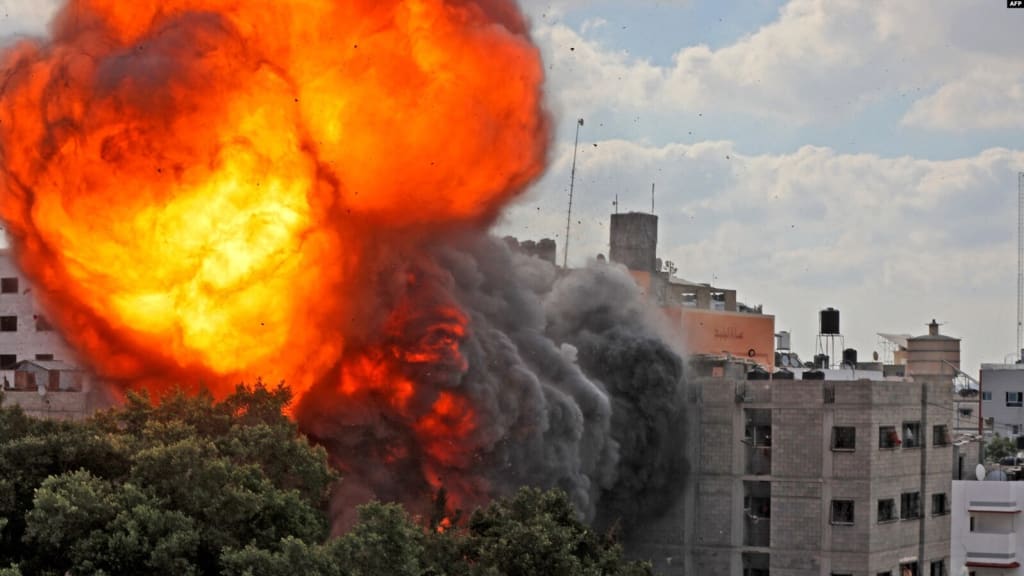
There exists a palpable tension that lingers in the air like a heavy fog. It is the fear that every resident here knows intimately—the fear of living under constant threat. In the shadow of ongoing conflicts, life in Israel is a daily struggle for normalcy amid the haunting presence of insecurity.
Sarah, a 35-year-old mother of two, is no stranger to this fear. Her life revolves around ensuring the safety of her family. She lives in Ashkelon, a coastal city that has been a frequent target of rocket attacks from Gaza. As the sun dips below the horizon, and the first stars appear in the darkening sky, Sarah's heart races with anticipation of what the night may bring.
The evening begins like any other, with the family gathered around the dinner table. The aroma of freshly baked challah fills the air, and the children's laughter brings warmth to the room. But in the back of Sarah's mind, there is an ever-present worry—a worry that they might have to abandon this meal and seek shelter within seconds.
As they sit down to eat, Sarah's husband, David, casts a glance toward the window. His eyes reflect a mixture of love for his family and the weight of responsibility that rests on his shoulders. He knows that, as the father, he must protect them, even as the fear gnaws at his own soul.
A siren suddenly wails in the distance, shattering the fragile peace of the evening. Sarah's heart skips a beat, and she bolts from her chair, spilling a plate of food onto the floor. Her children, wide-eyed with fear, follow her lead, their small hands gripping her skirt as they rush toward the reinforced safe room at the center of their home.
The seconds feel like hours as they huddle together in the dimly lit room, the only sounds being the muffled voices of news anchors on the television, broadcasting updates on the situation. Outside, the sirens continue their mournful cry, a stark reminder of the ever-present threat.
Sarah clutches her children tightly, whispering words of comfort as tears stream down her face. In this small room, surrounded by concrete walls and memories of countless similar nights, she finds solace in the embrace of her family. It is their love and resilience that keep her going, even in the darkest of times.
Meanwhile, David listens intently to the news, trying to gauge the severity of the situation. The fear in his eyes is mirrored by the countless other fathers and mothers across Israel who share his vigil. It's a fear that never truly subsides, even during moments of supposed peace.
The wail of sirens eventually fades, replaced by a tense silence. Sarah cautiously peeks out the small window, her heart still racing. The night sky is clear, adorned with stars, as if mocking the chaos that exists beneath it. She knows that the momentary calm could be shattered at any time, and the fear remains, an uninvited guest in their lives.
The following morning, Sarah prepares breakfast with shaky hands, her mind racing with thoughts of the previous night. Her children, resilient and brave, try to carry on with their lives, but the anxiety still lingers in their eyes. They know that, in their homeland, fear is as much a part of life as the air they breathe.
Outside, the city of Ashkelon comes to life once more. The streets are filled with people going about their daily routines, but the undercurrent of unease is palpable. Shopkeepers glance nervously at the sky, and parents keep their children close, their hearts heavy with the burden of protection.
As Sarah walks to the market, she encounters her neighbor, Miriam, who also faced the same fear last night. Their eyes meet, and without words, they share a bond forged in the crucible of living under threat. In that moment, they understand each other on a level that transcends language.
Over a cup of tea, Miriam shares her own story of fear and resilience. She speaks of the nights when the sirens blared, and she had to rush her children to safety. She talks about the sleepless nights and the constant worry that gnaws at her heart. Through her words, Sarah realizes that she is not alone in this struggle.
Miriam's eyes glisten with tears as she speaks about the dreams she has for her children. She longs for a day when they can grow up without the constant shadow of fear, when they can play freely without worrying about the next siren. Her voice trembles as she expresses her hope for peace, a hope that is both fragile and enduring.
The two women sit in silence for a moment, their hands clasped in unity. They know that their love for their families, their shared fear, and their hope for a better future bind them together in ways that transcend the conflicts that surround them.
In Jerusalem, a city revered by three major religions, the fear takes on a different dimension. The Old City's ancient stones have witnessed countless conflicts and conquests, and they seem to hold the collective memories of those who have lived and died within its walls.
David, a tour guide, navigates the labyrinthine alleys of the Old City, sharing its rich history with visitors from around the world. But beneath his charismatic demeanor lies a deep well of anxiety. Each day, as he leads tours through the city's iconic sites, he carries the weight of responsibility for the safety of his group.
The Old City is a microcosm of the larger conflict, with its divisions and tensions. David walks a tightrope, trying to ensure that his tours remain safe and enjoyable while acknowledging the complex political and religious realities that surround them. He knows that one wrong word or gesture could lead to an altercation.
As he stands before the Western Wall, a place of profound spiritual significance for Jews, David observes the prayers and wishes written on countless slips of paper, inserted into the ancient stones. He, too, has his own silent prayers—for peace, for the safety of his family, and for the hope that one day, the fear that hangs over this city like a storm cloud will dissipate.
In the West Bank, another chapter of the story unfolds. Palestinian families navigate a different kind of fear—a fear born from decades of conflict, occupation, and displacement. The children who grow up in this contested territory learn resilience at an early age, as their daily lives are shaped by checkpoints, barriers, and a longing for a homeland of their own.
Ahmed, a young man from Hebron, knows this fear all too well. He dreams of a future where he can live in peace and prosperity, free from the constraints of the occupation. Yet, his reality is marked by uncertainty and limitations. He watches as the world debates the conflict, often feeling like his voice is lost in the chorus of international politics.
At the same time, he knows that his experiences are mirrored by countless others in his community. The fear of losing one's home, of facing violence, and of living with limited opportunities are shared by Palestinians across the West Bank. It is a collective fear that binds them together, even as they yearn for a better future.
Amid the fear, there are also glimmers of hope. Ahmed sees young people in his community striving for education, working toward a brighter tomorrow.
About the Creator
Keep reading
More stories from Edward Flojera and writers in Earth and other communities.
Survival Admidst The Ice: A Saga of Fear and Resilience
The history of our species, Homo sapiens, is a tale intricately interwoven with the environmental conditions of our planet. While much of our history is defined by cultural achievements and technological innovations, there is a chapter, a profound era, etched into the very core of our being—the ice ages. This epic period, characterized by plummeting temperatures and relentless glaciation, forged the emotional landscape of early humans. Fear, survival, and the indomitable human spirit took center stage during these harsh times.
By Edward Flojera2 years ago in Earth
The Reality of the Illusion of Time
Recently, as I strolled along the short stretch to my strength training session, I aimlessly took in the row of tatty shops and shabby buildings along the route and passed an off-street, in which one of my sisters used to live, around thirteen years ago.
By Chantal Christie Weiss5 days ago in Earth
Earth’s Hidden Fires
The Black Scar of the Sahara and Other Fires That Shouldn’t Exist From high above, the Sahara Desert looks like a golden ocean—endless waves of sand broken only by scattered blue and green oases. But hidden among the dunes is something startling: a massive black region covering nearly 17,000 square miles. It’s so large it’s visible from space, yet it rarely appears in movies or documentaries. At first glance, it almost looks unnatural, as if something catastrophic happened there.
By Lexi Wilburn5 days ago in Earth
A Love Forboding
The chipped stone slope caused unbearable footing. I slid, skirting on my heels. I cast my shield, relinquishing my guard to stay upright. Left with my double-edge and a prayer to the maker, I skated toward my objective. The earthly stubble gave way to solid ground. I found myself restored, a trail of dust in my wake.
By James U. Rizzi4 days ago in Fiction


Comments
There are no comments for this story
Be the first to respond and start the conversation.