
Venezuela and Food Sovereignty: Hugo Chávez's Legacy in the Struggle for Food Justice
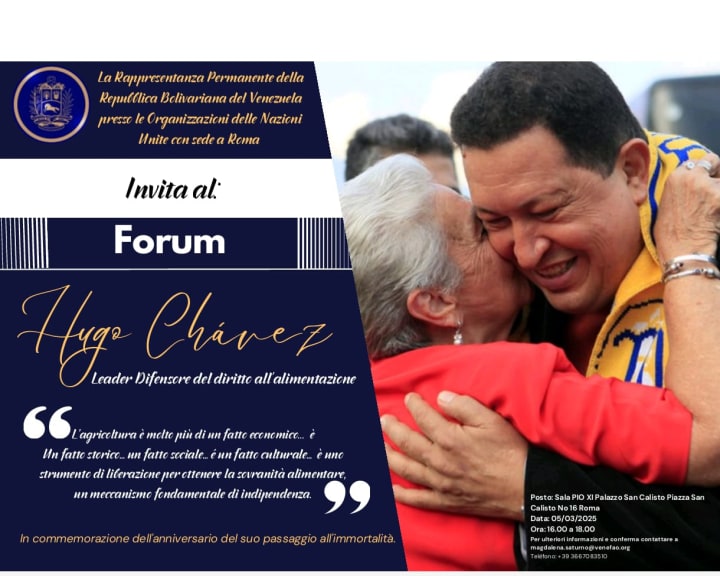
On March 5, 2025, an important event dedicated to food sovereignty in Venezuela took place in Rome, organized by the Permanent Mission of the Bolivarian Republic of Venezuela to the United Nations International Organizations.
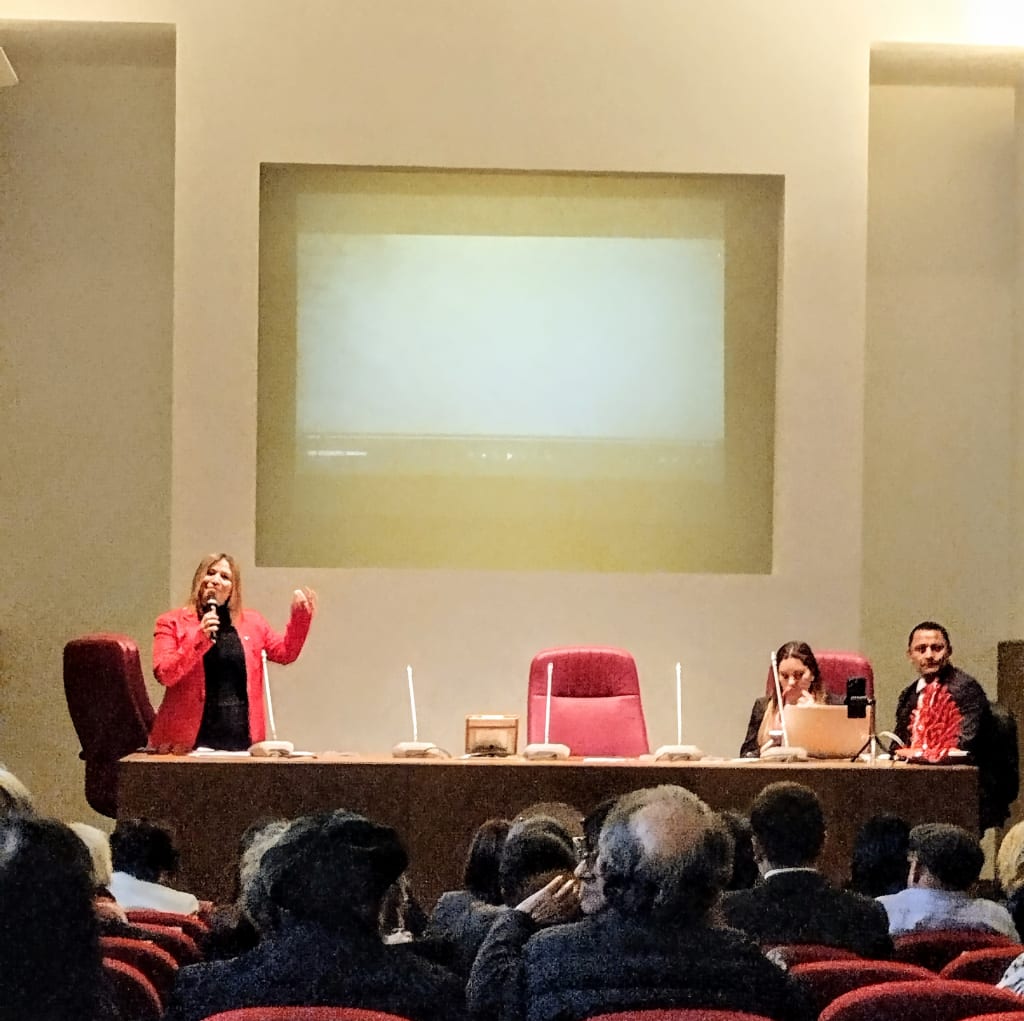
This meeting provided an opportunity to reflect on the pivotal role Hugo Chávez played in defending the right to food, a theme that remains central to Venezuela's policies despite economic difficulties and harsh international sanctions.
The event opened with a warm greeting from the organizers, who emphasized how food sovereignty is an essential element for Venezuela’s economic and political independence. The message was clear: the freedom to choose how to feed oneself is closely tied to the freedom to choose one’s future as a nation.
At 4:10 PM, a documentary titled "Hugo Chávez: A Legacy of Food Sovereignty, Ecosocialism, and Buen Vivir for Humanity" was screened. It explored Chávez’s thought, highlighting his commitment to a development model that respects the environment and the needs of the population. The film illustrated his ecosocialist vision, where economic development is intertwined with sustainability, aiming to ensure a better future for the Venezuelan people.
Next, Dr. Juan Carlos Loyo, Minister of Popular Power for Fisheries and Aquaculture, spoke via videoconference. Loyo explained the progress Venezuela has made in building an autonomous food system based on local production and reducing imports. Despite challenges, Venezuela has sought to adapt its agricultural model to meet internal needs, relying on local resources and a more sustainable approach.
A central moment of the meeting was the presentation of the book "Food and Nutrition: Thoughts and Works of Hugo Chávez" at 4:40 PM, curated by Marilyn Di Luca Santaella, Ambassador of the Permanent Mission of the Bolivarian Republic of Venezuela to the United Nations Organizations based in Rome. The book compiles Chávez's reflections and policies to guarantee the right to food, highlighting the importance of a food system that is equitable, sustainable, and accessible to all.
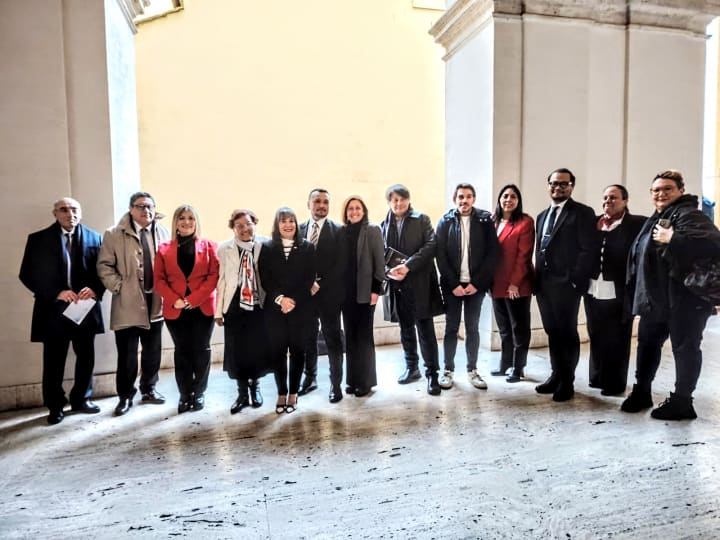
The event was also attended by important diplomatic figures, including:
H.E. Mirta Granda Averhoff, Ambassador of Cuba to Italy,
H.E. René Juan Mujica Cantelar, Ambassador of Cuba to the Holy See,
H.E. Teresa Subieta Serrano, Ambassador of Bolivia to the Holy See,
H.E. Monica Robelo Raffone, Ambassador of Nicaragua to the Italian Republic.
The event concluded at 5:20 PM with the screening of the video "Tribute to Commander Chávez: Letters of Love for a Garden of Justice and Equality," a reflective moment and tribute to Chávez, accompanied by a moving musical performance by the Venezuelan Musical Ensemble, honoring the Bolivarian leader. Finally, a buffet featuring Venezuelan agro-food products was offered.
This day was a significant opportunity to reflect on Hugo Chávez’s legacy and Venezuela's current challenges in ensuring food sovereignty. In a world increasingly marked by economic and environmental crises, the Venezuelan experience shows that the right to food must be at the center of public policies. This is a commitment that goes beyond simple access to food, embracing a broader vision of social and economic justice, where food policies are closely linked to the fight against global inequalities and injustices.
Hugo Chávez's Ideas of Food Sovereignty and Ecosocialism: A Model of Resistance and Social Justice
Hugo Chávez, the charismatic and revolutionary leader of Venezuela, dedicated much of his political life to promoting an alternative economic model, based on social justice, sustainability, and food sovereignty. The concept of food sovereignty became a central pillar of his political project, considered not only as a response to the country’s internal economic difficulties but also as a strategy of resistance against imperialist and neoliberal policies.
Food Sovereignty: An Inviolable Right
For Chávez, food sovereignty was not just about access to food, but a crucial element for the freedom and autonomy of a people. During his government, Venezuela sought to reduce its dependence on food imports and strengthen local production, particularly in agriculture. Food sovereignty, in this context, meant that the Venezuelan people should be able to produce, distribute, and consume their own food without being subject to the fluctuations of international markets or the impositions of organizations like the International Monetary Fund (IMF) or the World Trade Organization (WTO).
Chávez always argued that food policy should be anchored in the principles of social justice and equity, opposing the exploitation of natural resources and the globalization that places human rights second to the economic interests of multinational corporations. Through programs like Alimentación Popular and Mercal, the government sought to provide low-cost, high-quality food to vulnerable populations, while promoting food self-sufficiency.
Ecosocialism: An Integrated Model of Sustainability
Alongside the promotion of food sovereignty, ecosocialism was a central aspect of Chávez's thinking. For him, it was not just about protecting the environment, but integrating environmental sustainability with social equality. Ecosocialism, in fact, involves a vision in which nature is not seen as a resource to be exploited, but as a common good to be preserved for future generations. In a world marked by global warming and ecological disasters, Chávez saw ecosocialism as a way to ensure social justice, reduce inequalities, and promote economic development that respected the planet’s ecological limits.
During his tenure, Venezuela launched numerous ecosocialist initiatives, including the creation of the Ministry of Popular Power for the Environment, which promoted policies for the conservation of natural resources and renewable energy. Chávez also initiated several programs for the sustainable use of water and the protection of forests, aiming to reduce deforestation and promote ecological farming, with the goal of respecting natural cycles and improving the living conditions of rural communities.
The Integration of Food Sovereignty and Ecosocialism in the Venezuelan Model
The idea of food sovereignty and ecosocialism are perfectly intertwined in Chávez's vision of an independent and self-sufficient Venezuela. His agro-food policy was not limited to improving food production but aimed to strengthen the link between agriculture and nature, making agriculture an integral part of the fight against climate change and environmental conservation. In this context, the agroecology model found fertile ground: a form of farming that opposes the indiscriminate use of pesticides and chemical fertilizers, instead favoring practices that respect the ecosystem, promote biodiversity, and reduce environmental impact.
Chávez placed great emphasis on agroecological education as a tool to raise awareness among producers and consumers about the need to change their lifestyles and dietary habits in favor of a model that was respectful of the environment and social justice. The inclusion of indigenous communities and rural populations in decision-making processes regarding food policy had symbolic, as well as practical, value, demonstrating the attempt to value traditional knowledge and involve all sectors of Venezuelan society in building a more just and sustainable food system.
Hugo Chávez's Legacy and the Challenge of Food Sovereignty
Chávez's legacy in terms of food sovereignty and ecosocialism continues to have a significant impact not only in Venezuela but across Latin America. Despite economic difficulties and geopolitical challenges, the Venezuelan model has inspired many other countries to reflect on the importance of food independence and environmental sustainability. However, the policies of food sovereignty and ecosocialism are not without obstacles. The economic crisis, international sanctions, and the difficulty of implementing agricultural policies that can meet the needs of a people living daily in a situation of instability have tested the system.
Despite this, the struggle for food sovereignty remains one of the Venezuelan government's top priorities and a symbol of resistance against global neoliberal forces. The promotion of sustainable agriculture and the adoption of an economic model that respects the principles of ecosocialism are fundamental challenges in building a future beyond extractivism and the consumerist approach that dominates the global market.
Hugo Chávez left a visionary and courageous legacy, with the aim of building a more equitable, just, and sustainable society. His vision of food sovereignty and ecosocialism continues to be a beacon of hope for those fighting for a fairer and more environmentally respectful world.
About the Creator
Keep reading
More stories from Maddalena Celano and writers in Earth and other communities.
Do not designate Cuba as a 'sponsor of terrorism'!
Here is the translation of the text into English: --- Throughout its revolutionary history, Cuba has sent over 605,000 health professionals and technicians to 165 countries, providing medical care where the United States has imposed sanctions.
By Maddalena Celano2 years ago in Earth
At Least 22 Dead as Crane Collapses Onto Train in Thailand
Thailand has been plunged into mourning after a devastating accident in which a construction crane collapsed onto a moving passenger train, killing at least 22 people and injuring dozens more. The incident, described by officials as one of the deadliest infrastructure-related accidents in recent years, has raised urgent questions about construction safety, urban development, and oversight in the country.
By Aarif Lashari6 days ago in Earth


Comments
There are no comments for this story
Be the first to respond and start the conversation.