
US Government Partially Shuts Down Despite Last-Minute Funding Deal
Political deadlock exposes deep divisions as federal agencies face disruption
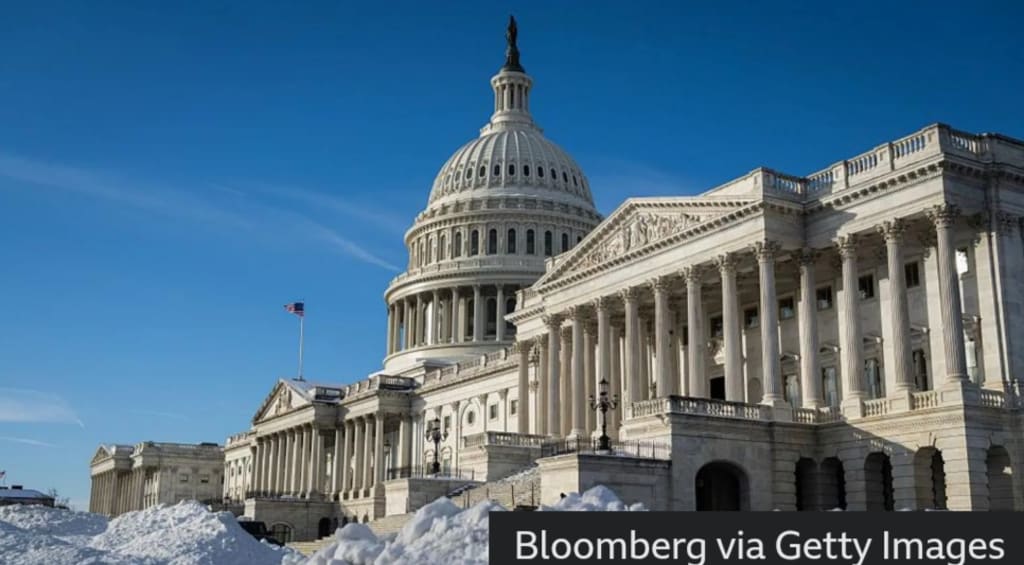
The United States government has entered a partial shutdown, even after lawmakers announced a last-minute funding deal intended to avert disruption. The development highlights persistent political gridlock in Washington and underscores how narrow margins, internal party divisions, and procedural delays can still trigger government paralysis.
Although congressional leaders signaled agreement just hours before the funding deadline, the legislation failed to move quickly enough through both chambers, leaving several federal agencies without authorization to continue full operations. The shutdown, while limited in scope, has immediate consequences for government workers, public services, and economic confidence.
What Led to the Partial Shutdown?
At the heart of the shutdown is Congress’s inability to pass a comprehensive funding bill on time. Temporary funding measures—known as continuing resolutions—have become increasingly common as lawmakers struggle to agree on long-term budgets.
In this case, negotiations dragged on until the final hours before the deadline. While leaders announced a deal, procedural hurdles, including votes, amendments, and internal opposition, delayed formal passage.
As a result:
Some government departments ran out of funding
Non-essential federal employees were furloughed
Certain public services were temporarily paused
The situation reflects a pattern seen repeatedly in recent years, where brinkmanship replaces long-term fiscal planning.
Which Agencies Are Affected?
Because the shutdown is partial, not all government functions are impacted. Essential services—such as national defense, air traffic control, and emergency medical response—continue to operate. However, many civilian agencies face disruptions.
Affected areas may include:
Federal grant programs
Housing and urban development services
Environmental and regulatory agencies
National parks and museums
Administrative offices across multiple departments
Hundreds of thousands of federal workers are either furloughed or working without pay until funding is restored.
Impact on Federal Workers and Families
For federal employees, even a short shutdown can create financial stress and uncertainty. Workers who are furloughed are barred from performing their duties and do not receive paychecks during the shutdown, though Congress has historically approved back pay once funding resumes.
Contractors, however, are not always guaranteed compensation, making shutdowns particularly damaging for private businesses that rely on government work.
Union leaders have criticized lawmakers for using federal employees as “political leverage,” arguing that repeated shutdown threats undermine morale and public trust in government institutions.
Economic Consequences of Shutdowns
While a brief shutdown may have limited macroeconomic impact, repeated disruptions can erode confidence and slow economic activity. Past shutdowns have:
Reduced quarterly GDP growth
Delayed government data releases
Disrupted small businesses dependent on federal contracts
Increased administrative costs due to stop-start operations
Economists warn that even partial shutdowns signal instability, especially at a time when global markets remain sensitive to political risk.
Political Blame and Division
As expected, both major political parties have blamed each other for the shutdown. Opposition lawmakers argue that the crisis was avoidable and accuse rivals of prioritizing ideological demands over governance.
Supporters of tougher budget negotiations claim that shutdown pressure is necessary to force spending discipline and accountability. Critics counter that shutdowns achieve little beyond public frustration and operational chaos.
The episode highlights deeper divisions over:
Government spending levels
Defense versus domestic priorities
Social programs and entitlement reform
Long-term debt and fiscal responsibility
These disagreements continue to stall progress toward stable, multi-year budgeting.
Public Reaction and Trust in Government
Public opinion polls consistently show that government shutdowns damage trust in elected officials. Many Americans view shutdowns as unnecessary and harmful, particularly when essential services and workers are affected.
Social media reactions following the partial shutdown reflected widespread frustration, with users questioning why last-minute deals still fail to prevent disruption.
Civic groups and policy experts argue that repeated shutdowns weaken democratic institutions by normalizing dysfunction.
What Happens Next?
Lawmakers are expected to move quickly to finalize and pass the funding agreement in the coming days. Once approved and signed into law, affected agencies would resume operations, and federal workers would receive back pay.
However, the broader issue remains unresolved. Temporary funding solutions only delay the next deadline, setting the stage for another potential shutdown if structural reforms are not implemented.
Proposed solutions include:
Automatic continuing resolutions to prevent shutdowns
Multi-year budget frameworks
Penalties for lawmakers when deadlines are missed
None of these proposals have yet gained enough bipartisan support to become law.
A Familiar Crisis with Lasting Effects
The partial shutdown serves as yet another reminder of Washington’s ongoing struggle to govern effectively. Despite a last-minute deal, the failure to act swiftly enough resulted in real-world consequences for workers, agencies, and public confidence.
As the US faces complex challenges at home and abroad, political observers warn that repeated shutdowns weaken America’s credibility and capacity to respond to crises.
Whether this latest disruption will prompt meaningful reform—or simply become another chapter in a familiar cycle—remains to be seen.
About the Creator
Keep reading
More stories from Aarif Lashari and writers in Earth and other communities.
Hull City Sign Collyer and Koumas on Loan
Hull City have confirmed the loan signings of defenders Collyer and Koumas, signaling a strategic push to strengthen their squad ahead of the remainder of the Championship season. The arrivals aim to provide both depth and quality as the Tigers seek to improve their league position and maintain momentum in a competitive division.
By Aarif Lashariabout 12 hours ago in Earth



Comments
There are no comments for this story
Be the first to respond and start the conversation.