
Urea Market Size and Forecast 2025–2033
How Rising Agricultural Needs, Industrial Innovation, and Government Policies Are Powering the Global Urea Market


The global urea market is entering a transformative decade, driven by accelerating agricultural needs, expanding industrial applications, and supportive government policies across major economies. According to Renub Research, the global urea market was valued at USD 63.39 billion in 2024 and is projected to rise to USD 66.38 billion in 2025, eventually reaching USD 96.00 billion by 2033, representing a CAGR of 4.72% during 2025–2033.
This steady yet substantial growth highlights urea’s expanding relevance—not just as a universal nitrogen fertilizer but also as a critical component in automotive emissions control, chemical synthesis, animal feed, and modern manufacturing. The report, Global Urea Market & Forecast 2025–2033, further segments the market by Type (Technical Grade, Fertilizer Grade, Feed Grade), Application (Agriculture, Chemical Synthesis, Animal Feed, Others), and Country-level markets, offering a comprehensive outlook for the decade ahead.
Urea—also known as carbamide—remains one of the world’s most widely used and adaptable chemical compounds. With the chemical formula CO(NH₂)₂, urea is a white, crystalline, highly water-soluble organic substance produced naturally in humans and animals and synthetically via the industry-standard ammonia + carbon dioxide process.
Why Urea Matters
Agriculture: It is the single most consumed nitrogen fertilizer globally, prized for its 46% nitrogen content—the highest of any solid nitrogen fertilizer.
Industrial Manufacturing: Urea plays a key role in producing plastics, adhesives, melamine resins, and cosmetics.
Automotive Sector: In diesel vehicles, urea-based solutions (like AdBlue) reduce nitrogen oxide emissions, supporting compliance with environmental policies.
Healthcare & Animal Nutrition: Urea supports pharmaceutical formulations and livestock feed optimization.
In short, urea’s versatility makes it indispensable across global industries, ensuring consistently high demand from both mature and emerging markets.
Advantages of Urea
The rising popularity of urea across agriculture and industry is driven by its compelling advantages:
1. High Nitrogen Efficiency
With the highest nitrogen concentration among fertilizers, urea improves soil fertility, accelerates plant growth, and boosts crop yields.
2. Cost-Effectiveness
Affordable pricing and easy availability make urea a preferred choice for farmers worldwide—especially in high-population, agriculture-reliant countries.
3. Industrial Versatility
Beyond fertilizers, urea supports:
Resin and plastic manufacturing
Adhesives production
Diesel emission fluids (DEF)
Cosmetics and pharmaceuticals
4. Environmental Compatibility (When Used Responsibly)
Urea offers environmental benefits in automotive exhaust technologies and is continually being optimized in sustainable farming systems.
Future Outlook: A Strong Decade Ahead
The global urea market is poised for healthy expansion, fueled by:
1. Rising Food Demand
A growing global population—projected to reach 9.7 billion by 2050—necessitates increased crop production, driving fertilizer consumption.
2. Precision Agriculture
Improved farming practices and controlled-release formulations will enhance urea efficiency and reduce environmental impact.
3. Industrial Expansion
DEF consumption is soaring amid tightening emission norms in Europe, India, and North America.
4. Growth in Emerging Regions
Asia-Pacific and Africa will remain major hotspots as they expand food production capacities.
5. Sustainability Innovation
Technologies such as green ammonia, low-carbon urea, and nano urea will reshape the market landscape.
Core Applications of Urea in Agriculture
Urea is the backbone of global agriculture due to its:
High nitrogen content
Low cost
Flexible application (broadcasting, fertigation, foliar spray, controlled-release pellets)
It supports the cultivation of major crops like:
Wheat, rice, corn, sugarcane, and vegetables
In addition, its contribution to photosynthesis and vegetative growth makes it indispensable for boosting yields and ensuring global food security.
Global Urea Market Growth Drivers
1. Rising Demand for Fertilizers
Agriculture continues to consume the majority of global urea output.
As population increases and arable land shrinks, farmers rely on nitrogen fertilizers to maximize productivity.
Notable Development:
March 2023: Yara International invested USD 1 billion in a new urea plant in Brazil with a capacity of 3.6 million tonnes, set to start operations in 2025.
This shows growing production capabilities aligned to keep up with global demand.
2. Expanding Industrial Applications
Urea plays a crucial role in:
Plastics
Resins
Adhesives
Automotive DEF solutions
Key Example:
May 2024: IMI launched its first control valve for urea plants to enhance efficiency at a major MEA fertilizer facility.
As industries pivot toward sustainable materials and emissions compliance, urea’s industrial relevance will only increase.
3. Strong Government Support & Subsidies
Countries such as India, China, Saudi Arabia, and Brazil heavily subsidize urea to support farmers and ensure food affordability.
India's Push for Self-Sufficiency:
Plans to end urea imports by 2025
Reviving closed plants
Promoting nano liquid urea
Domestic capacity target: 325 lakh tonnes annually
Subsidies and modernization policies continue to strengthen demand.
Challenges in the Urea Market
1. Volatile Raw Material Prices
Urea manufacturing relies on natural gas and ammonia, both subject to global price fluctuations and geopolitical risks.
2. Environmental Concerns
Improper or excessive urea usage leads to:
Soil degradation
Water eutrophication
Greenhouse gas emissions
Growing awareness is pushing farmers to adopt precision nutrient management and alternative fertilizers in some regions.
Market Breakdown by Key Segments
By Type
Technical Grade
Fertilizer Grade
Feed Grade Urea
By Application
Agriculture
Chemical Synthesis
Animal Feed
Others
Segment Insights
Fertilizer Urea Market
The largest segment globally, driven by:
Rising consumption in cereals, fruits, and vegetables
Adoption of slow-release and coated urea
Expansion of agriculture in Asia and Africa
Feed Grade Urea Market
Supports ruminant nutrition by providing a low-cost nitrogen source.
With meat and dairy consumption rising, demand for feed-grade urea is climbing steadily.
Chemical Synthesis Urea Market
Used to produce:
Melamine
Urea-formaldehyde resins
Pharmaceuticals
Adhesives
Demand is expanding due to increased construction, packaging, and furniture manufacturing.
Country-Level Market Analysis
United States
The U.S. urea market is supported by strong demand from:
Large-scale agriculture
DEF consumption for diesel vehicles
Industrial uses
May 2024: BASF introduced its first biomass-balanced ammonia and urea products, signaling a shift toward low-carbon solutions.
France
France’s urea usage is shaped by:
Highly regulated environmental policies
Demand for high-quality crop production
Growing adoption in industrial applications
May 2024: FertigHy selected Northern France for a major low-carbon fertilizer plant (500,000 MT/year), scheduled for operation in 2030.
India
India is one of the world’s largest urea consumers and producers.
Drivers include:
Heavy agricultural reliance
Robust government subsidies
Strong production expansion policies
Dec 2024:
Under the New Investment Policy, six new urea units (12.7 LMT each) were added.
Urea production surged from 225 LMT (2014–15) to 314.09 LMT (2023–24), demonstrating massive sector modernization.
Saudi Arabia
Saudi Arabia benefits from abundant natural gas reserves, making it a cost-efficient urea producer and exporter.
July 2024: SABIC Agri-Nutrients received approval to develop its sixth plant, producing:
1.1 MMTA of Urea
1.2 MMTA of Blue Ammonia
This aligns with the nation’s push for diversified, low-carbon industrial growth.
Countries Covered in the Market
A total of 25 countries are analyzed in the Renub Research report, including:
United States, Canada, France, Germany, Italy, Spain, United Kingdom, Belgium, Netherlands, Turkey, China, Japan, India, Australia, South Korea, Thailand, Malaysia, Indonesia, New Zealand, Brazil, Mexico, Argentina, South Africa, Saudi Arabia, UAE.
Key Companies Profiled
The report analyzes the following leading players across five dimensions (Overview, Key Persons, Strategies, Product Portfolio, Financials):
BASF SE
Petrobras
SABIC
Bunge Limited
Nutrien Ltd.
Sasol
CF Industries Holdings, Inc.
These companies are investing heavily in capacity expansion, low-carbon ammonia technologies, and modernization of urea production facilities.
Final Thoughts
The global urea market is on a solid growth trajectory, propelled by agricultural intensification, industrial expansion, and strong governmental support. While environmental challenges persist, innovations such as low-carbon and nano urea, precision farming, and sustainable industrial processes are reshaping the sector.
By 2033, with a valuation projected at USD 96 billion, urea will remain a central component in the world’s food systems, manufacturing ecosystem, and clean mobility transition.
About the Creator
Janine Root
Janine Root is a skilled content writer with a passion for creating engaging, informative, and SEO-optimized content. She excels in crafting compelling narratives that resonate with audiences and drive results.
Keep reading
More stories from Janine Root and writers in Earth and other communities.
Global Fertilizer Market Size and Forecast 2025–2033
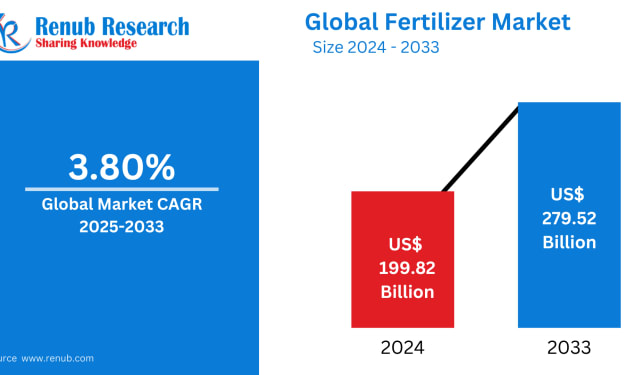
The global fertilizer market is entering a period of steady expansion as the world navigates rising food demand, limited arable land, and rapid advancements in agricultural technology. According to Renub Research, the fertilizer market is projected to reach US$ 279.52 billion by 2033, up from US$ 199.82 billion in 2024, exhibiting a CAGR of 3.80% from 2025 to 2033.
By Janine Root about a month ago in Earth
Facing Political Pressure, Trump Seeks Answer to Rising Housing Costs
As Americans continue to grapple with soaring home prices and rising rents, former President Donald Trump is once again thrust into the national spotlight — this time on a topic that affects millions of households: housing affordability. Facing mounting political pressure, Trump is reportedly exploring ways to address the rising cost of housing, a move that could influence policy debates, the real estate market, and his political narrative in the lead-up to upcoming elections. The Housing Cost Crisis Housing costs in the United States have been climbing steadily over the past several years. According to recent data: Home prices have risen faster than wages in many urban and suburban markets. Rental rates have increased sharply, particularly in high-demand cities like New York, Los Angeles, and Miami. Many Americans now spend 30–50% of their income on housing, leaving less for healthcare, education, and savings. The issue is not just economic — it is increasingly political, with voters citing housing affordability as a top concern. For a public figure like Trump, addressing this problem is both a strategic and symbolic imperative. Political Pressure Mounts Trump’s renewed attention to housing comes amid rising scrutiny from both political opponents and his own party. Democrats have criticized Republican-led efforts for failing to curb housing inflation, while some GOP voters are pressuring Trump to propose solutions that boost homeownership and reduce rent burdens. Policy analysts suggest that housing has become a litmus test for leadership, particularly as younger voters and working families express frustration over the lack of affordable options. This makes it a high-stakes issue for any political figure seeking influence or office. Trump’s Approach Reports indicate that Trump is focusing on several potential strategies to address rising housing costs: Regulatory Reform: Reviewing local and federal regulations that may restrict new construction, including zoning laws, environmental review processes, and permitting bottlenecks. Tax Incentives: Exploring measures to encourage developers to build more affordable housing units. Federal Support Programs: Considering expansion of federal programs for low-income families, including subsidies or down-payment assistance initiatives. Market-Based Solutions: Encouraging private sector investment in housing developments through incentives, partnerships, and streamlined approval processes. While the specifics of these proposals are still emerging, the focus is on expanding supply and easing financial barriers to homeownership and renting. Why Housing Costs Are Rising Understanding the challenge requires examining the factors behind rising housing costs: Supply Constraints: Many cities face shortages of available homes, particularly in areas with strong job growth. Labor and Material Costs: Construction costs have surged due to inflation, labor shortages, and higher material prices. Investor Activity: Institutional investors buying single-family homes as rental properties have reduced the supply available to individual buyers. Interest Rates: Elevated mortgage rates have increased monthly payments, further reducing affordability. These pressures are compounded in high-demand urban areas, making policy intervention both urgent and complex. Economic and Social Implications Rising housing costs have broad implications: Economic Strain: Families allocate more of their income to housing, leaving less for discretionary spending, healthcare, and education. Migration Patterns: High costs push residents to more affordable regions, reshaping local economies and labor markets. Political Discontent: Voters increasingly associate rising housing prices with government inaction, making it a politically sensitive issue. For Trump, addressing housing affordability is as much about economic outcomes as it is about political perception. Reactions from Industry Experts Housing analysts and economists have weighed in on Trump’s efforts: Some applaud the focus on regulatory reform, noting that local zoning and permitting hurdles are major barriers to new construction. Others caution that market-based incentives alone may not suffice and emphasize the need for targeted programs for low- and moderate-income households. Critics warn that overly aggressive deregulation could compromise environmental standards or neighborhood planning, creating long-term trade-offs. The debate reflects the complexity of housing policy in a country where supply, demand, and regulation intersect. Political Strategy and Messaging For Trump, addressing housing costs is not just policy — it is also political messaging. Analysts suggest that: Highlighting efforts to reduce housing costs allows him to appeal to working-class voters who feel squeezed by inflation. Framing housing as a regulatory and market problem aligns with broader Republican priorities of limiting government overreach. Demonstrating concrete solutions could strengthen his position as a problem-solver in the eyes of the electorate. In short, housing affordability represents both a policy challenge and an opportunity to shape the political narrative. Looking Ahead Trump’s proposals are still taking shape, but the broader housing crisis will remain a central issue in American politics: Policymakers at federal, state, and local levels will face pressure to balance supply, affordability, and environmental considerations. Real estate markets will continue to respond to interest rates, investor activity, and regulatory changes. Political figures will be judged by their ability to provide practical solutions that alleviate the financial burdens of everyday Americans. As the debate unfolds, one thing is clear: housing costs are not just numbers on a chart; they impact families, communities, and the broader economy. Conclusion Facing rising political pressure, Trump’s focus on the housing affordability crisis reflects both a policy challenge and a political imperative. With Americans struggling to pay rent and mortgage costs, any strategy that expands supply, reduces financial barriers, or incentivizes affordable development could have meaningful consequences. Whether his efforts will succeed in lowering costs or simply generate debate remains to be seen. What is undeniable, however, is that housing affordability is now a front-and-center issue in American politics, shaping public perception, economic policy, and the national discourse for years to come.Start writing...
By Muhammad Hassan2 days ago in Earth



Comments
There are no comments for this story
Be the first to respond and start the conversation.