
Unlocking the Secrets of the Universe: The Quest for Dark Matter and Energy
Uncovering the Secrets of the Cosmos' Hidden Components

I. Introduction
The universe is a vast and mysterious place, filled with countless celestial bodies and unimaginable phenomena. Among the many enigmas that continue to perplex scientists and cosmologists, dark matter and dark energy rank among the most intriguing. In this article, we embark on a journey to unlock the secrets of the universe and delve into the quest for understanding dark matter and energy.
II. The Nature of Dark Matter
A. What is Dark Matter Made of?
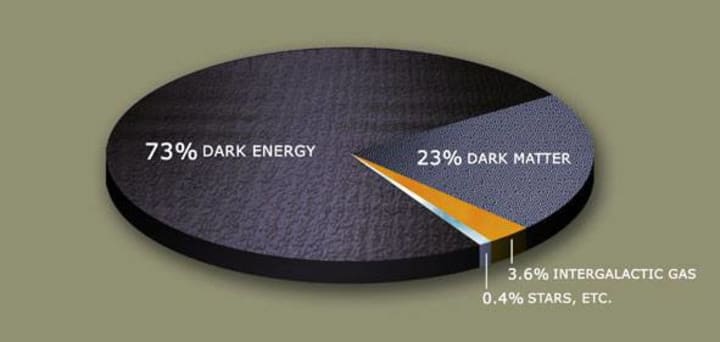
Dark matter, as the name suggests, is a form of matter that does not interact with light or other forms of electromagnetic radiation. Its elusive nature poses a significant challenge to scientists in their attempts to study and comprehend it fully. While the exact composition of dark matter remains unknown, various theories posit that it consists of subatomic particles that have yet to be discovered. These hypothetical particles, such as weakly interacting massive particles (WIMPs) or axions, are believed to be fundamentally different from the familiar matter that makes up our everyday world.
B. Dark Matter and Gravity
One of the primary reasons dark matter captures scientific interest is its gravitational effects on visible matter. Through its gravitational pull, dark matter influences the motion of galaxies, galaxy clusters, and even the cosmic web itself. Scientists have observed that the visible matter alone cannot account for the observed gravitational effects, leading to the conclusion that there must be a significant amount of unseen dark matter distributed throughout the universe. Understanding the relationship between dark matter and gravity is crucial in unraveling its secrets.
III. Detecting Dark Matter
A. Direct Detection Methods
Scientists have devised ingenious methods to detect and study dark matter directly. Direct detection experiments aim to capture the rare interactions between dark matter particles and ordinary matter. They employ highly sensitive detectors, often shielded deep underground to minimize interference from cosmic rays. These experiments seek to observe the elusive scattering of dark matter particles off atomic nuclei, providing valuable clues about their properties and interactions.
B. Indirect Detection Methods
Indirect detection methods involve the search for the elusive particles or phenomena that arise as a consequence of dark matter interactions. For example, scientists look for high-energy cosmic rays, gamma rays, or neutrinos that may be produced when dark matter particles annihilate or decay. Indirect detection experiments utilize sophisticated instruments and observatories to search for the signatures of dark matter in the vast expanse of the cosmos.
IV. The Quest for Dark Matter
A. Experiments and Observatories
Scientists around the world are actively engaged in the quest to unravel the mysteries of dark matter. Numerous experiments and observatories have been dedicated to this pursuit. These include underground detectors such as the Large Underground Xenon (LUX) experiment and the Cryogenic Dark Matter Search (CDMS), which aim to directly detect dark matter particles interacting with nuclei.
B. Large Hadron Collider (LHC)
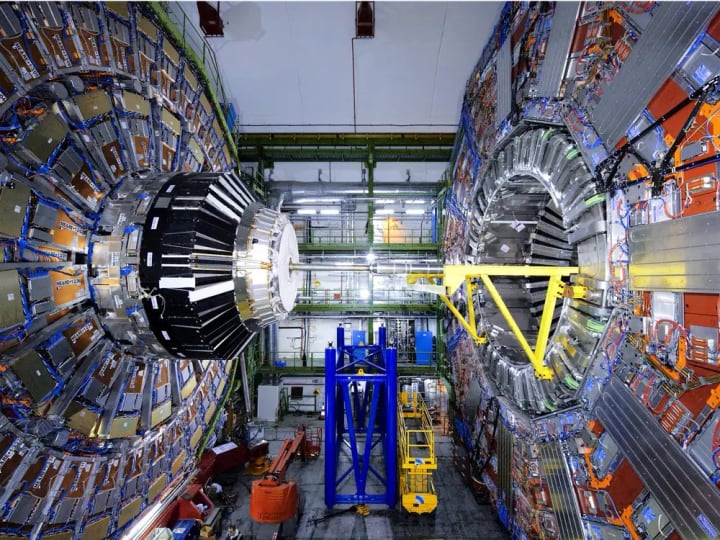
The Large Hadron Collider (LHC), located at the European Organization for Nuclear Research (CERN), also plays a crucial role in the search for dark matter. By colliding particles at high energies, the LHC recreates the conditions that existed shortly after the Big Bang. Scientists analyze the collision data to look for signals of new particles, including those that could be associated with dark matter.
V. Challenges in Studying Dark Matter
A. Elusive Nature of Dark Matter
The elusive nature of dark matter presents a significant challenge to scientists. As dark matter does not interact with light or electromagnetic radiation, it cannot be directly observed or detected through conventional means. Its presence is inferred through its gravitational effects on visible matter. Overcoming this challenge requires innovative approaches and cutting-edge technologies.
B. Decoding Dark Energy
In addition to dark matter, dark energy is another mysterious component of the universe. Dark energy is believed to be responsible for the observed accelerated expansion of the universe. Understanding the nature of dark energy is closely linked to the study of dark matter. Scientists strive to decode the properties and behavior of dark energy to gain deeper insights into the cosmic evolution.
VI. Dark Energy: The Cosmic Acceleration
A. What is Dark Energy?
Dark energy refers to the hypothetical form of energy that permeates the universe and exerts a repulsive force, causing the accelerated expansion of space. It is believed to account for a significant portion of the total energy density of the universe. The exact nature of dark energy remains a topic of intense research and debate among scientists.
B. Einstein's Cosmological Constant

Albert Einstein first introduced the concept of a cosmological constant to his equations of general relativity. The cosmological constant represents a form of energy inherent in space itself, which can drive the expansion or contraction of the universe. While Einstein initially introduced it to maintain a static universe, it has since been associated with the acceleration of the universe and considered a possible explanation for dark energy.
VII. Probing the Secrets of Dark Energy
A. Cosmic Microwave Background Radiation
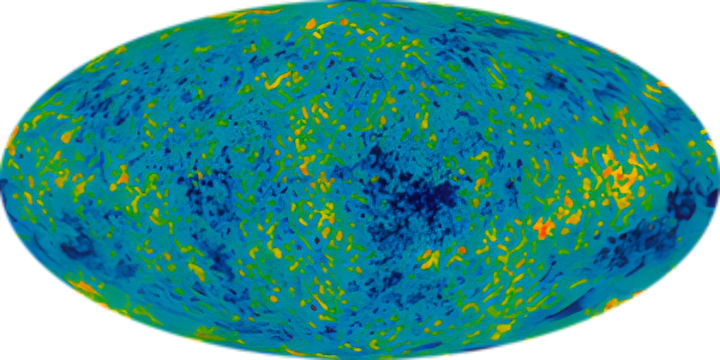
One of the key tools for studying dark energy is the measurement of the cosmic microwave background (CMB) radiation. The CMB radiation is the residual heat left over from the early universe and carries vital information about its composition and evolution. Precise measurements of the CMB radiation help scientists investigate the expansion history of the universe and infer the presence and influence of dark energy.
B. Supernovae Surveys

Supernovae, the explosive deaths of massive stars, provide valuable insights into the expansion of the universe. Type Ia supernovae, in particular, have been extensively studied to measure cosmic distances and probe the effects of dark energy. Surveys such as the Supernova Legacy Survey (SNLS) and the Dark Energy Survey (DES) have played crucial roles in mapping the expansion history of the universe and constraining the properties of dark energy.
VIII. Dark Matter and Dark Energy: Connections and Consequences
A. Influence on the Structure of the Universe
Dark matter and dark energy have profound implications for the large-scale structure of the universe. Dark matter acts as the scaffolding upon which galaxies and galaxy clusters form, while dark energy influences the expansion rate and overall geometry of space. Understanding the interplay between these two components is essential for comprehending the evolution and fate of the universe.
B. Implications for the Fate of the Universe
The presence of dark matter and dark energy has significant implications for the fate of the universe. If dark energy continues to dominate and drive the accelerated expansion, it could lead to a future where galaxies move further apart, and the universe becomes increasingly sparse and diffuse. This scenario, known as the "Big Freeze" or "Heat Death," envisions a universe with diminishing energy and fading starlight.
On the other hand, if the gravitational pull of dark matter is strong enough to counteract the repulsive force of dark energy, the expansion could slow down and reverse. This scenario, called the "Big Crunch," envisions a universe that ultimately collapses upon itself, potentially leading to a new cosmic cycle.
Understanding the balance between dark matter and dark energy is crucial in determining the ultimate destiny of the universe and shedding light on fundamental questions about its origin and existence.
IX. Alternative Theories and Hypotheses
Scientists explore various alternative theories and hypotheses to explain the mysteries of dark matter and dark energy. These theories go beyond the standard model of particle physics and general relativity, offering alternative explanations for the observed phenomena.
A. Modified Gravity Theories
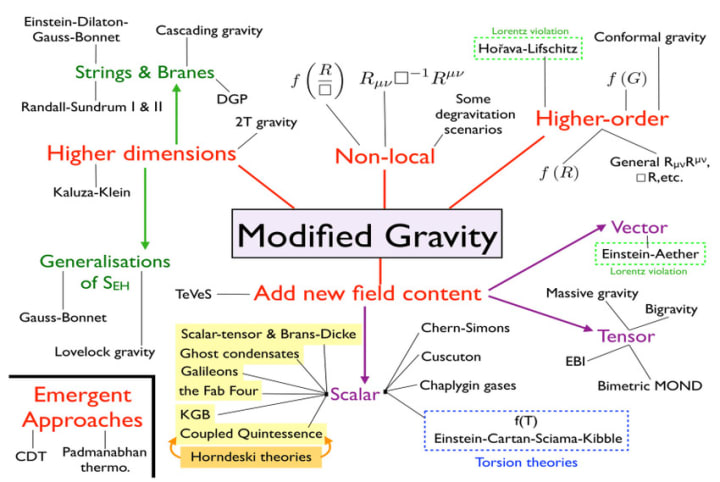
Some theories propose modifications to the laws of gravity at large scales as an alternative explanation for the observed gravitational effects attributed to dark matter. These modified gravity theories aim to explain the galactic rotation curves and the clustering of galaxies without invoking the existence of unseen particles. Examples of such theories include Modified Newtonian Dynamics (MOND) and Scalar-Tensor-Vector Gravity (STVG).
B. Theories of Extra Dimensions
Other theories propose the existence of extra dimensions beyond the three spatial dimensions we experience. These theories, such as the Braneworld models and string theory, suggest that dark matter and dark energy could arise from the effects of these additional dimensions on the fundamental forces and particles in the universe. Exploring these theories involves intricate mathematical frameworks and requires experimental evidence to support their validity.
X. The Ongoing Search for Answers
The quest to unravel the secrets of dark matter and dark energy is an ongoing endeavor that continues to captivate the minds of scientists worldwide. As technology advances and new discoveries are made, the search for answers intensifies.
A. Future Experiments and Technologies
Scientists are planning and developing new experiments and technologies to probe deeper into the nature of dark matter and dark energy. These include next-generation underground detectors with increased sensitivity, space-based observatories dedicated to mapping the cosmic microwave background with higher precision, and advancements in particle accelerators to probe the properties of particles associated with dark matter.
B. The Role of Artificial Intelligence
Artificial intelligence (AI) plays an increasingly significant role in the study of dark matter and dark energy. AI algorithms and machine learning techniques are employed to analyze vast amounts of data, identify patterns, and make predictions. AI assists in the identification of potential dark matter signals in experiments, simulates complex cosmological models, and aids in the analysis of astronomical observations, enabling scientists to extract valuable insights from the wealth of available information.
XI. Conclusion
The quest for understanding dark matter and dark energy takes us on a journey of exploration and curiosity. Scientists tirelessly pursue the secrets of the universe, aiming to unravel the mysteries that lie beyond the grasp of our current knowledge. The elusive nature of dark matter and the enigmatic behavior of dark energy challenge our understanding of the cosmos and push the boundaries of scientific inquiry. Through ongoing experiments, observations, and the development of new theoretical frameworks, we inch closer to unlocking the secrets of the universe and gaining deeper insights into our cosmic existence.
FAQs (Frequently Asked Questions)
1. What is the difference between dark matter and dark energy?
A: Dark matter is a hypothetical form of matter that does not interact with light, while dark energy is a hypothetical form of energy that is responsible for the accelerated expansion of the universe.
2. How do scientists know the exact composition of dark matter?
A: The exact composition of dark matter remains unknown. Scientists have proposed various theories, suggesting that dark matter may consist of yet-to-be-discovered particles such as WIMPs (Weakly Interacting Massive Particles) or axions. However, direct detection experiments have not yet provided conclusive evidence for the existence of these particles. The search for the true nature of dark matter continues.
3. How does dark matter affect the formation of galaxies?
A: Dark matter plays a crucial role in the formation of galaxies. Its gravitational pull provides the gravitational glue that allows ordinary matter to come together and form structures. Over time, dark matter's gravitational influence leads to the formation of dark matter halos, within which galaxies form and evolve. The distribution of dark matter dictates the overall structure and dynamics of galaxies and their clusters.
4. Can dark matter and dark energy be related or interconnected?
A: While dark matter and dark energy are distinct concepts, they may be interconnected in the sense that they both influence the behavior of the universe. Dark matter's gravitational effects contribute to the formation of structures, including galaxies, while dark energy drives the accelerated expansion of space. The interplay between these two components influences the overall evolution and fate of the universe.
5. How do scientists study dark energy and its effects on the universe?
A: Scientists study dark energy through various observational methods. They analyze the cosmic microwave background radiation, which provides information about the early universe and its expansion history. Supernovae surveys are also conducted to measure cosmic distances and infer the influence of dark energy on the acceleration of the universe. Additionally, scientists use large-scale galaxy surveys and gravitational lensing to study the effects of dark energy on the large-scale structure of the universe.
6. Could there be alternative explanations for dark matter and dark energy?
A: Scientists explore alternative theories and hypotheses to explain the mysteries of dark matter and dark energy. These include modified gravity theories, which propose modifications to the laws of gravity, and theories involving extra dimensions beyond the three spatial dimensions we experience. These alternative explanations aim to provide different frameworks for understanding the observed phenomena and challenge the current understanding of the universe.
As our understanding of the universe continues to evolve, the quest to unlock the secrets of dark matter and dark energy remains a captivating and ongoing scientific endeavor. Through advancements in technology, experiments, and theoretical frameworks, we inch closer to comprehending the mysteries that lie within the fabric of the cosmos.
About the Creator
Aditi
I Love to Write, I hope you love to read
Nature’s Hidden Gems: Discovering the Rarest Flowers on Earth
Introduction: When Beauty Meets Rarity Nature is filled with wonders, but few are as captivating—and as elusive—as the rarest flowers on Earth. From enormous parasitic blooms to delicate orchids that appear only under precise conditions, these plants challenge our understanding of survival, evolution, and beauty.
By Ahmed aldeabella4 days ago in Earth
Verizon Outage Today
A sudden Verizon outage can feel unsettling, especially when your phone switches to “SOS” or “emergency calls only” without warning. Across social media and outage-tracking platforms, users often rush to ask the same questions: Is Verizon down right now? Why is my phone in SOS mode? What happened to Verizon today, and when will Verizon be back up? While outages are never convenient, they are not uncommon for large national carriers like Verizon Wireless. Understanding what a Verizon service outage means—and how to respond—can help reduce confusion during moments when connectivity disappears. Is Verizon Down? Understanding Service Outages A Verizon wireless outage occurs when part of Verizon’s cellular or data network becomes unavailable. This can affect voice calls, text messages, mobile data, or all services at once. Some outages are isolated to specific cities, such as Verizon outage NYC, Atlanta, Houston, or New Jersey, while others expand into a broader Verizon nationwide outage. When service is disrupted, users commonly report: Verizon down today Verizon network down Verizon not working Is Verizon down in my area? Verizon service outage These reports often surface within minutes, especially on outage-monitoring platforms. Why Does My Phone Say SOS? One of the most alarming signs during a Verizon outage today is seeing SOS, SOS only, or emergency calls only at the top of an iPhone. This leads many to ask, “Why is my phone in SOS mode Verizon?” SOS mode does not mean your phone is broken. It indicates that your device cannot connect to the Verizon network but can still place emergency calls using any available carrier signal. Common searches during outages include: Why does my phone say SOS only? iPhone stuck in SOS mode Why is my phone on SOS Verizon? What does SOS mean on iPhone? How to get phone out of SOS mode In most cases, the issue resolves automatically once Verizon restores network connectivity. What Caused the Verizon Outage Today? When connectivity drops, users naturally want immediate answers to what caused the Verizon outage today. Verizon does not always publish technical details right away, but outages are typically linked to: Network maintenance or system upgrades Fiber or backend routing failures Power outages affecting Verizon towers Severe weather or environmental damage Unexpected network congestion Despite online speculation, most Verizon outages are not related to cyberattacks. Searches like “Verizon cyber attack today” often trend during disruptions, but confirmed causes are usually infrastructure-related and temporary. How to Check Verizon Outage Status in Real Time If you’re wondering “Is Verizon still down?”, there are several reliable ways to check. Downdetector Verizon Platforms like Downdetector and Down Detector Verizon track real-time user reports. A spike in complaints usually confirms a Verizon outage before official statements are released. Verizon Outage Map Verizon provides a Verizon wireless outage map, sometimes including outage views by ZIP code. This helps answer questions like: Is there a Verizon outage near me? Is Verizon down in my area? My Verizon App and Network Status Pages The My Verizon app and Verizon’s official network status tools may display service alerts and updates during larger outages. Verizon Customer Service During an Outage During a widespread Verizon service outage, many users attempt to call Verizon customer service or search for the Verizon customer service number. While support teams remain active, wait times often increase significantly during major disruptions. Important things to keep in mind: Customer service representatives usually cannot provide exact repair timelines Rebooting your phone repeatedly during an outage rarely helps Network restoration often happens region by region Monitoring Verizon outage updates is typically more effective than calling support during peak outage periods. When Will Verizon Be Back Up? The most pressing question remains: When will Verizon service be restored? The answer depends on: Whether the outage is local or nationwide The cause of the disruption Whether physical repairs are required Minor outages may resolve within minutes or hours. Larger incidents—such as a Verizon cellular outage affecting multiple states—can take longer. Verizon generally prioritizes emergency communications before restoring full voice and data services. Search trends during outages often include: When will Verizon be fixed? How long will Verizon be down? When is Verizon going to be back up? While exact times are rarely guaranteed, service usually returns gradually rather than all at once. Verizon, Competition, and Broader Impact High-profile outages often spark comparisons with competitors like AT&T and T-Mobile. Searches for AT&T outage or T-Mobile outage frequently rise at the same time, as users explore alternative networks. Although outages generate headlines and social media frustration, they rarely have lasting effects on Verizon stock unless disruptions become frequent or prolonged. What to Do If Your Phone Is in SOS Mode If your phone shows SOS only during a Verizon outage: Enable Wi-Fi calling if available Avoid changing SIM or resetting network settings mid-outage Keep your device charged and updated Check Verizon outage updates periodically Once Verizon’s network stabilizes, most phones exit SOS mode automatically. Final Thoughts A Verizon outage can be disruptive, especially when communication suddenly feels out of reach. However, seeing SOS mode does not mean your phone is damaged—it simply reflects a temporary network issue. Staying informed through trusted sources like Downdetector, Verizon’s outage maps, and official Verizon updates can help users navigate these moments with clarity. While outages are frustrating, they are typically temporary, and service restoration is usually a matter of time rather than cause for alarm.
By Saboor Brohi 4 days ago in Earth




Comments
There are no comments for this story
Be the first to respond and start the conversation.