
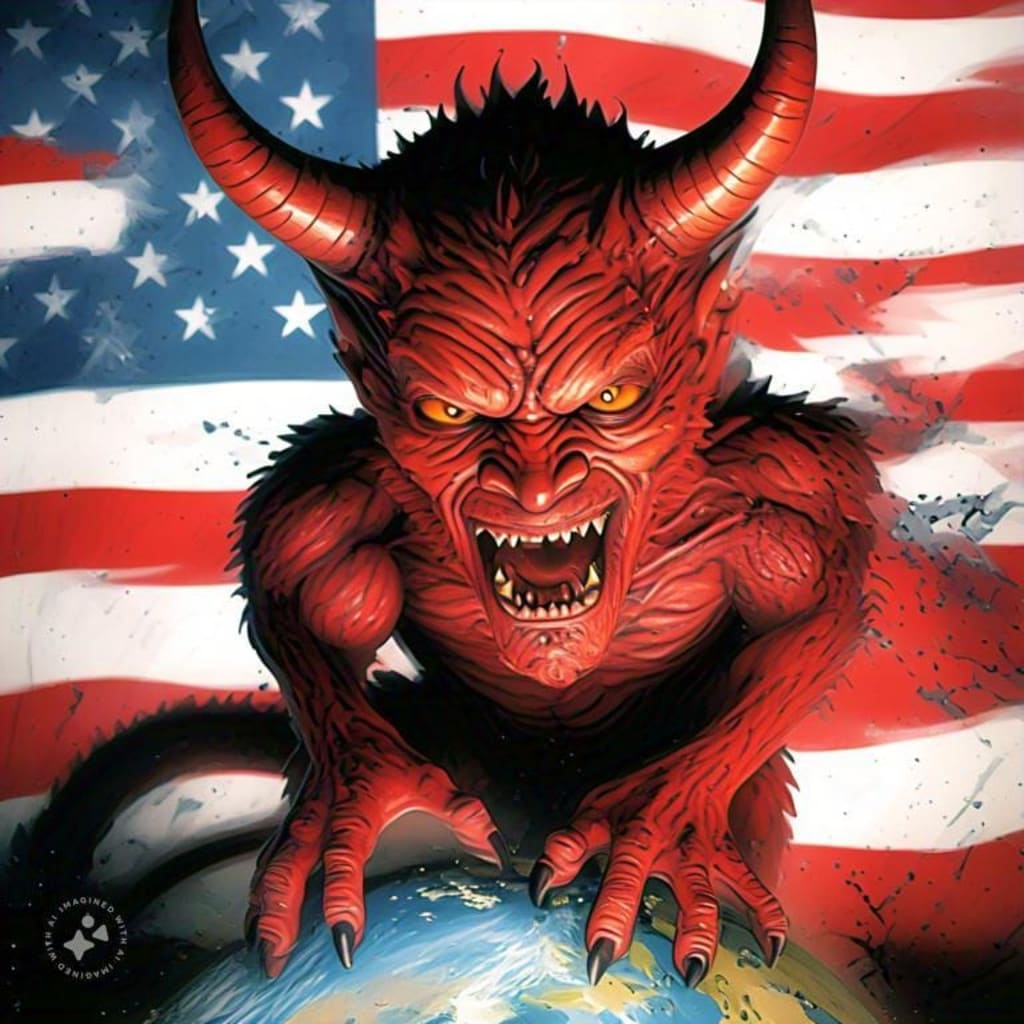
The United States, as one of the world's most powerful nations, exerts a profound influence on global affairs. U.S. politics, from its domestic policies to its international relations, significantly impacts economies, geopolitical stability, and even cultural trends worldwide. This article delves into how U.S. political decisions reverberate across the globe, shaping the future of other nations and influencing global dynamics.
Economic Influence
One of the most direct ways U.S. politics affects the world is through its economic policies. The U.S. dollar serves as the world's primary reserve currency, and decisions made by the U.S. government, particularly in fiscal and monetary policy, can have widespread ramifications. For example, changes in interest rates set by the Federal Reserve influence global capital flows, impacting everything from emerging markets to multinational corporations.
Trade policies enacted by the U.S. government also have far-reaching consequences. Tariffs, trade agreements, and sanctions can alter the global supply chain, affecting industries worldwide. The U.S.-China trade war, initiated during the Trump administration, disrupted global markets, leading to shifts in manufacturing bases and the reorganization of global trade routes.
Additionally, U.S. tax policies, especially those affecting multinational corporations, influence global economic landscapes. When the U.S. cuts corporate taxes or imposes new regulations, companies may shift operations, investments, and profits internationally, affecting jobs and economic growth in other countries.
Geopolitical Power and Diplomacy
The U.S. holds a significant role in international diplomacy, and its foreign policies can shift the balance of power across regions. As a permanent member of the United Nations Security Council, the U.S. plays a crucial role in international peacekeeping and conflict resolution efforts. Its military alliances, such as NATO, and its defense policies often determine the stability of various regions, particularly in Europe and the Middle East.
U.S. involvement in conflicts, such as those in Iraq, Afghanistan, and Syria, has had profound impacts on regional stability, refugee flows, and global terrorism. The U.S. approach to these conflicts often influences the actions of other nations, whether they choose to align with U.S. policies or oppose them.
Furthermore, U.S. diplomacy is central to addressing global challenges such as climate change, nuclear proliferation, and human rights. The country's stance on these issues, shaped by its political leadership, can either foster international cooperation or create divisions. For instance, the U.S. withdrawal from the Paris Agreement under the Trump administration created significant uncertainty about the global commitment to addressing climate change, although this was reversed under the Biden administration.
Soft Power and Cultural Influence
Beyond economic and military power, the U.S. exerts substantial soft power—the ability to influence others through culture, values, and ideology. American culture, from Hollywood movies to tech innovations, shapes global norms and lifestyles. U.S. political ideals, such as democracy, freedom of speech, and human rights, often serve as benchmarks for other nations, influencing political movements and reforms worldwide.
The spread of American culture and values is closely linked to the country's political environment. For example, U.S. policies on immigration, technology, and education can either bolster or hinder its global influence. When the U.S. is seen as a champion of democratic values and innovation, its cultural and ideological influence grows. Conversely, when U.S. politics are marked by internal division or controversial policies, its soft power can diminish, leading to skepticism and resistance abroad.
Impact on Global Institutions
The U.S. has been instrumental in the establishment and functioning of global institutions such as the United Nations, the World Bank, and the International Monetary Fund (IMF). These institutions are critical in addressing global challenges, from poverty reduction to conflict resolution. U.S. politics, particularly its funding and support for these institutions, can determine their effectiveness and the direction of global development.
For instance, U.S. contributions to international organizations like the World Health Organization (WHO) are vital for global health initiatives. Political decisions to reduce funding or withdraw from these organizations can undermine global efforts to tackle pandemics, health crises, and other transnational issues.
Global Reactions to U.S. Elections
The world closely watches U.S. presidential elections because the outcome can significantly alter global politics. Different administrations prioritize different aspects of foreign policy, leading to shifts in global alliances and tensions. The election of a new president often results in changes to international agreements, trade policies, and military strategies, prompting reactions from allies and adversaries alike.
For example, the election of Donald Trump in 2016 led to significant changes in U.S. foreign policy, including a more isolationist approach, withdrawal from international agreements, and heightened tensions with traditional allies. Conversely, the election of Joe Biden in 2020 marked a return to more traditional diplomacy, re-engagement with international institutions, and efforts to repair strained alliances.
Conclusion
U.S. politics play a pivotal role in shaping the global order. From economic policies that influence global markets to foreign policy decisions that affect international stability, the impact of U.S. political actions is felt far beyond its borders. As the world becomes increasingly interconnected, the importance of U.S. politics on the global stage will only grow, making it essential for other nations to closely monitor and respond to developments in Washington, D.C.
Understanding the global impact of U.S. politics is crucial for navigating the complex and ever-changing landscape of international relations. Whether through economic influence, military power, or cultural dominance, the United States remains a central player in the world's political arena, and its actions continue to shape the future of global society.
About the Creator
Himalayas Bare and Rocky After Reduced Winter Snowfall, Scientists Warn
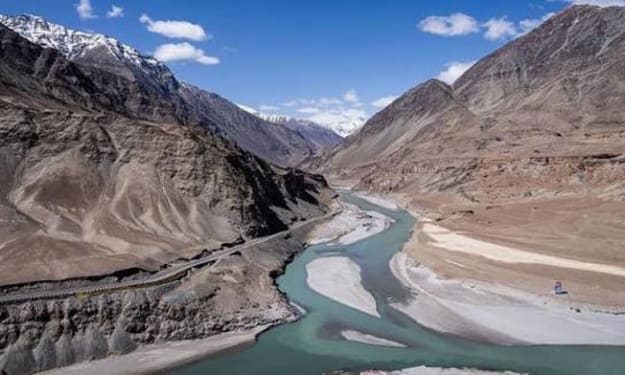
The Himalayas, often described as the world’s “Third Pole,” are facing a dramatic and worrying transformation. Scientists are warning that reduced winter snowfall is leaving vast stretches of the mountain range bare, rocky, and increasingly vulnerable to long-term environmental damage. Once known for their thick snow blankets and powerful glaciers, parts of the Himalayas are now showing exposed rock earlier than ever before—an alarming sign of climate stress in one of Earth’s most critical ecosystems. A Visible Change in the World’s Highest Mountains Winter snowfall plays a vital role in the Himalayan climate system. Snow acts as a protective layer, insulating glaciers and regulating the slow release of meltwater into rivers during warmer months. However, researchers monitoring satellite data and ground stations report that recent winters have brought significantly less snowfall across large areas of the range. As a result, snowlines are rising higher up the slopes, leaving lower and mid-altitude regions exposed. This has turned once-white mountain landscapes into expanses of dark rock, which absorb more heat from the sun, accelerating warming in a dangerous feedback loop. Why Reduced Snowfall Matters Snow is more than a scenic feature—it is essential to the health of Himalayan glaciers. When snowfall declines, glaciers lose their main source of replenishment. At the same time, exposed ice and rock melt faster under direct sunlight. Scientists warn that this imbalance is speeding up glacier retreat across the Himalayas. Many glaciers are now shrinking at rates not previously recorded, threatening the long-term stability of water systems that support nearly two billion people across South and Southeast Asia. Impact on Asia’s Major Rivers The Himalayas feed some of the world’s most important rivers, including the Indus, Ganges, Brahmaputra, Yangtze, and Mekong. These rivers depend on seasonal snow and ice melt to maintain consistent flow throughout the year. Reduced snowfall means less stored water for the dry season. In the short term, faster melting can cause floods and landslides. In the long term, however, shrinking glaciers could lead to water shortages, affecting agriculture, hydropower, and drinking supplies across multiple countries. A Growing Risk of Disasters Bare, rocky slopes are far more unstable than snow-covered ones. Snow helps bind loose material together, while exposed rock and soil increase the likelihood of landslides and avalanches. Scientists have already observed a rise in slope failures and glacial lake outburst floods in the region. As glaciers retreat, meltwater often accumulates in fragile lakes dammed by loose rock and ice. These lakes can burst suddenly, releasing destructive floods that threaten mountain communities and downstream infrastructure. Climate Change at the Core Researchers agree that climate change is the primary driver behind the declining snowfall. Rising global temperatures are altering weather patterns, causing more winter precipitation to fall as rain rather than snow. Even small temperature increases at high altitudes can drastically change how moisture behaves. Additionally, warming oceans and shifting atmospheric circulation are affecting the timing and intensity of winter storms that traditionally brought snow to the Himalayas. Effects on Local Communities and Wildlife Mountain communities that rely on predictable snowfall for farming, tourism, and water storage are already feeling the effects. Farmers report changes in planting cycles, while winter tourism has declined in some regions due to unreliable snow conditions. Wildlife is also under pressure. Species adapted to cold environments are losing habitat as snow cover shrinks. Plants that depend on snowmelt are struggling to survive in drier, warmer conditions, disrupting fragile alpine ecosystems. Scientists Call for Urgent Monitoring and Action Experts stress the importance of improved monitoring of snowfall, glacier health, and water flows across the Himalayan region. Better data can help governments plan for future water management challenges and disaster risks. At the same time, scientists emphasize that local adaptation alone is not enough. Reducing global greenhouse gas emissions remains critical to slowing temperature rise and preserving what remains of the Himalayan snow and ice. What the Future Holds If current trends continue, large parts of the Himalayas could see permanent changes within decades. Reduced snowfall and accelerating glacier loss may reshape landscapes, ecosystems, and human livelihoods on an unprecedented scale. The sight of bare, rocky Himalayan slopes is more than a visual change—it is a warning signal. The world’s highest mountains are responding rapidly to a warming planet, and the consequences will extend far beyond the peaks themselves.
By Fiaz Ahmed Brohi6 days ago in Earth
Nature’s Hidden Gems: Discovering the Rarest Flowers on Earth
Introduction: When Beauty Meets Rarity Nature is filled with wonders, but few are as captivating—and as elusive—as the rarest flowers on Earth. From enormous parasitic blooms to delicate orchids that appear only under precise conditions, these plants challenge our understanding of survival, evolution, and beauty.
By Ahmed aldeabella3 days ago in Earth



Comments
There are no comments for this story
Be the first to respond and start the conversation.