
Unfortunate events that happened in Korea
currently, Korea
South Korea has a long and complex history, filled with both triumphs and tragedies. While the country has made significant progress in recent decades, it has faced a number of unfortunate events that have left a lasting impact on its people and its society. From wars and political uprisings to natural disasters and tragic accidents, South Korea has experienced a number of significant setbacks over the years. In this article, we will explore some of the most notable unfortunate events that have taken place in Korea.
The Korean War
The Korean War, which lasted from 1950 to 1953, was a significant conflict that had a profound impact on the Korean people. The war was fought between North Korea, which was supported by the Soviet Union and China, and South Korea, which was backed by the United States and other Western powers. The war resulted in the deaths of millions of people and left the country deeply divided. Despite the signing of an armistice in 1953, tensions between North and South Korea have remained high, and the two countries have yet to sign a peace treaty.
The Gwangju Uprising
The Gwangju Uprising, which took place in May 1980, was a pro-democracy movement that was brutally suppressed by the South Korean government. The uprising was sparked by the government's decision to declare martial law and suppress opposition voices. In response, students and citizens took to the streets to demand democratic reforms. The government responded with violence, leading to the deaths of hundreds of people. The Gwangju Uprising is considered a turning point in South Korea's struggle for democracy and has become a symbol of resistance against authoritarianism.
The Sewol Ferry Disaster
The Sewol ferry disaster, which occurred in April 2014, was a tragic event that shook the entire country. The ferry was carrying over 400 passengers, many of whom were high school students on a field trip, when it capsized and sank off the coast of South Korea. The disaster resulted in the deaths of 304 people, most of whom were students. The sinking of the Sewol ferry was attributed to overloading, improper stowage of cargo, and the crew's negligence. The disaster shocked the country and led to widespread protests and calls for accountability. The government's response to the disaster was widely criticized for being inadequate and lacking transparency.
The Jeju Uprising
The Jeju Uprising, which took place on Jeju Island from 1948 to 1954, was a violent political conflict between communist forces and South Korean security forces. The conflict resulted in the deaths of an estimated 14,000 to 30,000 people, most of whom were civilians. The Jeju Uprising had a significant impact on the political and social landscape of South Korea and resulted in the establishment of a military government. The government's brutal response to the uprising is still a controversial and painful issue in Korean society.
The Sampoong Department Store Collapse
The Sampoong Department Store collapse, which occurred in June 1995, was a tragic event that resulted in the deaths of over 500 people. The collapse was attributed to the building's poor construction and maintenance, as well as overloading of the building's floors with heavy equipment and materials. The disaster led to public outrage and calls for improved safety regulations and inspections.
The Korean Air Lines Flight 801 Crash
Korean Air Lines Flight 801 was a scheduled international passenger flight from Seoul to Guam that crashed on August 6, 1997, killing all 228 people on board. The crash was caused by a number of factors, including poor weather conditions and the crew's failure to properly monitor the plane's altitude.
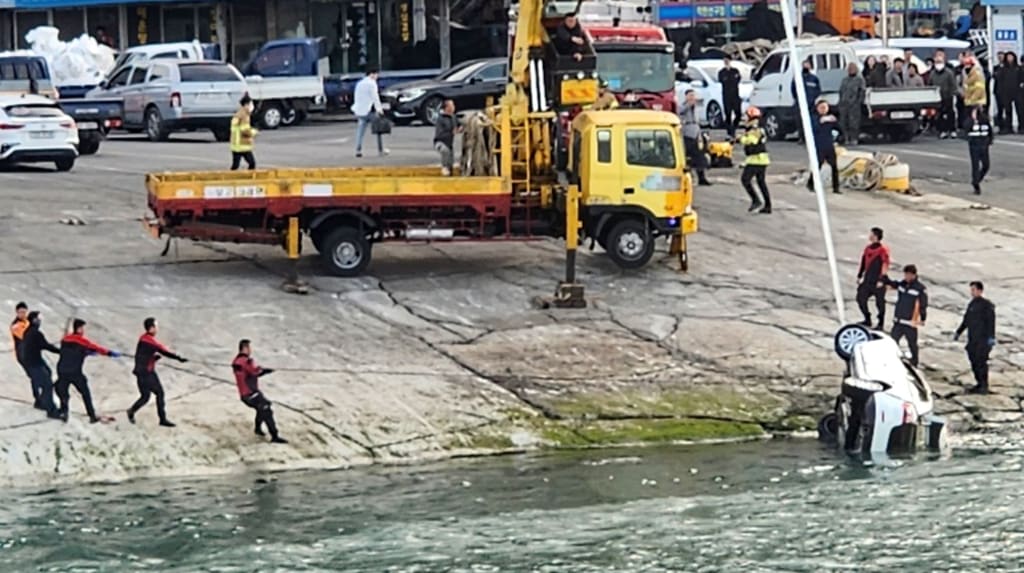
Maritime accident in Korea, pictured
About the Creator
Keep reading
More stories from writers in Earth and other communities.
Off the Book
It ended like every other stupid idea. Badly, and alone. I’m researching digital confession ethics, he said. A tech ethicist. He gestured at floating data I couldn’t see then pulled out a physical notebook. Actual paper, fountain pen. He held it up like he was showing me scripture.
By Nicky Frankly3 days ago in Fiction


Comments
There are no comments for this story
Be the first to respond and start the conversation.