
Undiscovered Stories About Bangladesh
The hidden woes about the Asian based country

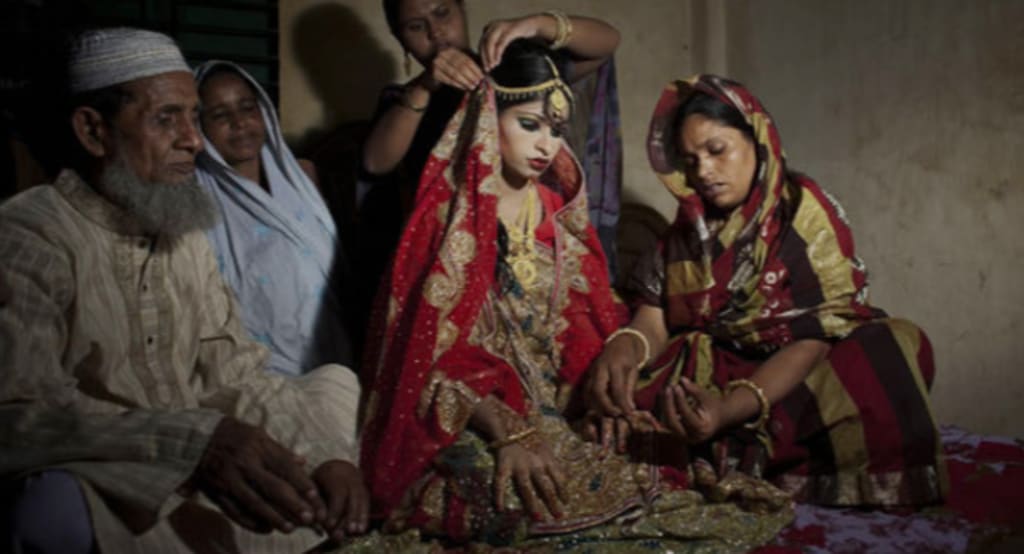
Bangladesh, a nation rich in cultural legacy, offers an intriguing contrast where modernity and tradition coexist in nuanced ways. It is one of the most populous countries in the world, with a population of over 160 million. Still, it faces serious social issues that have a big impact on people's lives, especially those of women and children.
The high rate of child marriage in Bangladesh is one of the most tragic problems. With nearly one in three girls being married off before the age of fifteen and more than two-thirds before the age of eighteen, the nation has one of the highest rates of child marriage in the world. This terrible norm deprives young girls of their youth, education, and future possibilities, and frequently results in a life of abuse and hardship at home. Despite attempts by the government and international organizations to curtail it, the tradition endures.
One particularly shocking tradition in the Mandi tribe, in the Mymensingh region, demonstrates the intricacy of social traditions in Bangladesh. Widows who wish to remarry must select a spouse from within their tribe, usually a younger, single man, in this community of about 25,000 people. Surprisingly, the widow's daughter might also be forced to wed the same man, frequently without her awareness until much later in life. The region's deeply ingrained patriarchal norms, which still influence women's lives, are highlighted by this practice.
Bangladeshi women have achieved amazing progress in politics despite these obstacles. The nation has witnessed female leadership at the highest levels; from 1991 to 1996, Khaleda Zia broke down barriers by becoming the first female prime minister. This legacy is carried on by the current prime minister, Sheikh Hasina, who has shown tenacity and grit in navigating a political environment dominated by men. These leaders have demonstrated the contradictory nature of gender dynamics in Bangladesh by securing and retaining power in a society where women are frequently marginalized.
Bangladesh is unique in Asia in that it takes a different stance on prostitution. Although the practice is illegal in many neighboring countries, Bangladesh legalized it in 2000. Only a small portion of the estimated 100,000 women and girls working in the field today do so voluntarily. Sadly, most are forced or sold into this life by strangers, relatives, or even their husbands. The conviction rate for human traffickers is as low as 0.5%, demonstrating a serious lack of legal protections for these defenseless women. This shows how little the justice system is doing to address this problem.
Even the most seasoned travelers find it hard to believe how much traffic congestion there is in Dhaka, the vibrant capital of Bangladesh. With only about 4,000 buses serving the city's nearly 17 million residents, crowded, outdated buses that are frequently more than 20 years old are the result. Over 500,000 unlicensed vehicles, innumerable tuk-tuks, and an astounding number of rickshaws—roughly 400,000—all contribute to the traffic chaos. Travel times are often two or three times longer than usual due to the frequent disregard for traffic lights.
Bangladesh's culinary customs are as unique as they are delicious. Breakfast is usually fermented or puffed rice at 8:00 a.m. Lunch, lentils, is served at 2:00 p.m. and is a mainstay in Bangladeshi homes. Dinner is typically served late, at 11:00 p.m., and consists of rice and milk. Rice is combined with curry or chapati dipped in sauce and eaten by hand, making for a delicious combination of flavors and textures. Bangladesh is also well-known for its love of spices, especially the Bhut jolokia, which has a Scoville rating of over a million SHU and is one of the spiciest chilies in the world.
Bangladesh's apparel industry is a major player in the global fashion market, with about 3,500 factories producing textiles for brands like Levi's, Zara, and H&M valued at about $40 billion a year. Nevertheless, the stark reality that underpins this success is that garment workers frequently work in subpar conditions for less than $100 per month without formal contracts, face wage delays, and lack insurance. The 2013 Savar factory collapse, which left 2,500 people injured and over 1,100 dead, is still a sobering reminder of the terrible working conditions in the sector.
Bangladesh has demonstrated incredible innovation in education despite these obstacles. Floating schools were introduced through the Shidhulai Swanirvar Sangstha initiative in response to the annual floods that impact one-fifth of the country. These schools are fully functional classrooms, libraries, play areas, and even health stations. They are housed in wooden boats over 50 feet long and 10 feet wide. More than 1,800 children in remote areas can now learn digitally thanks to computers powered by solar panels with internet access. This floating school system is an amazing example of human resourcefulness and fortitude, transforming hardship into a chance for development and education.
Bangladesh is also home to some of the world's most unusual cultural landmarks, like the Ahsan Manzil, popularly known as the Pink Palace, near the Buriganga River, and the magnificent Lalbagh Fort in Dhaka, which was constructed in the 17th century by Prince Muhammad Azam. A peek at the rich architectural legacy of the nation can be found at these historical sites.
India and Bangladesh have made major progress in resolving their intricate border disputes recently. 2015 saw the signing of a historic land exchange agreement that simplified the two countries' convoluted, jigsaw-like northern border. After years of uncertainty and hardship for the locals, this agreement, which affected about 50,000 people and covered about 177,000 acres, allowed each country to integrate these lands within their territories fully.
Bangladesh is nevertheless a vibrant and strong country despite its numerous difficulties. Discovering and comprehending this intriguing nation is made possible by its inventive approaches to societal issues, a wealth of cultural traditions, and steady economic expansion. Bangladesh provides an enthralling voyage into a place where tradition and modernity continue to shape the lives of its people, whether via its busy streets, distinctive culinary customs, or historical sites.
About the Creator
Themba Botilo
A pragmatic sesquipedalian
Keep reading
More stories from Themba Botilo and writers in Earth and other communities.
David Lewis' Unsolved Mystery
David Lewis, a well-respected attorney residing in Amarillo, Texas, lived with his wife Karen and their nine-year-old daughter in 1993. He was known for his devotion to his family and participation in various charitable endeavors.
By Themba Botiloabout a year ago in Criminal
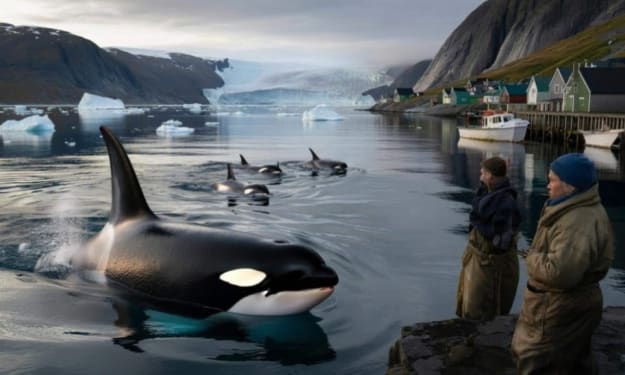
Greenland Declares State of Emergency as Scientists Link the Growing Presence of Orcas to Accelerating Ice Melt
In a landmark decision that reflects the intensifying impacts of climate change, the government of Greenland has officially declared a state of environmental emergency—a rare and solemn move that underscores the accelerating transformation of Arctic ecosystems. The catalyst for this declaration? An unusual and growing presence of orcas—also known as killer whales—in waters once locked in sea ice, a phenomenon scientists say reveals the alarming scale of ice melt in the region.
By Sadaqat Ali2 days ago in Earth
Clintons to Testify in Epstein Inquiry
Reports that former U.S. President Bill Clinton and former Secretary of State Hillary Clinton could testify in an inquiry related to Jeffrey Epstein have sparked widespread international attention. The inquiry is part of ongoing efforts by authorities and investigators to understand the full scope of Epstein’s network, financial dealings, and connections with high-profile individuals.
By Aarif Lashari7 days ago in Earth
The Lesions of Devotion
Every day I set myself down on the freshly cut lawn and strip myself bare. I take my guitar and finger the frets and pick at the strings, listening for dissonance. My life is dissonance. I twist the tuning pegs until each string sounds bright. Then I kneel, calves pointing behind me, kneecaps facing forward. All exposed to the breeze. I close my eyes and play the melody.
By Paul Stewart4 days ago in Fiction



Comments (2)
Thanks for sharing
Well written