
Understanding Earthquakes: Unveiling the Forces Behind Nature's Tremors
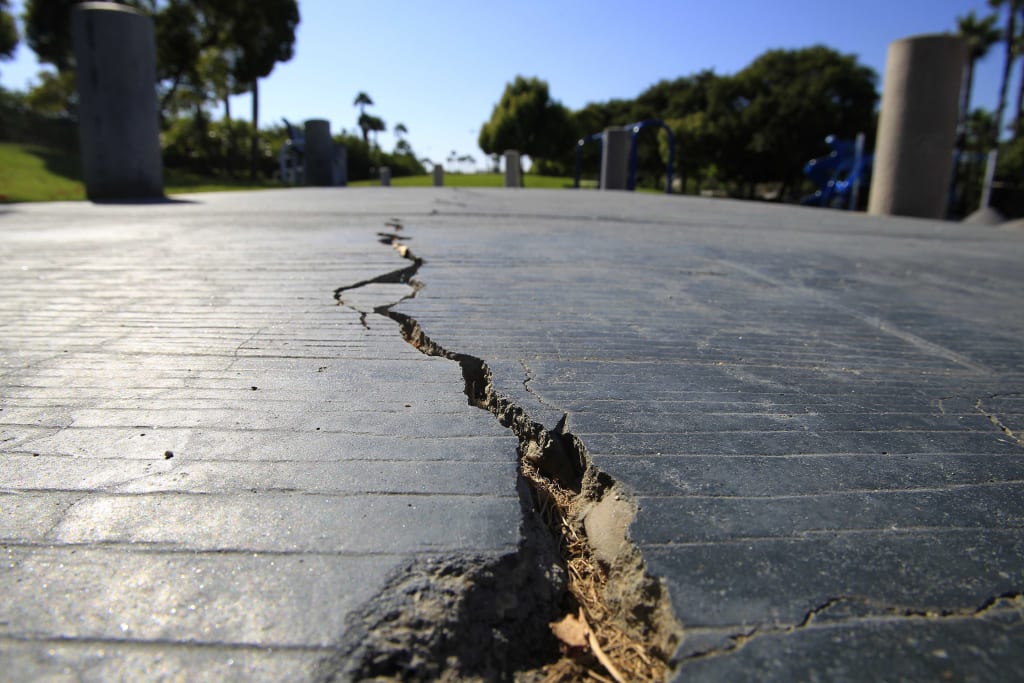
Earthquakes, awe-inspiring yet terrifying natural phenomena, have captivated human curiosity for centuries. These sudden vibrations of the Earth's surface can cause widespread devastation, leaving us pondering the reasons behind their occurrence. This article explores the fascinating world of earthquakes, shedding light on their causes, the various types of seismic activity, and their implications for our planet.
The Earth's Dynamic Nature
To comprehend earthquakes, we must first grasp the Earth's dynamic nature. Our planet is composed of several layers, with the lithosphere being the outermost and divided into enormous tectonic plates. These plates, akin to puzzle pieces, slowly shift due to underlying forces, leading to interactions that result in seismic activity.
Tectonic Plates and Plate Boundaries
Earth's crust is divided into numerous tectonic plates, such as the Pacific Plate, Eurasian Plate, and North American Plate. The boundaries where these plates meet are the epicenters of intense seismic activity. There are three primary types of plate boundaries: divergent, convergent, and transform boundaries, each responsible for distinct earthquake patterns.
Divergent Plate Boundaries
Divergent boundaries occur when tectonic plates move away from each other. This movement allows magma from the Earth's mantle to rise, leading to the creation of a new crust. The resulting earthquakes are generally mild to moderate in intensity, commonly observed along the Mid-Atlantic Ridge and the East African Rift Zone.
Convergent Plate Boundaries
Convergent boundaries are characterized by tectonic plates colliding with one another. Subduction zones, where an oceanic plate sinks beneath a continental plate, give rise to the most powerful earthquakes on Earth. These colossal events, such as the 2004 Sumatra-Andaman and 2011 Tohoku earthquakes, result from immense strain buildup and the subsequent release of energy.
Transform Plate Boundaries
Transform boundaries occur when tectonic plates slide horizontally past one another. The friction between plates eventually gives way, generating earthquakes along the fault lines. The San Andreas Fault in California is a prominent example of this type of plate boundary, famous for its history of powerful seismic events.
Factors Influencing Earthquakes
While plate tectonics are the primary cause of earthquakes, additional factors can contribute to their occurrence. These include volcanic activity, where the movement of magma beneath the surface can trigger seismic events, and human-induced earthquakes resulting from activities such as mining, reservoir-induced seismicity, and hydraulic fracturing.
Measuring Earthquakes
To quantify earthquakes, scientists employ various measurement scales. The Richter scale, developed by Charles F. Richter in 1935, gauges the magnitude of an earthquake based on the amplitude of seismic waves. The moment magnitude scale, introduced later, provides a more accurate measurement of the total energy released during an earthquake.
Mitigating Earthquake Risks
Given the potential devastation earthquakes can cause, it is crucial to implement effective mitigation strategies. Seismic monitoring systems, early warning systems, and strict building codes play pivotal roles in reducing the impact of earthquakes on human lives and infrastructure. Public education and preparedness also play a crucial role in ensuring community resilience.
Conclusion
Earthquakes, formidable forces of nature, are a consequence of the Earth's dynamic nature and the interplay of tectonic plates. Understanding the different plate boundaries and the factors influencing seismic events is key to comprehending these geological occurrences. By employing advanced technologies, promoting education, and implementing robust mitigation strategies, we can better prepare ourselves and mitigate the risks associated with these powerful natural events.
About the Creator
Keep reading
More stories from Osama Mohamed Abd Elmoneim and writers in Earth and other communities.
How to setup your own Dropshipping Business with No Money Down
How to setup your own Dropshipping Business with No Money Down Starting a business can be a daunting task. It often requires a large investment of both time and money. But what if you could start a business without investing anything? Dropshipping is one of the most popular business models for entrepreneurs and online sellers, and it is possible to start your own dropshipping business with no money down. In this blog post, we will explore the steps you need to take to set up a successful dropshipping business with no upfront investment. We will discuss everything from finding the right supplier to marketing your new business, so you can get started without spending a single dime.
By Osama Mohamed Abd Elmoneim3 years ago in Education
Muslim Countries Condemn Israel’s Gaza Strikes, Allege ‘Repeated Violations’ of Ceasefire
Several Muslim-majority countries have condemned recent Israeli strikes in Gaza, alleging that the attacks represent repeated violations of ceasefire agreements. The statements, issued through official government channels and regional organizations, reflect growing diplomatic tensions and renewed concern about stability in the Middle East.
By Aarif Lasharia day ago in Earth
A Love Forboding
The chipped stone slope caused unbearable footing. I slid, skirting on my heels. I cast my shield, relinquishing my guard to stay upright. Left with my double-edge and a prayer to the maker, I skated toward my objective. The earthly stubble gave way to solid ground. I found myself restored, a trail of dust in my wake.
By James U. Rizzi5 days ago in Fiction




Comments
There are no comments for this story
Be the first to respond and start the conversation.