
Two Miles Beneath the Ocean: A Hidden World Thriving Near a Volcano
A Discovery That Redefines Life on Earth
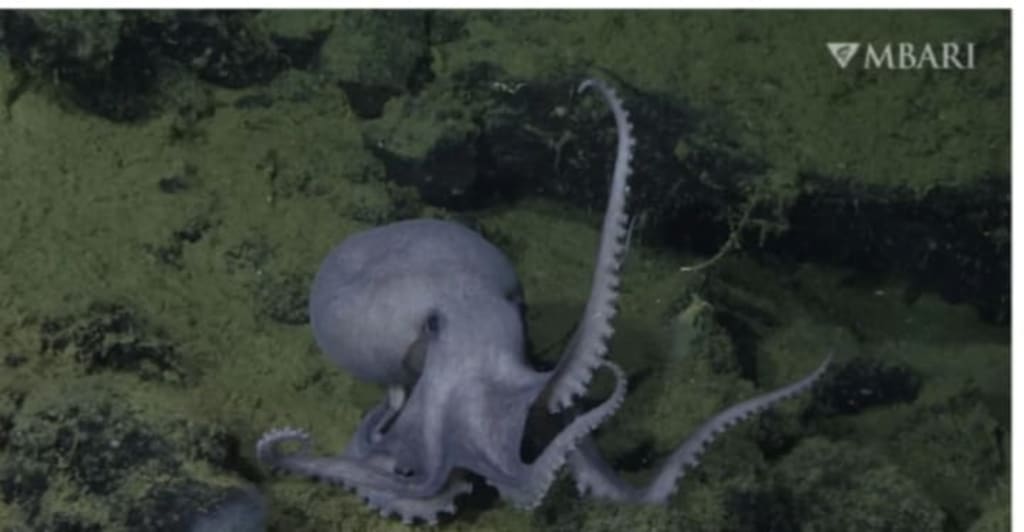
Two miles beneath the surface of the ocean, in complete darkness and under crushing pressure, lies a world so vast and alive that it challenges everything we thought we knew about life on Earth. Hidden close to an active underwater volcano, this extraordinary ecosystem spans an area roughly equal to 233 soccer fields and is home to an estimated 20,000 living creatures.
Far from sunlight and isolated from the surface world, this deep-sea environment proves that life does not just survive under extreme conditions—it thrives.
Life Without Sunlight
At the surface, life depends almost entirely on sunlight. Plants use photosynthesis, animals eat plants, and the entire food chain begins with the sun. But two miles down, sunlight is completely absent. Instead, life here is powered by chemical energy released from the Earth itself.
This ecosystem exists around hydrothermal vents, cracks in the seafloor where superheated, mineral-rich water erupts from beneath the Earth’s crust. These vents are often found near underwater volcanoes, where tectonic activity keeps the planet’s interior hot and dynamic.
Rather than relying on sunlight, microorganisms here use a process called chemosynthesis, converting chemicals like hydrogen sulfide into energy. These microbes form the foundation of a complex food web that supports thousands of larger organisms.
An Alien-Like Landscape
The environment surrounding these vents looks more like a science fiction movie than a familiar part of Earth. Towering mineral chimneys rise from the seabed, spewing hot fluids that can reach temperatures of over 350°C (660°F). Despite the extreme heat, life clusters tightly around these vents, taking advantage of the energy and nutrients they provide.
The pressure at this depth is immense—more than 200 times the pressure at sea level. Yet, the creatures here have evolved remarkable adaptations that allow them to survive where humans and most surface animals could not last a single moment.
Creatures of the Deep
The biodiversity in this deep-sea ecosystem is astonishing. Giant tube worms, some reaching over six feet in length, dominate the landscape. These worms have no mouths or digestive systems; instead, they rely on symbiotic bacteria living inside their bodies to produce food.
Alongside them are deep-sea crabs, ghostly white shrimp, heat-resistant snails, mussels, and countless microscopic organisms. Many of these species are found nowhere else on Earth. Their bodies are often colorless or pale due to the lack of sunlight, and some possess unique enzymes that protect them from extreme heat and toxic chemicals.
Scientists estimate that around 20,000 individual creatures inhabit this single vent field, making it one of the densest concentrations of life ever discovered in the deep ocean.
A Vast Ecosystem Hidden in Plain Sight
What makes this discovery even more remarkable is its sheer size. Covering an area equivalent to 233 soccer fields, this is not a small, isolated pocket of life but a massive, interconnected ecosystem. For decades, such regions went unnoticed simply because they are so difficult to reach.
Only with advanced submersibles, remotely operated vehicles (ROVs), and deep-sea mapping technology have scientists been able to explore these depths in detail. Every expedition reveals new species, new behaviors, and new questions about how life evolves under extreme conditions.
Why This Discovery Matters
Beyond its awe-inspiring nature, this deep-sea ecosystem has profound scientific importance. It offers clues about how life may have originated on Earth billions of years ago, possibly in similar volcanic environments.
It also fuels speculation about life beyond our planet. Moons like Europa (orbiting Jupiter) and Enceladus (orbiting Saturn) are believed to have subsurface oceans and geothermal activity. If life can flourish near volcanic vents on Earth, could similar ecosystems exist elsewhere in our solar system?
Additionally, studying these organisms could lead to breakthroughs in medicine, biotechnology, and environmental science. Enzymes that function under extreme heat and pressure may one day inspire new industrial or medical applications.
A Fragile World at Risk
Despite being so remote, this hidden world is not immune to human impact. Deep-sea mining, climate change, and ocean acidification pose serious threats to these fragile ecosystems. Because many of the species here exist nowhere else, damage could mean permanent extinction before we even understand what we are losing.
Scientists stress the importance of protecting these environments, not only for their ecological value but also for what they can teach us about life itself.
A Reminder of How Much We Still Don’t Know
The discovery of this vast, thriving ecosystem two miles beneath the ocean is a powerful reminder that Earth still holds countless secrets. While we often look to the stars in search of the unknown, some of the greatest mysteries lie hidden beneath the waves.
In the crushing darkness near an underwater volcano, life has found a way—not just to survive, but to flourish. And as exploration continues, who knows what other worlds we may uncover right here on our own planet.
About the Creator
Keep reading
More stories from Ayesha Lashari and writers in Earth and other communities.
Chasing a Frozen World: A New Exoplanet Candidate May Be Colder Than Mars
Astronomers are abuzz with the potential discovery of a new exoplanet candidate that may be colder than Mars — and yet, it’s roughly the size of Earth and orbits a sun-like star. This intriguing finding comes from reanalyzing old data from NASA’s retired Kepler Space Telescope, showing just how much treasure still hides in archival data.
By Ayesha Lasharia day ago in Earth
Talks Between Ukraine and Russia to Restart on Wednesday, Kremlin Says – Latest News
Diplomatic negotiations between Ukraine and Russia are expected to restart on Wednesday, according to statements from the Kremlin, marking another potential turning point in one of the most significant geopolitical conflicts in recent history. While previous rounds of talks have produced limited long-term results, the decision to return to the negotiating table has drawn global attention, as world leaders and humanitarian organizations hope renewed dialogue could reduce violence and improve humanitarian conditions.
By Aarif Lashari5 days ago in Earth
Public Announcement Challenge Winners
For the Public Announcement Challenge, writers were asked to work inside voices built for control. These were notices, warnings, and updates meant to inform rather than confess. The strongest entries committed to that form and didn't break from it. Corporate memos, formal government alerts, and internal policy language were held consistently, allowing emotion, fear, grief, or humor to surface indirectly through pressure rather than declaration. The following poems recognize the voice of authority, and let human feeling slip through despite all its rules and restraint.
By Vocal Curation Teama day ago in Resources




Comments
There are no comments for this story
Be the first to respond and start the conversation.