
Trees are Not for Poor People
In Defence of Tree Equity, or as they were called "Non-Racist Trees)
While mocking tree equity, critics of the provision ignore what it's like to die of extreme heat. When core body temperature reaches a hundred and four degrees and higher, a person can become confused or lost in delirium, nonresponsive. Heat-stroke victims are consumed by nausea and difficulty breathing. They vomit. They can't hold water. Finally, the body breaks down. Organs fail and emit toxins. It is a painful, often lonely death. It's also a preventable one.
Amongst the less articulate of the tree equity critics, there are those who laugh about "racist trees". While a catchy criticism, "racist" trees make no sense. They know I would guess, the critics, that what's racist is a system that has maintained the habit of undeserving poor areas, which are often populated by people of colour.
Institutional racism also referred to as systemic racism, is a type of racism that is ingrained in a society's or organization's rules and regulations. Discrimination in domains including criminal justice, work, housing, health care, education, and political representation are all examples. Of course, this underserving regards the people, but also the wider neighbourhoods they live in.
The tree equity passage of the Build Back Better Act acknowledges that in America communities of colour are found to live under 33% less tree canopy coverage than white communities, on average. Even poorer neighbourhoods see the great majority of their inhabitants living under 41% less tree canopy cover than communities with higher average socioeconomic background.
Not so long ago, a rare and strong heatwave reached the Pacific Northwest. Many people living in neighbourhoods with little tree coverage died.
Concrete jungles we call them, evoking the nostalgia we feel for nature, or the romanticism often associated with modern life. However, real concrete jungles (dense concrete and asphalt areas), streets and areas deprived of vegetation, create urban heat islands. These islands have none of the romantic features of the 80s Tv series' modern living. Instead, on very hot days they retain all of the heat coming from the sun, which intensifies temperatures until they become unbearable for many people.
This creates a dangerous health risk. Under current climate warming trajectories, heat-related deaths from 2031 to 2050 could be 57% higher than from 1971 to 2000, American Forests said.

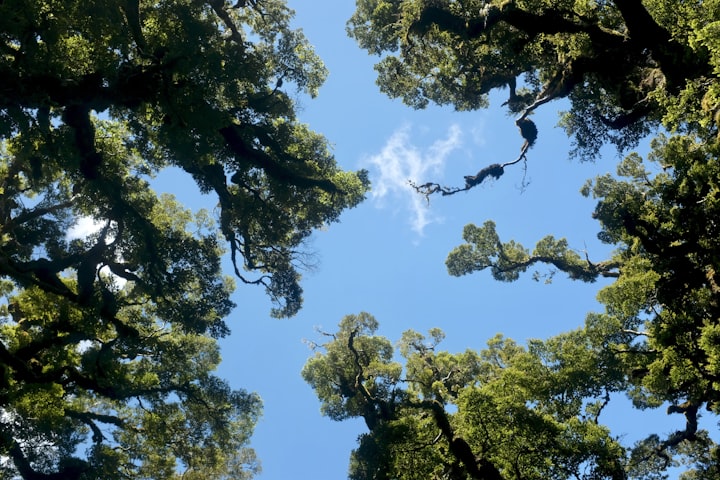
Tree canopies are very effective in reducing the health stress caused by urban heat islands.
The Build Back Better Act, including the Tree Equity item, was passed in late 2021. The plan toward Tree Equity is to put three billion dollars towards the expansion and protection of tree coverage in urban areas. Of top priority, tree canopies in neighbourhoods with 30% or more inhabitants living below the poverty line. Also targeted are areas with lower tree canopy and where summer temperatures reach higher degrees when compared to surrounding neighbourhoods.
Tree canopy in urban areas has the potential for enormous public health and environmental benefits.
Tree canopies help to promote environmental health and lessen climate change's consequences.
Urban vegetation is vital for both the environment and humans, since it improves community health and wellness, lowers urban temperatures, and supports ecosystems and biodiversity.
Tree canopies not only absorb trapped heat, give shade, and assist evaporative cooling, but they also promote active transportation by providing cool, shaded paths for people to cycle or walk to their destination.
While sounding like the ultimate cliché, it usually helps - with the aim of understanding risks and benefits of action - to think about the people we love most. Your grandmother, grandfather, your children. What would it feel like to fear for their life simply because the temperatures are high? This suggestion is not to be cruel or sensational, but to humanise those who suffer from the current status of things. Supporting, even in attitude, actions towards public health and sustainability are important to sustain positive change.

And if you're wondering about it, no: tree equity is not the fight for trees to be all the same size.
About the Creator
Avocado Nunzella BSc (Psych) -- M.A.P
Asterion, Jess, Avo, and all the other ghosts.
Keep reading
More stories from Avocado Nunzella BSc (Psych) -- M.A.P and writers in Earth and other communities.
The Real Power of Storytelling
Everything that remains with us, from family talks to penning personal essays, journaling, and TED-talk speeches, appears to have a narrative. Someone or something starts their narrative someplace, then something happens, and then, hopefully, the problem is resolved.
By Avocado Nunzella BSc (Psych) -- M.A.P 4 years ago in Earth
The Refrigerant Transition
Cooling seldom features in climate headlines, yet it is one of the quietest success stories of the last decade. Under the Kigali Amendment to the Montreal Protocol, countries are phasing down hydrofluorocarbons (HFCs)—super-pollutant refrigerants—while retailers and manufacturers rapidly switch to ultra-low-GWP “natural” refrigerants such as carbon dioxide (R744) and propane (R290). Fully implemented, Kigali alone can avert roughly 0.4–0.5°C of warming by 2100; paired with efficiency improvements, the avoided warming can be closer to ~1°C—an enormous contribution from a single policy family [1–2].
By Futoshi Tachinoa day ago in Earth
Bruce Lee and The God of War: Kuan Ti
It starts with love.. The Power to the God Of War and Wealth Walk into a Chinese restaurant (even in Oklahoma, USA), a Chinese police station, a kung fu martial arts studio or even a Chinese temple and you often see a red faced warrior holding a heavy quan-do (spear like weapon).
By WILD WAYNE : The Dragon King6 days ago in Chapters


Comments
There are no comments for this story
Be the first to respond and start the conversation.