
Tragedy in Khyber Pakhtunkhwa Pakistan: Flash Floods Claim Over 300 Lives as Rescue Efforts Continue
Dangerous flood coming in Pakistan

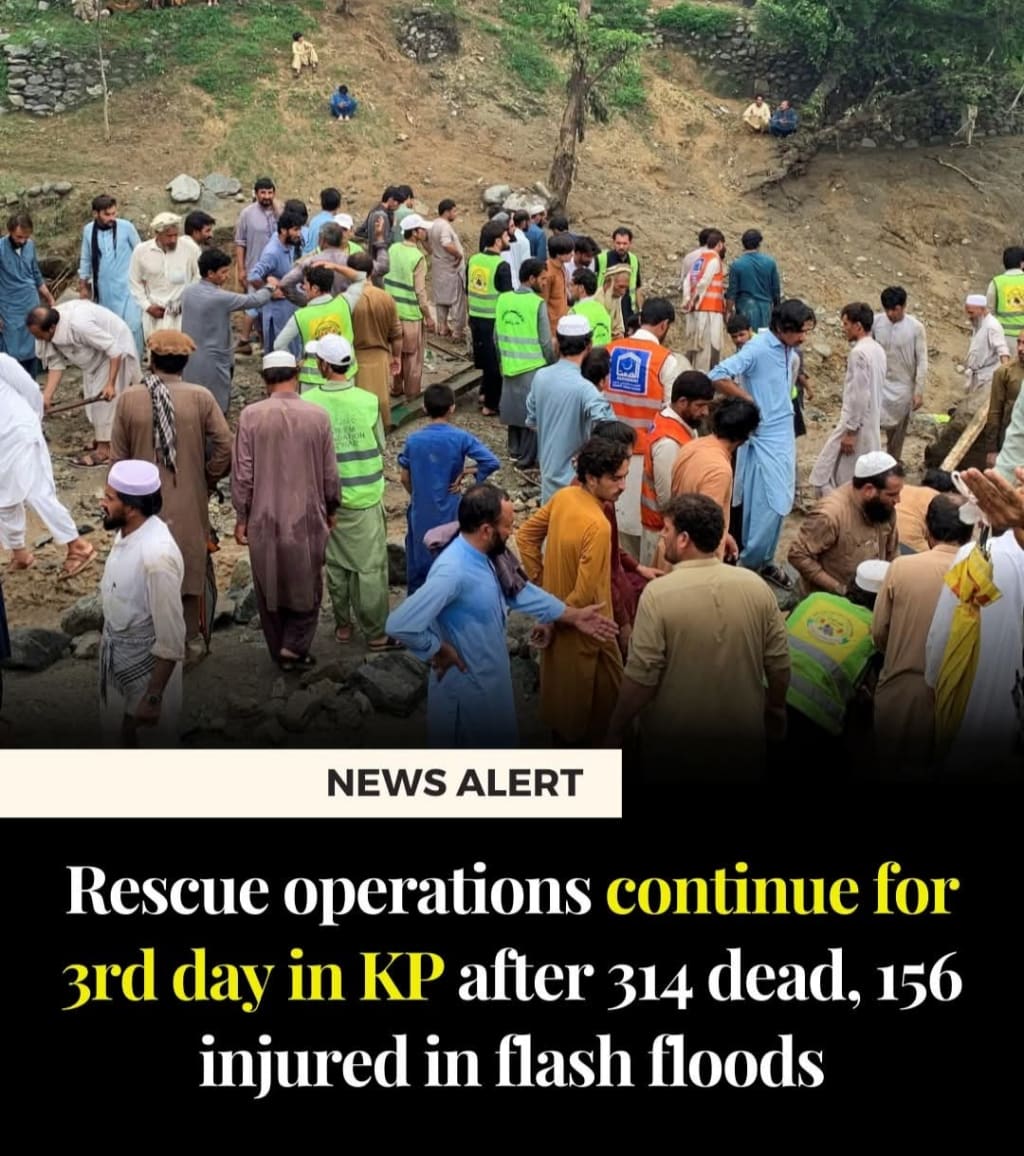
Khyber Pakhtunkhwa (KP), a mountainous and often flood-prone province in Pakistan, is currently reeling from one of the deadliest natural disasters in recent years. Torrential rains and subsequent flash floods have devastated large swaths of the province, leaving a trail of death, destruction, and despair. According to a report issued by the Provincial Disaster Management Authority (PDMA) on Sunday, at least 314 people have lost their lives and 156 others have been injured as rescue operations stretch into their third day.
A Province in Crisis
The relentless downpours began earlier in the week, overwhelming rivers and submerging entire communities. Districts such as Buner, Swat, Shangla, and Mansehra have been hit the hardest, with many rural villages completely cut off from the rest of the province. Roads have been washed away, bridges collapsed, and communications in several areas remain down, severely hampering relief efforts.
In response to the scale of devastation, the KP government declared a state of emergency on Saturday, mobilizing all available resources to aid in rescue and recovery operations. Civil and military personnel have been deployed, working around the clock to locate survivors, distribute aid, and begin the grim task of recovering the bodies of those lost.
Buner: The Epicenter of the Catastrophe
According to the PDMA, the district of Buner has suffered the highest number of casualties, with 209 confirmed deaths and 120 injuries. Local officials say the real toll may be higher, as many areas remain inaccessible and dozens of people are still believed to be trapped under debris or swept away by floodwaters.
Eyewitness accounts paint a harrowing picture: entire families buried under landslides, houses reduced to rubble in seconds, and survivors wandering in search of lost loved ones. “We didn’t even hear it coming,” said one resident. “One minute we were sitting at home, and the next moment the flood took everything.”
In Shangla, another hard-hit area, 36 people have been confirmed dead and 21 injured. Like Buner, the region's rugged terrain and lack of infrastructure are making rescue efforts painfully slow.
Humanitarian Response and National Outcry
Relief organizations and government agencies are working in coordination to provide emergency shelter, food, and medical care. Makeshift camps have been set up for displaced families, though resources are stretched thin. Many survivors are in urgent need of clean drinking water, blankets, and sanitation facilities to prevent outbreaks of waterborne diseases.
Prime Ministerial officials and leaders from across Pakistan have expressed their condolences and pledged federal assistance to the provincial government. Yet, as rescue teams dig through mud and debris with bare hands in some cases, the scale of the disaster has laid bare the region’s vulnerability and lack of preparedness in the face of extreme weather events.
Climate Change and Increasing Flood Risk
Pakistan is no stranger to floods, especially during the monsoon season. However, experts warn that climate change is amplifying the frequency and intensity of these disasters. Rising global temperatures have led to irregular weather patterns, heavier rainfall, and accelerated glacial melting in the northern regions of the country—all contributing to a higher flood risk.
The devastation in KP serves as a grim reminder of the urgent need for sustainable environmental planning, improved infrastructure, and early warning systems. Local officials say that many of the affected communities received little or no warning before the floods struck, leaving residents with no time to evacuate.
What Comes Next?
As the floodwaters begin to recede, the long-term impact of this disaster is just beginning to emerge. Thousands have been left homeless, livelihoods destroyed, and basic services disrupted. Rebuilding these communities will take months, if not years, and will require both national and international support.
For now, the focus remains on rescue and recovery. Emergency teams continue to search for the missing and provide relief to the survivors. Yet the psychological toll on affected families—many of whom have lost multiple members—cannot be overstated.
In times like these, solidarity and swift action are crucial. The people of Khyber Pakhtunkhwa are resilient, but they cannot face this calamity alone.
If you’d like to help, consider donating to reputable humanitarian organizations operating in Pakistan, or spreading awareness about the situation in KP.
About the Creator
Israr khan
I write to bring attention to the voices and faces of the missing, the unheard, and the forgotten. , — raising awareness, sparking hope, and keeping the search alive. Every person has a story. Every story deserves to be told.
Keep reading
More stories from Israr khan and writers in Earth and other communities.
Amou Haji: The Man Who Lived Without Water for Over 60 Years
Amou Haji, an Iranian man who had earned the title of “world’s dirtiest man,” passed away at the age of 94 last week, leaving behind a story that is both bizarre and fascinating. His life, which spanned nearly a century, was marked by his extreme aversion to cleanliness, something that made him a subject of both local curiosity and international intrigue. Haji lived in the remote village of Dejgah, located in the southern Fars region of Iran, where he became somewhat of a local legend due to his unique and unorthodox way of life.
By Israr khan6 months ago in Earth
Global Lawn Mowers Market Set for Strong Growth as Smart Landscaping Goes Mainstream (2025–2033)
Global Lawn Mowers Market Size & Forecast 2025–2033 The Global Lawn Mowers Market is entering a transformative decade, reshaped by rapid urbanization, the rise of smart homes, and growing environmental awareness. According to Renub Research, the market is projected to grow from US$ 32.11 billion in 2024 to US$ 54.39 billion by 2033, expanding at a CAGR of 6.03% from 2025 to 2033.
By jaiklin Fanandisha day ago in Earth
Homeowners Don’t Want to Move: The Big Deal About Shrinking Backyards
In neighborhoods across the country, a subtle but growing trend is taking root: homeowners aren’t moving, and it’s not just because of the housing market. Many are staying put because their backyards—once spaces for relaxation, gardening, and family fun—are shrinking, either physically due to new development or symbolically as life priorities shift. What may seem like a minor detail—an ordinary backyard—is, for many, a defining feature of home life. Losing it can change how people live, play, and even feel about their communities. This shift has consequences for families, urban planning, and even the way cities are designed. It also sheds light on why homeowners are willing to compromise on size, style, or even location rather than give up their outdoor space. Why Backyards Matter More Than Ever Backyards are more than just patches of grass. They are extensions of our living space, providing: Personal outdoor retreats for reading, gardening, or hosting friends. Safe spaces for children and pets to play. Social hubs for barbecues, birthdays, and neighborhood gatherings. Mental and physical health benefits, including fresh air, sunlight, and exercise. For families who have invested years into landscaping, planting trees, or building decks and patios, the backyard is an emotional asset. Moving to a new home often means losing these personal touches—and many homeowners aren’t willing to take that step. “Backyards are part of our identity,” says Laura Jennings, a landscape designer in suburban Chicago. “People have memories tied to them—first steps, garden harvests, family barbecues. That’s why so many homeowners are staying put, even if it’s tempting to relocate for a bigger house or a better neighborhood.” The Trend of Shrinking Yards Urban densification and suburban development have slowly eaten into traditional backyard space. In many cities, large lots are being replaced with townhomes, duplexes, or small-lot single-family homes. Even in suburban neighborhoods, new constructions often prioritize indoor square footage over outdoor space. The shrinking backyard trend has several effects: Less room for recreation: Families may struggle to fit a swing set, pool, or garden into a smaller yard. Increased desire to stay put: Homeowners prefer maintaining a familiar outdoor space rather than trading it for a slightly larger indoor area. Higher emotional attachment: As yards become more limited, the significance of every tree, patch of grass, or vegetable garden grows. For many, the choice isn’t just about square footage—it’s about quality of life. Homeowners Are Making Trade-Offs As a result, more homeowners are staying in place longer, even if it means: Skipping a bigger kitchen or extra bedroom. Living in a less “trendy” neighborhood. Paying more in maintenance or property taxes to keep a cherished yard intact. Some have embraced innovative backyard solutions to maximize smaller spaces: Vertical gardens and container planting. Multi-functional patios that serve as dining, lounging, and play areas. Creative landscaping, including raised beds, pergolas, and tiny ponds. These adaptations allow homeowners to maintain the sense of space and enjoyment they’ve built over years without relocating. Emotional and Social Dimensions Beyond practical reasons, the backyard has a symbolic meaning. It represents: Continuity and stability: Homeowners see staying put as preserving a lifestyle. Family history: Many yards hold stories—graduations, summer afternoons, first bike rides. Community connection: Long-term residents know neighbors, local schools, and nearby amenities. Moving often means giving up these ties. A survey by the National Association of Home Builders found that over 60% of homeowners aged 35–55 preferred staying in their current homes, citing yard size and outdoor enjoyment as key factors. For these individuals, giving up a backyard is not a small inconvenience—it’s a major life decision. The Impact on Neighborhoods and Cities The trend of staying put also affects broader urban and suburban planning. Fewer homeowners moving means: Less turnover in neighborhoods, which can reduce housing market fluidity. Pressure on developers to include quality outdoor space in new builds. Greater demand for parks and community green spaces, as private yards shrink. Urban planners and developers are noticing the importance of outdoor space in retention and satisfaction metrics. Homes with usable yards, green roofs, or communal gardens often have higher value and attract long-term residents. The Future of Backyard Living As city lots shrink and suburban sprawl continues, homeowners are adapting: Smaller, highly curated gardens instead of sprawling lawns. Multi-functional backyards designed for work, play, and entertainment. Investment in outdoor amenities such as fire pits, decks, or small pools. Some communities are exploring shared backyard concepts, like community gardens and pocket parks, to supplement shrinking private spaces. While these aren’t a complete replacement for personal yards, they provide social and environmental benefits and may encourage homeowners to stay in their homes longer. Conclusion: More Than Grass and Trees Shrinking backyards might seem like a minor design issue, but for homeowners, it’s deeply tied to lifestyle, family life, and personal identity. The reluctance to move is not just a reaction to the housing market; it reflects an emotional, social, and practical connection to outdoor space that indoor square footage alone can’t replace. As urban density grows and lot sizes shrink, the importance of backyards will continue to shape homeowner decisions, neighborhood design, and community dynamics. Families are showing that a yard is not just grass and trees—it’s a place of memory, freedom, and connection. In a world where real estate trends often prioritize indoor luxury, the backyard remains a powerful symbol of home, anchoring families to the places they love—and keeping many from moving at all
By Muhammad Hassana day ago in Earth



Comments
There are no comments for this story
Be the first to respond and start the conversation.