
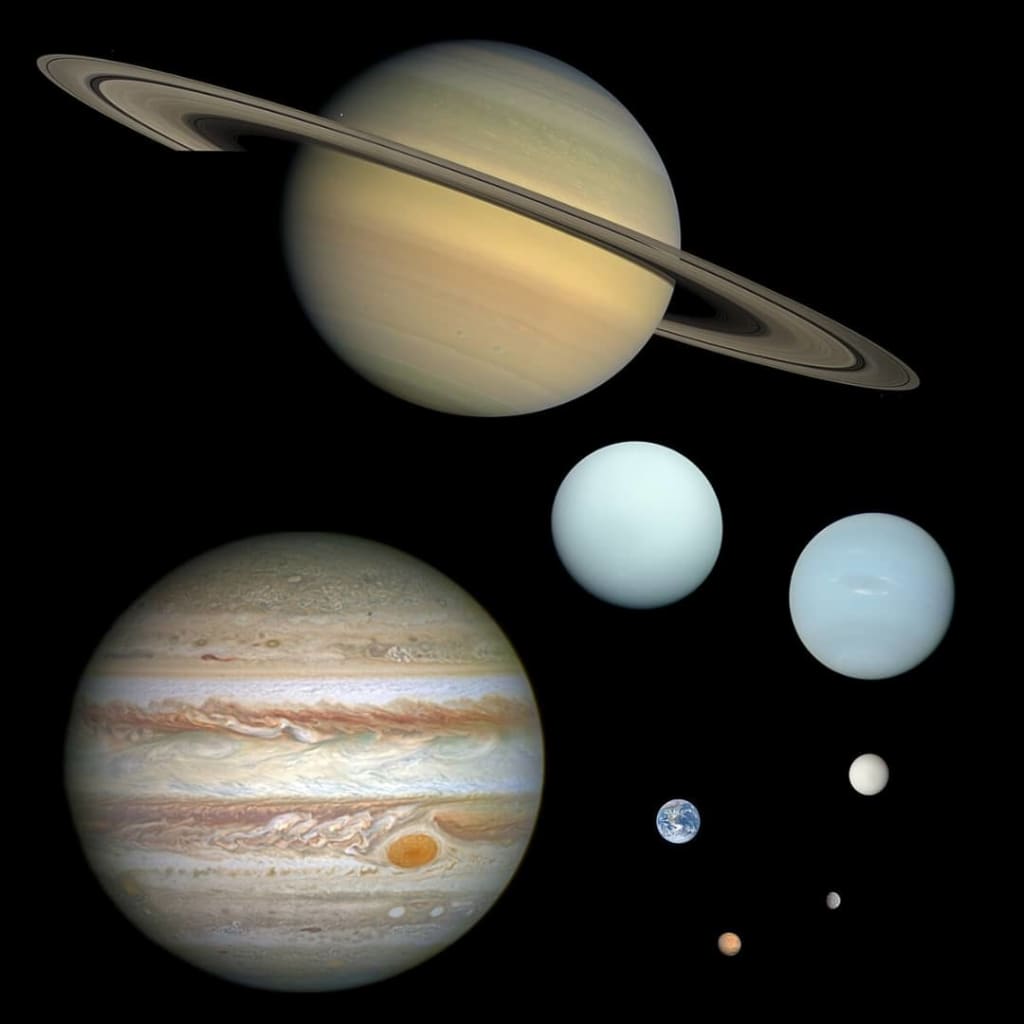
THIS PLANET CAN BE OUR NEW HOME
Kepler-22b is quite a thrilling discovery! Found in the Cygnus constellation, this exoplanet sits in the habitable zone—the region around a star where conditions could allow liquid water to exist. That’s why astronomers got so excited when it was spotted by the Kepler Space Telescope back in 2011.It orbits a Sun-like star about 600 light-years away, and is roughly 2.4 times the size of Earth. While its exact composition remains uncertain, scientists think it could have a surface temperature suitable for liquid water—though whether it’s rocky, oceanic, or something else entirely is still a mystery.Kepler-22b was a major milestone because it reinforced the idea that habitable-zone planets are out there waiting to be found. Since then, many more exoplanets have been discovered that could potentially harbor life.Absolutely! The hunt for new planets is a challenging but fascinating endeavor. Kepler-22b’s discovery was a major breakthrough, but spotting distant worlds isn’t as simple as pointing a telescope and snapping a picture. Many exoplanets are only detectable through indirect methods, like observing how their host star dims slightly when the planet passes in front of it—a technique called the transit method.Even the Hubble Space Telescope, as powerful as it is, has limits when it comes to spotting planets directly. Most are too far, too small, or too faint against the glare of their parent star. That’s why astronomers rely on tools like the James Webb Space Telescope and advanced ground-based observatories to analyze atmospheres and determine whether conditions for life could exist.And if Kepler-22b does have liquid water, then who knows? Maybe one day we’ll find signs of life—or even consider it as a possible future home for humanity. But there are many challenges to overcome first, from studying its climate to figuring out whether humans could actually survive there.Exactly! Since many exoplanets, including Kepler-22b, are too small and faint to observe directly, scientists use clever techniques to detect them. One common method is the transit method, where astronomers take repeated images of a star over time and look for tiny, periodic dips in brightness. These dips suggest that a planet might be passing in front of the star, blocking some of its light.Another method is Doppler spectroscopy, also known as the radial velocity method. Instead of looking for dimming, astronomers study how a star subtly wobbles due to the gravitational pull of an orbiting planet. By measuring these shifts in the star's light, scientists can determine a planet’s mass, orbit, and even atmospheric composition.Kepler-22b was discovered using the transit method, and further observations helped confirm its size and location in the habitable zone. But even with advanced technology, spotting these distant worlds is like trying to find a tiny speck of dust in a vast cosmic ocean.If you could discover an exoplanet, what would you name it?Exactly! Spotting exoplanets like Kepler-22b isn't like seeing a bright, shining star in the sky—it's more like noticing a tiny shadow flicker against a massive light source.Astronomers take repeated images of a star over time and compare them carefully, searching for subtle dark spots—which could be signs of a planet passing in front of the star. This transit method helps determine a planet's size, orbit, and whether it’s in the habitable zone. Scientists also use Doppler spectroscopy to study how a star wobbles due to the gravitational tug of an unseen planet.With thousands of planets discovered this way, the search for another Earth-like world continues. If Kepler-22b turns out to have the right conditions, it could be an incredible find—maybe even a future home for humanity.Would you ever want to visit an exoplanet?Kepler-22b is indeed a big deal! It was the first exoplanet discovered in the habitable zone by the Kepler Space Telescope, meaning that conditions there might allow for liquid water—and where there’s water, there’s always the potential for life.This fascinating planet orbits a Sun-like star about 600 light-years away in the Cygnus constellation. It's roughly 2.4 times the size of Earth, making it a "super-Earth," though scientists aren't yet sure if it's rocky, oceanic, or gaseous. What makes Kepler-22b even more exciting is that its surface temperature is estimated to be around 22°C (72°F)—quite comfortable by Earth standards!Its discovery was groundbreaking because it showed that Earth-like planets could exist beyond our solar system. Since then, astronomers have found many more exoplanets in habitable zones, bringing us closer to answering one of humanity’s biggest questions: Are we alone in the universe?What do you think? Could Kepler-22b hold life, or will we need to dig deeper into the cosmos?Kepler-22b is certainly one of the most intriguing candidates for a second Earth! At 635 light-years away, it’s surprisingly “close” by cosmic standards—though, as you pointed out, that’s still an unimaginable three quadrillion miles from us.Its parent star, Kepler-22, is a G-type main-sequence star, meaning it’s very similar to our Sun, though slightly smaller and cooler. This is one of the reasons Kepler-22b sits comfortably in the habitable zone—the range where temperatures might allow liquid water to exist.Despite the promising similarities, there’s still much we don’t know. Is Kepler-22b rocky, covered in oceans, or wrapped in thick clouds? Does it have an atmosphere that could support life? To answer these questions, future missions or telescopes like the James Webb Space Telescope could help analyze its conditions.If humans ever travel beyond our solar system, Kepler-22b might be one of the first places we set our sights on. Would you board a spaceship to explore it someday?That’s right! Kepler-22, the parent star of Kepler-22b, is a yellow dwarf, much like our Sun. It shares a similar size, radius, and age—around 4 billion years old—but has about 20% less luminosity. That means it shines a little dimmer than our Sun, making it impossible to see with the naked eye from Earth.Even though it’s fainter, its habitability zone is still intact, meaning Kepler-22b could receive just the right amount of warmth to potentially support liquid water. Since the planet is larger than Earth, its atmosphere—if it has one—might play a crucial role in determining whether conditions are hospitable.If you could build a telescope powerful enough to see Kepler-22 with your own eyes, would you be tempted to scan the stars for new worlds yourself?
Kepler-22b’s larger size definitely opens up some fascinating possibilities! With a radius 2.4 times that of Earth, it could have more surface area for potential oceans or landmasses. But as you pointed out, its sheer size might make travel quite a challenge—imagine crossing vast distances on a planet much bigger than Earth. Long-haul flights would take on a whole new meaning!However, since we don’t know its exact mass, we can’t yet determine its gravity. If it turns out to be significantly heavier, the stronger gravitational pull could make walking and daily activities much harder for humans. But if it has a lighter composition, it might still be manageable.There’s also the question of its atmosphere—does it have breathable air, thick clouds, or even extreme storms? Scientists are eager to find out more, and future telescopes could help reveal whether this world could truly be a second Earth.If you could visit Kepler-22b, what’s the first thing you’d want to explore? Oceans, mountains, or something entirely new? If Kepler-22b’s mass is up to 36 times greater than Earth’s, that would result in much stronger gravity—potentially about six times Earth's gravity.This means everything on the planet would feel six times heavier. If you weigh 70 kg (154 lbs) on Earth, you’d feel like you weigh 420 kg (925 lbs) on Kepler-22b! Walking, jumping, or even standing for long periods would be incredibly difficult without assistance. The atmosphere would also need to be considered—if it’s thick enough, it might help counteract some effects of extreme gravity.Life, if it exists there, would likely adapt to intense gravity—perhaps with sturdy, compact structures or powerful muscles to withstand the pull. If humans ever set foot there, we’d need advanced technology to help move around.Would you want to experience such extreme gravity, or would that be a little too intense?Extreme gravity on Kepler-22b would absolutely change everything about daily life! Imagine carrying six times your normal weight—even lifting a grocery bag would feel like hauling a massive sack of bricks. Walking, running, and even standing upright would require immense strength, meaning humans would have to bulk up just to move around.With such intense gravitational pull, transportation would also need serious innovation. Cars, planes, and trains would require powerful engines to counteract the force pressing everything down. And forget traditional sports—jumping would be nearly impossible, and any movement would feel slow and exhausting.If life exists there, it would likely be adapted to extreme gravity—perhaps with strong, dense bones and compact muscle structures. Humans might need exoskeleton suits or gravity-assist technology just to function normally.Would you take on the challenge of living on a high-gravity planet, or does Earth’s gravity seem much more appealing?muscular giant spiders built for extreme gravity! If life exists on Kepler-22b, creatures would likely have dense, powerful bodies to withstand the crushing gravitational pull. A low, stocky stature would be ideal, and multiple legs could make movement more efficient.Of course, without confirmed data, we’re free to speculate wildly. Maybe instead of spiders, life there evolved bulky, armored creatures that move with slow, deliberate force. Or perhaps they’re compact, muscular beings, similar to sumo wrestlers, built to handle the immense weight pressing down on them.Until we get real observations, the possibilities remain endless—Kepler-22b might be teeming with life, barren, or something far stranger than anything we’ve imagined. If scientists do find life there, what kind of creature would you hope to discover?
If Kepler-22b were in our solar system, it would sit closer to the Sun than Earth—about 15% closer, based on its orbit around its own star. That would likely make it warmer overall, but because Kepler-22 is dimmer than the Sun, the planet’s actual temperature balances out.This closer proximity means it receives slightly more stellar radiation, which could impact its climate. If it has a thick atmosphere, it might trap more heat, making it humid and warm like a tropical paradise—or hot and suffocating like Venus. If the atmosphere is thinner, it could still resemble Earth, just with slightly stronger solar intensity.Gravity and atmosphere aside, Kepler-22b has many Earth-like qualities—its size, location in the habitable zone, and potential for liquid water. If conditions turn out to be ideal, it might become one of our best candidates for future exploration.If Kepler-22b were somehow placed in our solar system, do you think it would support life, or would it turn out to be too extreme?
About the Creator
Keep reading
More stories from writers in Earth and other communities.
All Holidays Cancelled as UK Holiday Firm Goes Bust
Holiday Firm Collapse Sparks Chaos A major UK holiday company has gone bust, resulting in the cancellation of all booked holidays. The collapse has left thousands of travellers without trips, refunds, or alternative arrangements, sparking frustration and concern among affected customers.
By Aarif Lashari3 days ago in Earth
The Duelist
The rays of a dying red sun flashed against the onrushing blade. The grey beards say the key to dueling lies in size, speed, reach, righteous fury, whatever the person in front of them pays them to say. Matteo knew better than any it was none of these and had an undefeated record on these sands to prove it.
By Matthew J. Fromm5 days ago in Fiction




Comments (1)
Kepler-22b sounds really interesting. It's amazing that it's in the habitable zone. The hunt for new planets is tough. I remember when they first found it in 2011. It made me think about all the possibilities out there. Do you think we'll ever be able to visit it? And how long will it take to figure out if it's truly a viable home for us?