
This kind of livestock must die if it breaks its leg, because it is worse to live on three legs.
Believe in science


A question you may have never thought about: why haven't you seen a three-legged horse?
This is because a horse with a broken leg must die or live miserably.
If humans break bones, have an operation, get a cast, and in a few months, most people will recover. Cats, dogs and even elephants can survive without a leg.
But the horse fracture is very fatal, treatment is difficult, the prognosis is also very painful. Therefore, in most cases, the owner will euthanize the horse with a broken leg. Today let's take a look at horses that must live on four legs.
To explain why broken legs and broken bones are so fatal to a horse, it is necessary to understand the horse's body structure.
First of all, the whole anatomical structure of horses is suitable for running: their legs are thin, their bones are light, and their body weight is on the upper body. But on the other hand, it also makes their legs very fragile.
Jenny Hall, chief veterinarian of the British Horse Racing Authority (BHA), pointed out that horses' bones are much lighter than human ones, which means that when a horse's leg is broken, it is often comminuted or deformed, both of which make it extremely difficult to recover.
The American College of Veterinary Surgeons (ACVS) also introduced that although small or minor horses have a higher survival rate after fractures than large adult horses, open fractures (that is, skin-piercing fractures) of horses are extremely difficult to treat, and horse owners had better get rid of the suffering of the horses in time.
Second, horses belong to strangers (that is, the number of toes is odd), and their hooves are equivalent to the tips of human toes. When a horse runs, it is equivalent to a person running with his fingertips.
It sounds painful, but there are more scares to take apart the horse's hoofs. The bone behind the horse's hoof is called the hoof bone, which is a bit like a sharpened triangular blade.
Between the horse's hoof and the back of the hoof is supported by a kind of corrugated tissue. This layer of folded tissue, called the hoof leaf, is actually made up of a special kind of epidermal cell that can disperse the pressure from the hoof bone.
In other words, the horse is actually a kind of "blade warrior", and the cushioning of the horse's hoof depends on the skin.
In this way, when one leg of the horse is injured, the other three legs can only support the weight of the body, which means that the load of the other three legs increases by 1/3. Come to think of it, that sharp bone will increase the pressure on the horse's hoof by 1/3.
If this situation continues, the hoof bone will break through the hoof wall and insert the hoof leaf, and the horse will be vulnerable to a very thorny disease-laminitis. Tim Morris, a professor of veterinary medicine at the British Horse Racing Authority, explained that horses with fractures are more likely to develop hoof inflammation.
Hoof leaf inflammation is very painful for horses. In severe cases, the horse's hoof and hoof will separate, and the hoof may even rotate and shift. Imagine your fingerbones turning 90 degrees behind your fingernails. According to the Department of Veterinary Medicine at the University of California, Davis, hoof disease is irreversible and veterinarians can only prevent it from getting worse.
Of course, for racehorses, hoofing is the equivalent of declaring the end of a career. Many racehorses have died of hoof inflammation caused by fractures, such as Barbaro, the famous foal that won the 2006 Kentucky Derby in Kentucky.
Barbaro underwent a five-hour operation at the University of Pennsylvania after a fracture in May 2006, and veterinarians fitted his broken leg with a synthetic stainless steel locking compression plate. But two months later, it suffered from hoof inflammation and was euthanized in January 2007.
You may want to ask, since sharing the weight between three legs can easily lead to foot inflammation, why not let a horse lie down and recover like a man?
In fact, horses are magical animals. They can't lie down all the time.
The horse's legs are actually made to stand, and it is unnatural for the horse to lie down. This is because the default state of the tendons and muscles of a horse's leg is to remain upright, a physiological structure also known as Stay apparatus (standing device).
It is no joke that an animal as big as a horse is lying down for a long time and one side of the body is under pressure for a long time. Elysia Schaefer, a veterinary researcher at the School of Veterinary Medicine at the University of Illinois, said that the longer a horse lies, the more likely it is to develop ischemic damage because of a lack of blood supply to one side of the body. In the end, horses will suffer from pressure sores and even muscle and nerve necrosis as people who have been lying down for a long time.
The above-mentioned Hall also introduces that, like long-term bedridden people, the effusion of the horse's lungs is not excreted as easily when lying down as when standing, so the lungs are prone to infection.
In short, a lying horse should roll over as often as a pancake, and when operating on a large animal like a horse, the operation time should be as short as possible, usually compressed within a few hours.
Of course, the reconstruction of horses after operation is also a big problem.
As I just said, slender horse legs are adapted to running. And this wonderful line is due to the lack of muscle in the lower part of the horse's leg. This means that after the fracture, the horse's leg lacks the tissue to support and fix the bone. Therefore, injured horses need special supports to ensure that they can stand up and recover from injuries. This kind of support tool is called a sling.
The horse sling is good, but it can't be used for a long time. Morris said that the horse sling is not effective for diseases such as hoof leaf inflammation, and if the horse is used for a long time, it will also get a disease similar to bedsores, that is, the sore caused by the hanging horse.
This is why the American College of Veterinary Surgeons says that horse fractures are very difficult to treat, and horses that have lost blood to their legs should be euthanized, in other words, amputation does not exist on horses. Hall also stressed that because there is almost no cure for horse leg fractures, veterinarians usually euthanize racehorses in the first place when they encounter a fracture.
For example, at the 2006 Cheltenham Racing Festival (Cheltenham National Hunt Festival), nine horses (1.86%) died, five of which were euthanized because of leg fractures.
Because horses with broken legs never live long, three-legged horses are associated with death in many cultures. In Denmark, for example, a three-legged horse is called Helhest, which means "horse of hell", and its presence means death.
It is unexpected that cattle and horses with long legs should be such a fragile treadmill.
Horse racing is indeed an expensive "foot" sport.
About the Creator
Keep reading
More stories from gaisndm Hawkshaw and writers in Earth and other communities.
Believe in science
Medical science Nine days after the pig heart transplant, a 57-year-old American man can walk on the ground. On January 7, a team from the University of Maryland School of Medicine said it had performed the world's first pig heart transplant on a 57-year-old man with terminal heart disease. According to China Business report, Professor Wu Zhongjun, director of the artificial organs Laboratory at the University of Maryland, revealed on January 15 that the patient had left ECMO (extracorporeal membrane oxygenation, which can provide long-term cardiopulmonary support) two days ago, and began to walk on the ground one day ago. A team of doctors at the University of Maryland said it would monitor patients' immune response and heart function and would continue to conduct controlled clinical trials.
By gaisndm Hawkshaw4 years ago in Earth
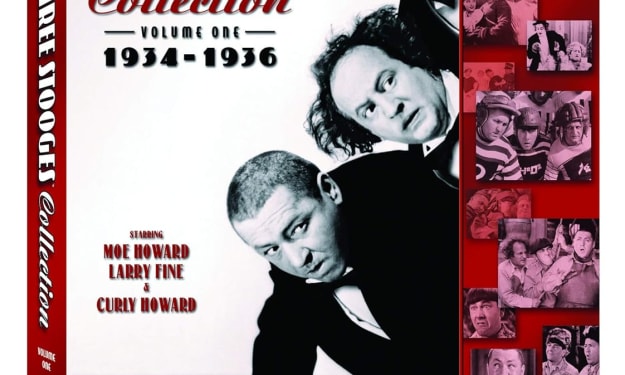
History of The Three Stooges (Part I: The Beginnings and Columbia Pictures - 1920s-1936)
I have been itching to write about The Three Stooges on Vocal for close to two years, but I couldn't figure out how to do it. I wanted to do it by third Stooge, but that's a bit complicated. I know this much. I was about eight or nine years old when I first saw The Three Stooges. I remember one of my local channels had the Stooges on for hours, and I tried my damnedest to be up for those shorts. I remember that the Family Channel actually had an hour of the Stooges on from 11PM to midnight, and it was the entire library on during that time.
By Clyde E. Dawkins4 days ago in Geeks


Comments
There are no comments for this story
Be the first to respond and start the conversation.