
Things Newton Didn't Want the World to Know About Him
Things Newton Didn't Want the World to Know About Him
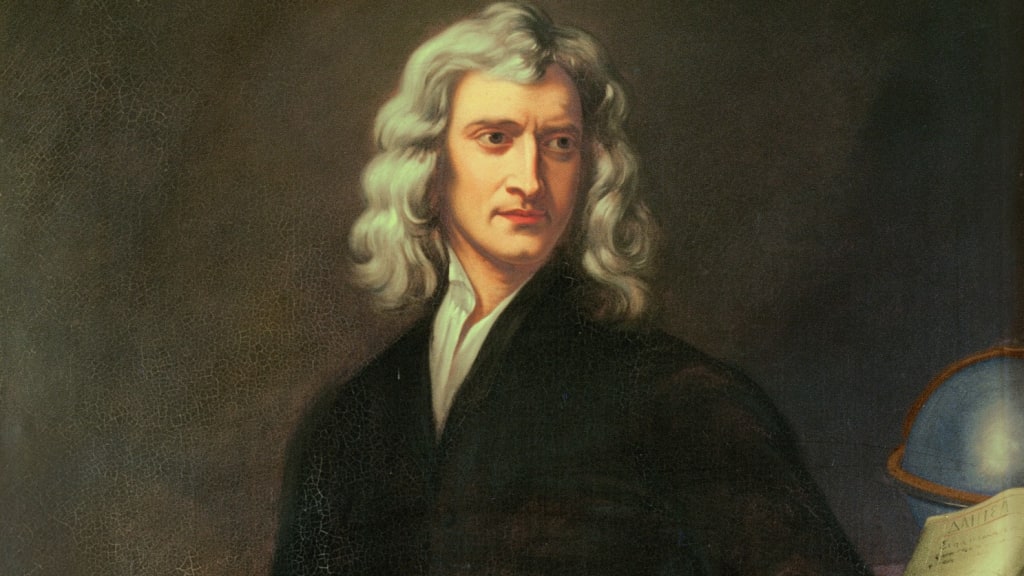
Isaac Newton, a name synonymous with scientific brilliance, emerged from humble beginnings in the small settlement of Woolsthorpe in 1643. The tale of Newton's life is one marked by tragedy, intellect, and the complex interplay of solitude and societal expectations.
The narrative begins with Newton's premature birth, a tiny infant small enough to fit inside a large mug. Orphaned early on, Newton faced separation from his mother for nine years, finding solace at his grandmother's. This period of solitude laid the foundation for his introspective nature, a characteristic that would echo throughout his life.
Despite not fulfilling his mother's dream of becoming a farmer, Newton's intellectual spark ignited under the encouragement of his uncle and school headmaster. Mechanically inclined, he delved into books on mechanics and technology, crafting accurate sundials that showcased his burgeoning scientific prowess.
Newton's return to grammar school, after persuading his mother against familial expectations, marked the turning point in his journey. Trinity College, Cambridge, became the arena where Newton's intellect would clash with the conventional Aristotelian philosophy taught at the time. His spare time was dedicated to modern philosophy and mathematics, laying the groundwork for future groundbreaking discoveries.
The year 1665 brought the plague, closing the university and thrusting Newton into isolation. This period of seclusion became the crucible for his genius, birthing ideas that would shape the scientific landscape. Calculus, optics, and the anecdotal apple incident, which symbolized his contemplations on universal gravitation, all found their origins in these solitary years.
Graduating without honors did not deter Newton. Trinity College granted him a fellowship, and he commenced teaching at the age of 26. Newton, however, remained an introvert, forgetting meals and teaching to empty classrooms when students were absent. His unique teaching style highlighted his unwavering commitment to individual research.
Newton's scientific brilliance extended beyond mathematics. His rivalry with Gottfried Leibniz over the invention of calculus became a defining chapter, sparking controversies that echoed through history. The invention of the reflecting telescope further solidified Newton's legacy in astronomy.
Upon Newton's passing, a treasure trove of approximately 10 million words awaited, covering scientific brilliance, mathematics, alchemy, and theology. Surprisingly, Newton's interest in alchemy remained concealed for centuries, shielded by his family. In the late 1800s, physicists John Couch Adams and George Stokes faced the monumental task of organizing his chaotic and unsorted papers.
Newton's papers painted a portrait of a multifaceted genius, delving into alchemy and showcasing the repetitiveness in his writings. While primarily celebrated for scientific breakthroughs, Newton's legacy now included enigmatic pursuits that added layers to his persona.
The papers, though, remained a peculiar gap in history books, contrasting with other scientists of his era whose works were promptly published. The complex genius of Isaac Newton, with his scientific brilliance and enigmatic personal pursuits, continues to captivate and intrigue, offering a glimpse into the intricate tapestry of his life.
Newton's legacy, a blend of scientific rigor and mysterious personal endeavors, remains a puzzle. The lack of a comprehensive collection of his works in history books raises questions about his family's protective stance. In this intriguing gap, Newton's alchemical pursuits and theological explorations add an unforeseen dimension to his character.
As physicists Adams and Stokes confronted the disarray of Newton's papers, the repetitive nature of his writings hinted at an obsession with his own ideas. The struggle to maintain Newton's secrecy echoes the challenges of understanding a genius who transcended conventional boundaries.
This enigma further intensifies the narrative, making Newton's story not just about groundbreaking science but about a complex individual navigating the expectations of society. The intricate layers of his life, concealed for centuries, unveil a tale that continues to beckon curiosity.
About the Creator
Ghana Wheat Market Size & Forecast 2025–2033
Introduction Ghana’s wheat market is steadily emerging as an essential segment of the country’s food economy. Driven by rapid urbanization, changing dietary habits, and the expansion of bakeries, fast-food outlets, and packaged food manufacturing, wheat has become a key ingredient in everyday Ghanaian diets. According to Renub Research, the Ghana wheat market was valued at US$ 46.20 million in 2024 and is projected to reach US$ 79.89 million by 2033, growing at a compound annual growth rate (CAGR) of 6.27% during 2025–2033.
By Marthan Sir7 days ago in Earth
Met Office Issues Yellow Fog Warnings After Parts of UK Battered by Rain
After days of relentless rainfall sweeping across large parts of the United Kingdom, the Met Office has issued yellow fog warnings, cautioning residents and travelers to prepare for reduced visibility and hazardous conditions. The sudden shift from heavy rain to dense fog highlights the volatile nature of the UK’s winter weather and underscores the challenges it poses to transport, public safety, and daily life. From Heavy Rain to Thick Fog The recent spell of intense rain saturated the ground across England, Wales, and parts of Scotland, leaving rivers swollen and fields waterlogged. As calmer weather followed the downpours, a combination of high moisture levels, falling temperatures, and light winds created ideal conditions for fog formation. According to meteorologists, this type of fog—often called radiation fog—develops when moisture near the ground condenses overnight, forming thick, low-lying clouds that can linger well into the morning. The Met Office’s yellow warning signals that fog could significantly reduce visibility, in some areas dropping below 100 meters. While not the most severe level of weather alert, yellow warnings are designed to prompt awareness and caution, particularly for motorists, cyclists, and pedestrians who may be caught off guard during early morning commutes. Travel Disruptions and Safety Concerns Fog is one of the most dangerous weather conditions for road travel, as it can dramatically shorten reaction times and obscure hazards. Authorities have urged drivers to slow down, use fog lights appropriately, and maintain greater distances between vehicles. Motorways and rural roads alike are vulnerable, with sudden patches of thick fog appearing without much warning. Rail services may also experience delays, as drivers are required to reduce speeds when visibility drops. At airports, fog can disrupt flight schedules, causing delays or cancellations, particularly during peak morning hours. Aviation authorities closely monitor visibility thresholds, and even a short-lived fog bank can ripple through tightly scheduled operations. Emergency services have emphasized that pedestrians and cyclists should wear reflective clothing where possible, especially during early mornings and evenings. With darker winter days already limiting visibility, fog compounds the risks for vulnerable road users. Why Fog Follows Heavy Rain Meteorologists explain that fog warnings often follow periods of heavy rainfall. When rain saturates the ground, it leaves behind large amounts of surface moisture. If skies then clear and winds ease, the ground cools rapidly overnight, allowing moisture to condense into fog. This pattern is becoming increasingly familiar in the UK, where weather systems are growing more erratic. Climate scientists note that a warming atmosphere holds more moisture, increasing the likelihood of intense rainfall events followed by fog, frost, or sudden temperature drops. Regional Impact Across the UK The yellow fog warnings are not uniform across the country. Low-lying areas, river valleys, and rural regions are particularly susceptible. Parts of southern England, the Midlands, and eastern regions are among those most at risk, though localized fog could appear almost anywhere conditions align. In Scotland and northern England, lingering wet ground combined with colder overnight temperatures raises the possibility of fog forming alongside icy patches. This mix of hazards further complicates travel and increases the risk of accidents. What a Yellow Warning Really Means A yellow weather warning does not mean severe disruption is guaranteed, but it does indicate a heightened likelihood of impacts. The Met Office uses yellow alerts to encourage the public to stay informed and take sensible precautions. For fog, that means checking travel updates, allowing extra journey time, and staying alert to rapidly changing conditions. Weather experts stress that fog can be highly variable. One area may experience clear skies while another, just a few miles away, is blanketed in thick mist. This unpredictability is what makes fog particularly dangerous. Looking Ahead: More Changeable Weather Forecasts suggest that unsettled weather will continue in the coming days, with further spells of rain interspersed with calmer, colder nights—conditions that could lead to additional fog warnings. While no prolonged severe weather is currently expected, the pattern reflects the broader trend of increasingly changeable winters in the UK. For many residents, this serves as another reminder that winter weather is no longer defined by just cold or snow. Instead, a mix of heavy rain, flooding risks, fog, and sudden temperature shifts is becoming the new normal. Staying Prepared The Met Office advises the public to regularly check forecasts, especially before traveling, and to remain flexible with plans during periods of weather warnings. Simple measures—such as cleaning car windows, ensuring lights are functioning, and staying updated via official channels—can significantly reduce risk. As the UK continues to navigate this wet and fog-prone winter, awareness and preparation remain the best defenses. While the fog may lift by midday in many areas, its early impact serves as a timely reminder that even seemingly mild weather hazards can have serious consequences.
By Fiaz Ahmed 6 days ago in Earth
Thoughts on Vocal and the way the world is
"Death cannot stop true love, only delay it." – Wesley in The Princess Bride. I decided to come back to Vocal on a very cold and dark night at the end of December. I had been, and still am, convalescing from a horrible staph infection that had gone misdiagnosed for months. This, paired with the increasing challenges of being healthy, making the best choices for my co-parented child, being a wife, and being a director at a new job, was a lot to manage.
By Jazzy 3 days ago in Confessions



Comments
There are no comments for this story
Be the first to respond and start the conversation.