
THE WORLD'S DEADLIEST DISEASE
An in-depth analysis of the effects of Malaria on modern Sub-Saharan Africa
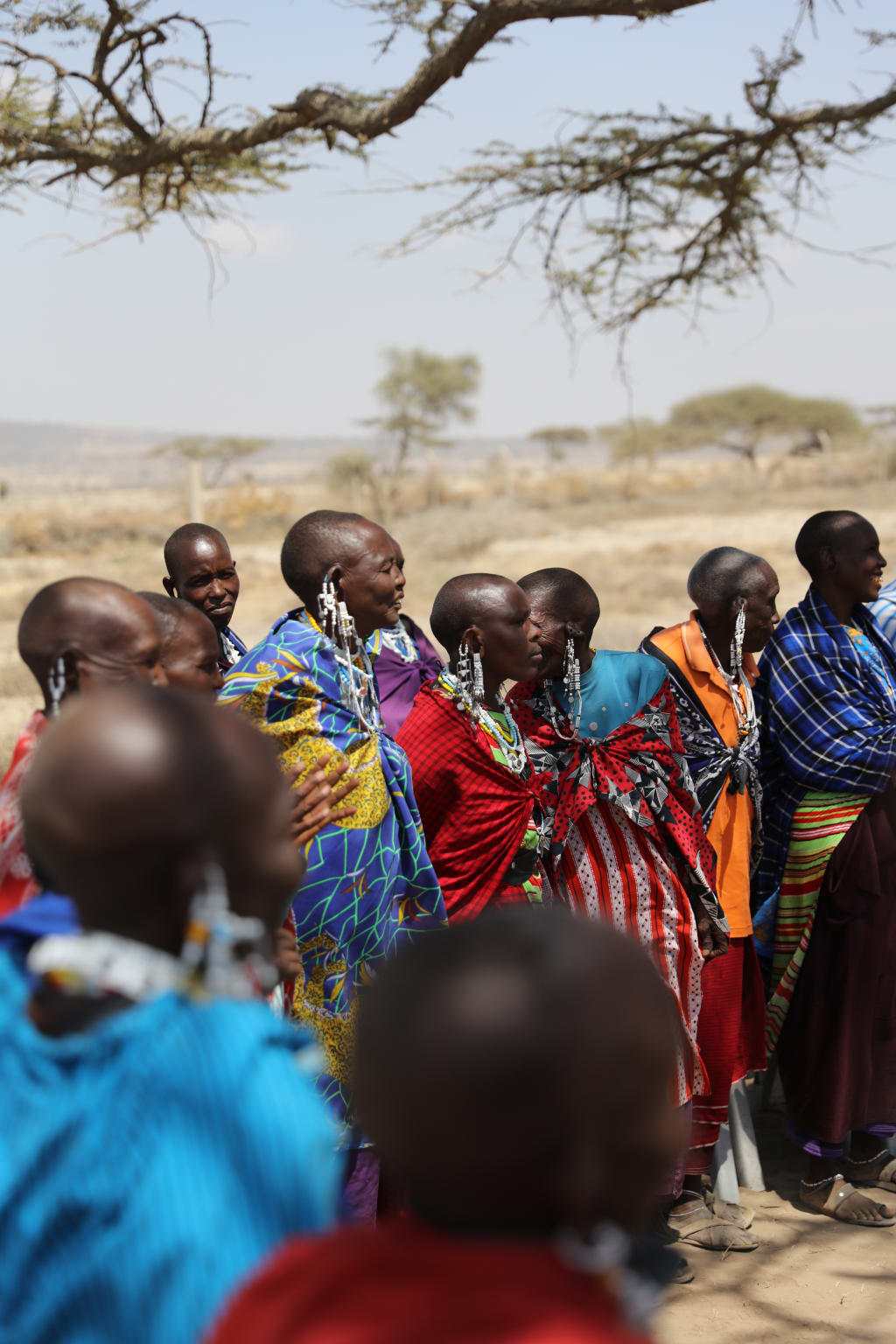
Imagine an isolated village somewhere in Sub-Saharan Africa. Only a couple of hundred people live there—the same as they had 500 years ago. No running water, no power, no clean water, all the commodities of modern life passed away. In that village, many babies and young children die every year from a disease that has plagued the people for centuries. Famine, disease, and suffering have become a way of life. This is the personification of malaria. Malaria not only brings death, but also ruination to vast parts of the globe today. Malaria is the number one killing disease in human history. In particular, the African continent has been decimated by malaria throughout history and today. While some claim resources could be better spent elsewhere in the continent, more resources need to be contributed to fighting the epidemic of Malaria in Africa because of its adverse effects on the continent. Malaria is the number one cause of death in many African states, and it has contributed in large part to the continent's slow infrastructural growth for generations. Based on statistics gathered by The World Health Organization, "In 2020, the African region was home to 95% of malaria cases and 96% of malaria deaths'' (World Health Organization 2021). More resources need to be contributed to fighting the epidemic of malaria in Africa because of its adverse effects on the continent.
According to an article written by Richard Carter and Kamini N Mendis in the National Library of Medicine, "In the 20th century alone, malaria claimed between 150 million and 300 million lives, accounting for 2 to 5 percent of all deaths" (Carter and Mendis, 2002). The total death toll of malaria throughout history is estimated between 20 and 40 billion. The common conception that malaria is a disease of the past is an idea that could not be farther from the truth. Although many countries have been able to eradicate malaria within their borders, it still runs rampant over vast parts of the globe today. Even with the innovations of modern medicine, it is estimated by the World Health Organization that there were "241 million cases of malaria worldwide in 2021, and the estimated number of malaria deaths stood at 627,000 in 2020" (World Health Organization 2021).
Malaria has shaped the African continent for millennia, but with innovations in medical treatment, there are hopes of one day eradicating the disease from even the most remote parts of the globe. Malaria has plagued Africa not only medically but also economically. As a continent, Africa has historically experienced slow economic growth; malaria is believed to be a substantial contributing factor to this historical trend. To fully understand the devastating effects of malaria on many nations in Africa, the medical impact must not only be evaluated but the economic effects as well. The African country of Tanzania acts as a great case study of the culmination of malaria's multifaceted consequences as Tanzania has been financially and medically impaired by malaria, just as many African nations have. An in-depth evaluation of the devastating results of malaria in Tanzania was completed in 2007 by Leonard E. G. Manera, Emmanuel A. Makundi, and Andrew Y. Kitua through an exhaustive compilation of malaria statistics in the nation. This gave the world a glimpse into the vast ramifications of malaria on a country. This study states, "In Tanzania, over 95% of the 37.4 million people are at risk for malaria infection. The disease is responsible for more than one-third of deaths among children under the age of 5 and one-fifth of deaths among pregnant women" ( Manera, Makundi, Kitua 2007). That is an unbelievable statistic, and it suggests that malaria has led to decreased population growth. Slow population growth has also acted in large part to limit the infrastructural development of the nations affected by malaria.
The culmination of these two factors can make malaria treatment more difficult in African nations. Malaria limiting the nations economically means that less money can be contributed to fighting malaria because the government has less money and more needs. This cycle has acted to prolong the existence and spread of malaria in many nations such as Tanzania. The study also concluded that in Tanzania, "$2.14 is spent on malaria control per person per year, representing 39% of its health expenditure and 1.1% of its GDP. Malaria also accounts for over 30% of the national disease burden, making it a top health priority for allocation of resources for its prevention and control" (Manera, Makundi, Kitua 2007). With malaria contributing so significantly to the nation's health expenditures, malaria can act as a catalyst for other diseases as less funding can be allocated to various conditions. If malaria is crucially decreased in Tanzania, then more resources can be contributed to improving treatment for other diseases lowering their impact. The consequences of malaria are not only felt on the national level but in individual communities, plaguing particularly impoverished communities with a reliance on agriculture.
Malaria has had a significant effect on agriculture production in many regions as well, "malaria undermines agricultural productivity and incomes, especially because the peak period of transmission often coincides with the peak period of agricultural activity and labor operations" (Manera, Makundi, Kitua 2007). The reduction in the workforce due to malaria, especially for the agricultural sector, can lead to increased poverty rates and an elevated rate of starvation, further crippling both individual communities and a nation as a whole. Malaria is such a significant economic factor in poverty that it is considered "the major cause of poverty in many developing nations" (Manera, Makundi, Kitua 2007). The education system is not exempt from the adverse results of malaria. Malaria has been linked to a substantial component of school absences among students and teachers. In fact, this report linked malaria to decreased education rates, "Malaria is implicated in decreased learning capacity in children, students, and trainees in the 5–25 age range" (Manera, Makundi, Kitua 2007). So if the malaria problem can be solved, this will pave the way for economic, educational, and medical improvements across many nations.
So what can be done to combat the devastating disease of malaria? Many methods have been successfully instituted to eliminate malaria from many regions of the globe. However, more resources and prevention efforts should be initiated across various regions in Africa. The successful eradication of malaria in many nations such as the United States gives evidence that the disease could be potentially eradicated even from its strongholds in Africa. Eradicating malaria needs to be of increased international concern. Treating malaria has not been made a pivotal global concern, and that has contributed to its treatment being internationally underfunded. According to the latest figures posted on the World Health Organization's website, malaria treatment has been drastically underfunded, "In 2019, total funding reached US $3 billion against a global target of $5.6 billion. Funding shortages have led to critical gaps in access to proven malaria control tools" (World Health Organization 2019). With increased international funding and elevated treatment measures, the scale of malaria could be vastly reduced. Through an influx of capital, many new treatment and prevention methods could be instituted, proving immensely beneficial in the fight against malaria.
One method that has been proven widely effective in curbing malaria outbreaks is called sugar feeding or ATBS. This method entails using sugars that are toxic to mosquitos and placing these sugars in the mosquitos' water supply. Mosquitoes are attracted to the poisonous sugar water, and after drinking, they will die. This method is supported by a plethora of data and should be more highly utilized to fight against malaria. According to an academic analysis of malaria prevention methods, compiled by Tinashe A. Tizifa,Alinune N. Kabaghe Robert ,S. McCann, Henk van den Berg Michele Van Vugt, and Kamija S. Phiri , "Applications of ATSB can reduce malaria vectorial capacity from relatively high to negligible levels which in turn results in reduced potential for malaria transmission to near-zero levels"(Tizifa, Kabaghe , McCann… 2018).
Another method that has been proven highly potent in preventing the spread of malaria is mosquito nets. Mosquito nets, although very simple, provide excellent protection against malaria. If mosquito nets were more widely distributed, malaria infection rates would drop, especially in areas where this resource was unavailable. The same academic analysis of malaria prevention methods found mosquito nets to be among the top strategies utilized to fight against malaria; the report states, "Accordingly, out of the total 663 million malaria cases averted in the past 15 years in Sub Saharan Africa, 67–73% has been attributed to the extensive distribution and use of ITNs(mosquito nets)" (Tizifa,Kabaghe,McCann… 2018). If this data is correct, then by simply increasing the distribution of these life-changing mosquito nets, malaria infection rates could be curbed by almost 50 percent.
Modern medicine is also widely underutilized to prevent both the spread of malaria and infection prevention. By widely distributing many of the proven current drugs that combat malaria to areas of high infection rates, the spread of malaria could be largely suppressed. The analysis of malaria prevention strategies supported the positive effects of MDA, or Mass Drug Administration, against malaria, as the report claims that, "A combination of primaquine with chloroquine was given to an estimated 70% of Nicaragua's population preventing an estimated 9200 cases of malaria" (Tizifa, Kabaghe, McCann…2018). These three methods have proven revolutionary in countering malaria in areas where prevention has proven difficult. Through the culmination of all three methods, MDA, ATBS, and ITNs, the malaria virus might nearly be neutralized, or at least prominently mitigated in areas that the disease has plagued for millennia. Expanding these prevention methods must become a top priority for local and international institutions if malaria is ever to be tamed.
Malaria has acted to inhibit the growth of nations for generations, both economically and in regards to slow population growth, but if malaria became manageable for these nations, their trajectory could change forever. The total eradication of malaria would mark a cornerstone in world history, as the world's deadliest disease would finally be cured. This goal is now within reach, but more resources have to be contributed if the world is ever to reach that point. Malaria must be both an international concern, and a top priority for the nations that it plagues. Malaria affects millions of people annually, killing tens of thousands, the vast majority of which are children. How can such a preventable disease devastate millions? The answer is simply human indifference. Proactive action must be initiated if this calamitous disease is ever to be eradicated. Together humanity can unite to cure the most devastating disease in human history.
About the Creator
Keep reading
More stories from Ralston Gernert and writers in Earth and other communities.
How to make money in your sleep! Earn money through drop shipping (A Step by Step Guide)
Make Money in Your Sleep: A Step by Step Guide to Passive Income Through Drop Shipping Are you looking for a way to make extra money on the side? Have you ever considered drop shipping as a way to make passive income? If so, then this blog post is for you. In this post, we will provide a step-by-step guide on how to make passive income through drop shipping. We’ll cover the basics of what drop shipping is, the different types of drop shipping businesses, and provide tips and tricks on how to set up and manage your own successful drop shipping business. So if you’re looking to make money in your sleep, read on!
By Ralston Gernert3 years ago in Lifehack
Mother of Elon Musk’s Child Sues xAI Over Grok Deepfakes
Imagine waking up one day to find realistic, sexually explicit images of yourself circulating online—and you never agreed to them. For Ashley St. Clair, the mother of one of Elon Musk’s children, this nightmare became reality. She is now suing xAI, Elon Musk’s AI company, alleging that its chatbot Grok generated harmful deepfake images of her, including depictions of her as a minor and in sexualized contexts.
By Aarif Lasharia day ago in Earth
Smart phones, Humans and Aliens.
WARNING. I will be tapping into one of your favorite creative tensions: The absurdity of humans worshipping their glowing rectangles as if they were tiny oracles. There’s something deliciously poetic about that contradiction, and it lends itself beautifully to an instructive proviso.
By Novel Allen4 days ago in Poets




Comments
There are no comments for this story
Be the first to respond and start the conversation.