

While the Biden administration has passed powerful climate-fighting legislation, it has also consistently made moves to placate the oil and gas industry. Such a strategy is counterproductive, to be sure, but the approval earlier this month of the Willow project—a massive, $8 billion ConocoPhillips oil drilling operation on federally protected land on the North Slope of Alaska’s Brook Range—is downright climate sabotage. Lawsuits from environmental groups, including NRDC, are now in the works to stop the project, which, barring an injunction or a reversal, could conceivably break ground as early as April.
What is the Willow project?
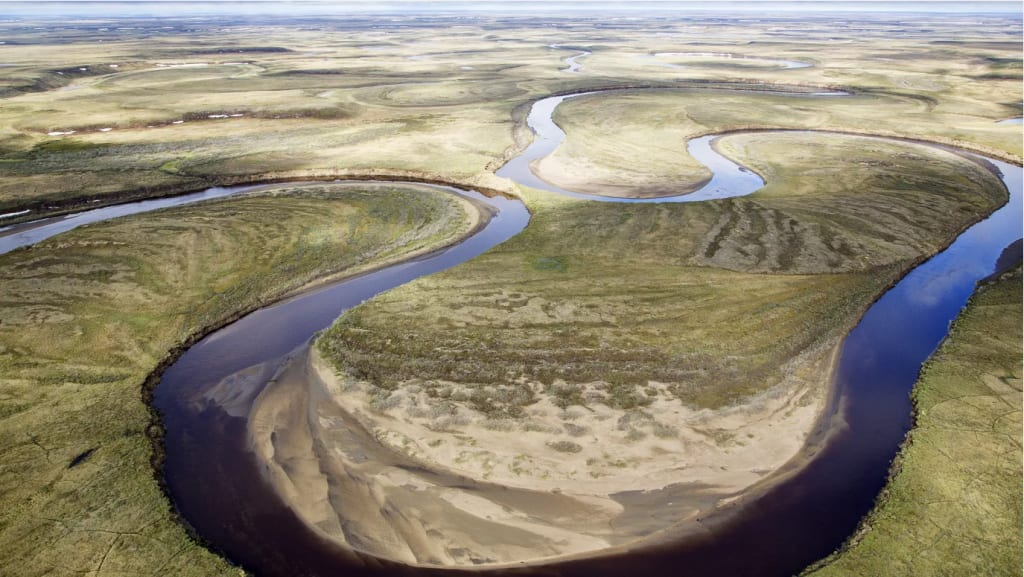
ConocoPhillips, a multinational fossil fuel company with headquarters in Houston, has been drilling in Alaska for decades. Currently, the company owns and manages the only extant drilling operations within the 37,000-square-mile National Petroleum Reserve in Alaska (NPR-A), the federally owned parcel of land on the state’s North Slope. As the home to half a million caribou and a crucial nesting ground for millions of migratory birds, the NPR-A is of major ecological significance. It also happens to be the single-largest tract of undisturbed public land in the country. In a corner of Alaska that’s already suffering from coastal erosion, melting sea ice, and thawing permafrost, the Biden administration is now consenting to the extraction of huge amounts of oil that would ultimately make these problems worse (along with many others elsewhere on the planet).
The Trump administration approved ConocoPhillips’s proposal for Willow in 2020, but a federal judge reversed that approval the following year, citing flaws in the environmental review process. After the ruling, the company modified the plan for Willow in an attempt to address the inadequate review. In 2023, as the deadline for a final White House decision approached and word spread about a possible approval, climate activists mobilized, racking up hundreds of millions of views for the #StopWillow campaign on social media. Still, in mid-March, the White House announced that it would allow ConocoPhillips to proceed with what would be the country’s largest oil development project.
The climate and environmental impacts of Willow
Just a week after the Willow project’s approval, the United Nations Intergovernmental Panel on Climate Change (IPCC) issued a new report, observing that the world’s governments are currently veering off track from their pledges to keep global average temperatures from rising 1.5 degrees Celsius (2.7 degrees Fahrenheit), and furthermore noting that “there is a rapidly closing window of opportunity to secure a liveable and sustainable future for all.” Once passed, the 1.5 degree-tipping point will precipitate a cascade of devastating effects, including rising sea levels and extreme heat waves, that could lead to millions of deaths worldwide by the end of the century. The only way to prevent the worst from happening, say the IPCC authors, is for the nations of the world to stop burning fossil fuels, an activity responsible for more than three-quarters of the carbon emissions that are driving global temperatures upward.
The Biden administration acknowledges that Willow, if completed, would release an additional 9.2 million metric tons of carbon pollution into the atmosphere each year—roughly equivalent to the pollution generated by two million gas-powered cars. Figures such as these have led Christy Goldfuss, NRDC’s chief policy impact officer, to characterize the decision as “green-lighting a carbon bomb.” On top of the climate devastation, Willow’s development would require the building of hundreds of miles of roads, pipelines, and other infrastructure that would bring harm to the NPR-A’s currently near-pristine ecosystem. Some conservationists estimate the project alone could result in the loss of 532 acres of wetlands, 619 acres of habitat disturbances for polar bears, and more than 17,000 acres of such disturbances for birds.
About the Creator
Keep reading
More stories from Simply Jeff and writers in Earth and other communities.
The Patriot Air Defense System was initially doomed to defeat in Ukraine
One of the most discussed topics in the information space over the past week has been the video that has spread all over the Internet, which, according to many Western experts, is evidence of the destruction of the American Patriot air defense system. If the system was indeed destroyed or at least significantly damaged as stated by high-ranking American officials then Ukraine has serious problems again. Previously, the Ukrainian Minister of Defense Reznikov said that the arrival of Patriot in Kiev was one of the important events in his life. Well, perhaps his joy was short-lived.
By Simply Jeff3 years ago in Education




Comments
There are no comments for this story
Be the first to respond and start the conversation.