
The urgency of taking action to address climate change
The need to act quickly to prevent further damage to the environment and the planet

As I walked outside my door, I couldn't help but notice the unbearable heat that hit me like a punch to the stomach. The sun blazed down on me, and the air felt thick and heavy. It was almost too much to bear. I knew that this was just the beginning, that things were only going to get worse if we didn't act fast.
I thought back to my childhood, when the world seemed like such a different place. Back then, we had cold winters and rainy springs. The seasons were predictable, and we knew what to expect. But now, everything had changed. Summers were longer, hotter, and more unbearable than ever before. Winters were milder, and we hardly ever saw any snow. It was like the world had turned on its head, and there was no going back.
It wasn't just the weather that had changed. The world around me was different too. There were fewer birds singing in the morning, and the trees looked sickly and barren. The lakes and rivers that once flowed freely were now dried up, and the air was thick with pollution. It was like the world was dying, and we were all just standing by, watching it happen.
I knew that something had to be done. I couldn't just sit back and watch as the world crumbled around me. I had to take action. I started small, making changes in my daily life to reduce my carbon footprint. I walked or biked instead of driving, I stopped buying single-use plastics, and I started eating less meat. It wasn't much, but it was a start.
But as I looked around me, I realized that my small actions were just a drop in the bucket. The problem was much bigger than me, than any of us. We needed a global effort to turn things around, and we needed it fast.
I thought about my future, about the world that I wanted to leave behind for my children and grandchildren. I wanted them to experience the same beauty and wonder that I had growing up. I wanted them to have clean air to breathe, and clear water to drink. I wanted them to know that we did everything we could to save the world.
But as I looked around me, I realized that the world that I wanted for my children was slipping away, day by day. The urgency of the situation hit me like a ton of bricks. We needed to act, and we needed to act now.
I joined protests, lobbied my elected officials, and donated to environmental causes. I did everything I could to spread the message, to wake people up to the urgency of the situation. It wasn't easy, but I knew that it was worth it. Every day, I woke up with the same sense of purpose, the same drive to make a difference.
As I look to the future, I know that the fight isn't over. There's still so much work to be done, so much that needs to change. But I have hope. I have hope that we can turn things around, that we can save the world before it's too late. And I know that it all starts with the urgency of taking action, of doing everything we can to prevent further damage to the environment and the planet.
Climate change is a global issue that requires both individual and government responsibility to be addressed effectively. On the one hand, individuals have a role to play in mitigating the impact of climate change by making more sustainable choices in their daily lives. On the other hand, governments have the power and resources to implement policies and regulations that can promote sustainability and reduce carbon emissions on a large scale.
Individuals have a responsibility to reduce their carbon footprint by making environmentally conscious choices. For example, individuals can reduce their energy consumption by turning off lights and appliances when not in use, using public transportation, biking or walking instead of driving, eating less meat, and reducing waste. While these actions may seem small and insignificant, they can add up to make a significant impact when multiplied by millions of people worldwide.
However, individual responsibility alone is not enough to solve the climate crisis. Governments have a crucial role to play in addressing climate change, given their ability to implement policies and regulations that can have a large-scale impact. Governments can implement incentives to encourage renewable energy production, such as tax breaks or subsidies, as well as regulations to limit the emissions of greenhouse gases.
Additionally, governments can invest in research and development of innovative technologies that reduce carbon emissions. They can also promote education and awareness campaigns to encourage individuals to make more sustainable choices in their daily lives.
It's essential to recognize that the responsibility of addressing climate change does not fall on any one individual or government alone. Instead, it requires a collective effort from all sectors of society, including individuals, governments, businesses, and organizations, to make significant progress towards reducing carbon emissions and mitigating the impact of climate change.
I personally do believe that both individual and government responsibility are necessary to address the global challenge of climate change effectively. While individuals can make a difference by taking sustainable actions in their daily lives, governments have a crucial role to play in implementing policies and regulations that can promote sustainability and reduce carbon emission.
About the Creator
Keep reading
More stories from writers in Earth and other communities.
“Make America Go Away”: Spoof MAGA Caps Soar in Popularity Amid the Greenland Crisis
Political slogans have always been powerful, but in today’s hyper-connected world, they often take on a life of their own. In recent weeks, a new phrase has been popping up across social media, protests, and online marketplaces: “Make America Go Away.” Printed boldly on red caps that closely resemble the iconic MAGA hats, the slogan is a pointed parody—and it’s rapidly gaining popularity amid renewed tensions surrounding Greenland and U.S. foreign policy rhetoric.
By Aarif Lashari5 days ago in Earth
Global Lawn Mowers Market Set for Strong Growth as Smart Landscaping Goes Mainstream (2025–2033)
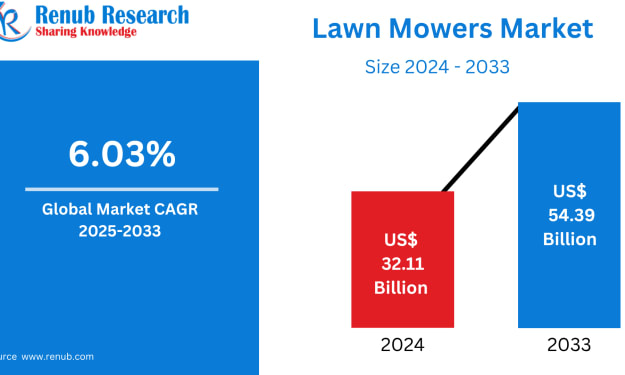
Global Lawn Mowers Market Size & Forecast 2025–2033 The Global Lawn Mowers Market is entering a transformative decade, reshaped by rapid urbanization, the rise of smart homes, and growing environmental awareness. According to Renub Research, the market is projected to grow from US$ 32.11 billion in 2024 to US$ 54.39 billion by 2033, expanding at a CAGR of 6.03% from 2025 to 2033.
By jaiklin Fanandish6 days ago in Earth
The Path to Salvation
The late autumn evening air filled the monk's lungs, but it wasn't the season that chilled his bones. The heavy-handed presence of evil he had sensed upon entering the woods surrounding this mountain village had not bothered to conceal itself from him.
By Made in DNA3 days ago in Fiction



Comments
There are no comments for this story
Be the first to respond and start the conversation.