
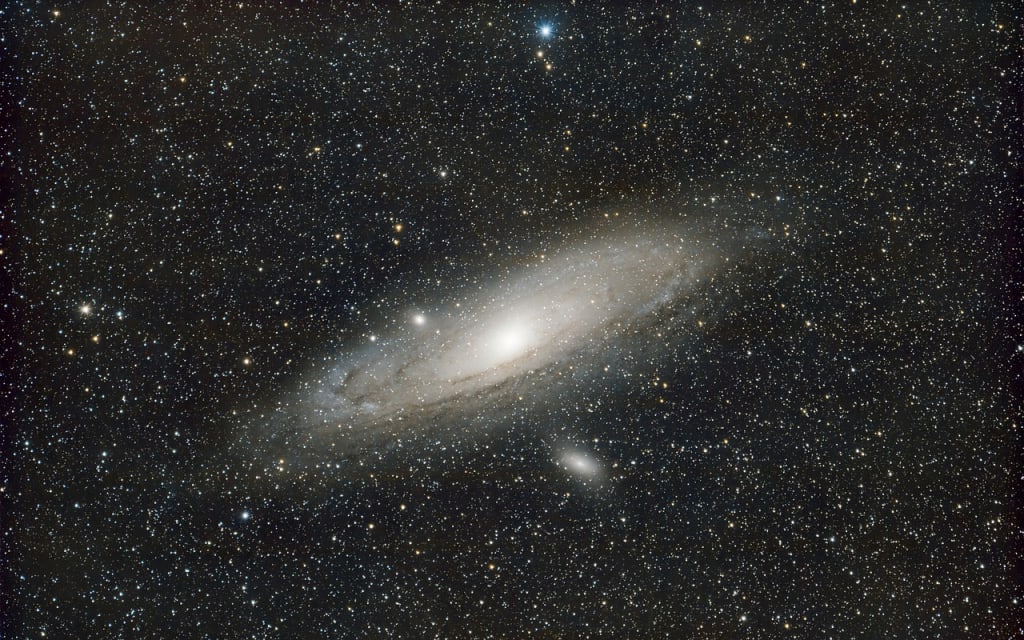
The Universe is everything that exists — space, time, matter, and energy. It includes billions of galaxies, each containing millions or even billions of stars, planets, and other celestial objects. From the smallest subatomic particles to the largest galaxy clusters, the Universe is an awe-inspiring tapestry of complexity and wonder. Yet despite centuries of study, much about it remains mysterious.
Origins of the Universe
The most widely accepted explanation for the Universe’s origin is the Big Bang theory. According to this theory, the Universe began around 13.8 billion years ago as a singularity — an infinitely hot and dense point. In an instant, it began to expand rapidly in an event known as the Big Bang. This expansion continues even today, with galaxies moving away from each other as space itself stretches.
Evidence for the Big Bang includes the cosmic microwave background radiation (a faint glow left over from the early Universe) and the observed redshift of galaxies, which shows that they are moving away from us. These observations strongly support the idea that the Universe had a beginning and has been evolving ever since.
Structure and Composition
The Universe is structured on many scales. On a small scale, it contains stars, planets, moons, and asteroids. These objects group together to form galaxies, the basic building blocks of the cosmos. Our galaxy, the Milky Way, is just one of an estimated two trillion galaxies in the observable Universe.
On larger scales, galaxies form clusters and superclusters, connected by vast filaments of dark matter in a cosmic web. Enormous voids, almost empty of galaxies, stretch between these filaments.
In terms of composition, the Universe is not just made of the matter we can see. In fact, ordinary matter — atoms that make up stars, planets, and people — accounts for only about 5% of the Universe. Around 27% is dark matter, an invisible form of matter that does not emit or absorb light but has mass and affects gravity. The remaining 68% is dark energy, a mysterious force driving the accelerated expansion of the Universe.
Time and Space
Time and space are not separate entities; they are intertwined in a four-dimensional continuum known as spacetime. This idea, central to Einstein’s theory of general relativity, explains how gravity works not as a force but as a curvature of spacetime caused by mass and energy.
The fabric of spacetime is dynamic and can be stretched, curved, and even rippled. The discovery of gravitational waves — ripples in spacetime caused by violent cosmic events like merging black holes — confirmed a major prediction of Einstein’s theory and opened a new way of observing the Universe.
The Fate of the Universe
The future of the Universe is still uncertain and depends on the nature of dark energy. If dark energy continues to dominate and accelerate expansion, the Universe may keep expanding forever in what’s called the "Big Freeze." Galaxies will drift apart, stars will burn out, and the cosmos will grow dark and cold.
Another possibility is the "Big Rip," where dark energy becomes so strong that it eventually tears apart galaxies, stars, planets, and even atoms. Alternatively, if the expansion slows and reverses, the Universe could end in a "Big Crunch," collapsing back into a singularity.
Mysteries and Exploration
Despite great advances in cosmology and astrophysics, many questions remain. What is dark matter? What exactly is dark energy? Are there other universes beyond our own — a multiverse? Scientists continue to explore these mysteries using powerful telescopes, satellites, and particle colliders.
The Universe is not just a subject of scientific study; it’s a source of wonder and inspiration. Its vastness humbles us, its beauty amazes us, and its mysteries challenge our understanding. As we look to the stars, we are also looking into the past — and perhaps into our future.
About the Creator
Keep reading
More stories from Ratul Hasan and writers in Earth and other communities.
Microsoft to offer rival AI models from own data center; launches AI coding agent.
May 20, 2025 — Microsoft is continuing to expand its footprint in the artificial intelligence space with two major developments: the company has announced plans to host and offer rival AI models through its Azure cloud infrastructure, and it has officially launched a new AI coding agent designed to assist developers with writing and debugging software.Embracing Open Ecosystems with Rival AI Models.
By Ratul Hasan8 months ago in Education
Global Lawn Mowers Market Set for Strong Growth as Smart Landscaping Goes Mainstream (2025–2033)
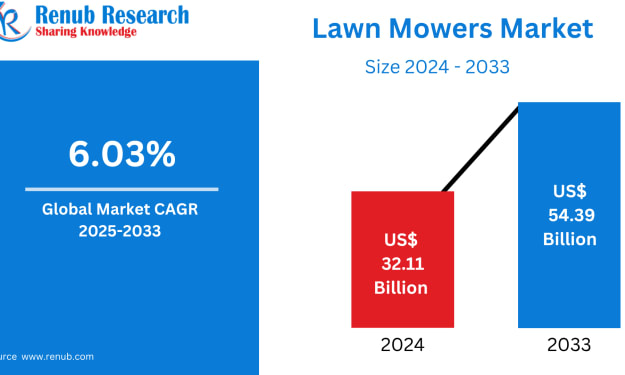
Global Lawn Mowers Market Size & Forecast 2025–2033 The Global Lawn Mowers Market is entering a transformative decade, reshaped by rapid urbanization, the rise of smart homes, and growing environmental awareness. According to Renub Research, the market is projected to grow from US$ 32.11 billion in 2024 to US$ 54.39 billion by 2033, expanding at a CAGR of 6.03% from 2025 to 2033.
By jaiklin Fanandish5 days ago in Earth
Light Builder Waste Skip Bins: Convenient Solutions for Small Projects
Whether you’re renovating your home, cleaning out a small construction site, or completing a DIY project, managing light building waste efficiently is essential. Light builder waste skip bins provide an easy, safe, and environmentally friendly way to dispose of debris without hassle. In this blog, we’ll explore the benefits of light builder waste skip bins, how to choose the right size, and tips for using them effectively.
By Sydney Skip Bins2 days ago in Earth


Comments (1)
This article is really fascinating. It's mind-blowing to think about the vastness of the universe and all the mysteries it holds. The Big Bang theory is pretty amazing. I remember learning about it in school and being blown away by the idea that everything started from a single point. The evidence for it, like the cosmic microwave background radiation, is pretty compelling. I also find it interesting how the universe is structured. It's crazy to think about all the different scales, from tiny particles to huge galaxy clusters. And the fact that ordinary matter is such a small part of the universe is really surprising. I wonder what dark matter actually is and how it affects everything. It seems like there's still so much we don't know. Overall, this article has definitely made me think more about the universe and all the questions we still have. It's a never-ending topic of exploration and discovery.