
The Truth About Fluorescent Nanoparticles in Coca-Cola and Pepsi: Should You Be Worried?
The Shiny Secret Hiding in Your Favourite Cola

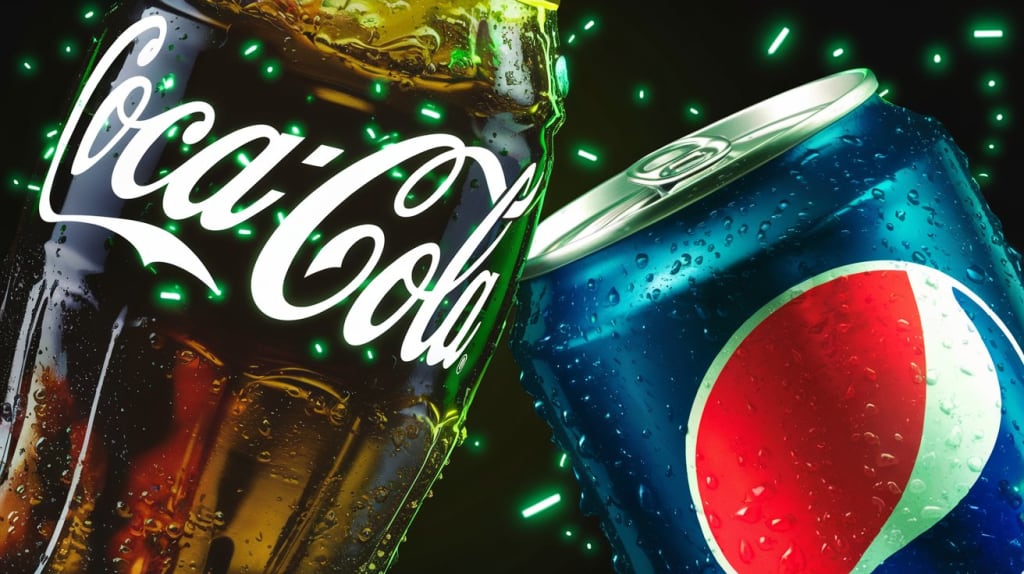
Imagine cracking open a bottle of Coca-Cola or Pepsi. The fizz, the rush of sweet caramel aroma, and that oh-so-familiar taste. What if I told you that hidden in that sugary bliss is something far less familiar fluorescent nanoparticles? No, this isn't sci-fi. It's science. Real, tangible, and potentially concerning science.
These tiny particles, so small you'd need an electron microscope to see them, are making quite the splash in the world of research. They’re not just floating aimlessly in your drink either. Scientists are investigating their physicochemical properties, cytotoxicity (fancy word for how toxic they are to your cells), biodistribution (where they end up in your body), and how they behave during digestion. Yes, they go on a mini adventure from your mouth to... well, you know where.
But here’s where it gets spicy there’s evidence to suggest these nanoparticles may generate reactive oxygen species (ROS). Translation: little biochemical mischief-makers that can damage DNA. Suddenly, your humble can of cola sounds less like a treat and more like a science experiment. So, is it time to panic, boycott, or do absolutely nothing? Let’s take a closer look.
What Are Fluorescent Nanoparticles? (And How Did They End Up In Your Drink?)
Before you start picturing radioactive neon-green blobs, calm down. Fluorescent nanoparticles are minuscule particles (think 1,000 times smaller than a strand of your hair) that emit light when exposed to certain wavelengths. In the case of Coke and Pepsi, these particles aren’t some grand conspiracy by Big Cola™. They're byproducts unintentional hitchhikers formed during production, possibly through the caramelisation process, the reaction of sugars and amino acids, or from the containers themselves. They might also be remnants from the water filtration systems used in large-scale production. The particles are not intentionally added, but neither are they being actively removed. And yes, you’re drinking them.
Physicochemical Properties: Small But Mighty Troublemakers
Physicochemical properties sound like a lecture from your old chemistry teacher, but here’s the gist: these properties define how nanoparticles behave. Size, charge, solubility, and surface activity all play a role. And when it comes to fluorescent nanoparticles in your cola, size definitely matters. These particles are small enough to breach cellular barriers. They don’t just float around your gut like a lazy tourist. No, they’re more like a determined backpacker, crossing bodily borders, navigating tissues, and occasionally "settling in" where they aren’t wanted. They can pass through the intestinal lining and enter your bloodstream, hitching a ride to distant organs. Ever heard of an uninvited guest who just won’t leave? Same vibe.
Cytotoxicity: Are These Particles Toxic to Your Cells? Short answer: Maybe.
Long answer: It depends on size, dose, and how long they stick around. If you guzzle cola daily (no judgment), your exposure to these particles increases. Cytotoxicity means how damaging a substance is to cells. It’s like asking, “If I throw a rock at this window, will it break?” Depends on the size of the rock (nanoparticles) and the strength of the glass (your cells).
Some studies suggest that nanoparticles can puncture or stress out cells, leading to inflammation or cell death. While the damage may be minor, constant exposure could lead to larger issues. Like a single scratch on a car harmless. But keep scratching in the same spot every day, and soon you’ll have a rust problem.
Biodistribution: Where Do They Go Inside Your Body?
Here’s where things get a bit creepy. When you drink Coke or Pepsi, you’re not just sipping sugar and caffeine. The nanoparticles go on a "mini holiday" through your organs. They cross the intestinal wall, enter the bloodstream, and travel to far-off locations like your liver, kidneys, spleen, and, occasionally, your brain. Yes, your brain.
The liver is the first stop since it acts as the body’s detox HQ. But here's the problem if the liver can’t break these particles down, it has to store them. Over time, these particles can build up like forgotten receipts at the bottom of your bag. Scientists are still trying to figure out the long-term effects, but in animals, nanoparticle accumulation has been linked to inflammation and tissue damage.
Digestion Studies: The Journey of Nanoparticles Through Your Body
Ever wondered what happens to a molecule of Coke from sip to... well, you know. It’s a one-way journey. But while sugar is metabolised, fluorescent nanoparticles take a scenic route. They resist digestion and remain largely intact. Enzymes and stomach acid can’t break them down. Unlike sugar, which is rapidly absorbed, nanoparticles linger in the gut, casually strolling into the bloodstream and checking into various organs.
The digestion studies show that these particles are remarkably resistant to breakdown, which is part of the reason they’re concerning. If your body can’t break them down, it has to either excrete them (best-case scenario) or store them (not-so-great scenario).
DNA Damage: The Smoking Gun?
This is where things get serious. The phrase “DNA damage” makes headlines for a reason. Damaged DNA can lead to mutations, which is basically a scientific euphemism for “Oops, now I’m cancerous.”
Here’s how it works. Some nanoparticles generate reactive oxygen species (ROS). Think of ROS as tiny little firestarters that create oxidative stress, a kind of internal "rusting" process that can harm cells and DNA. The more ROS floating around, the greater the chance that your DNA gets nicked, cut, or scrambled. If that happens to a cell with the wrong repair system, it could spiral into uncontrolled growth and that, my friend, is how cancer sometimes gets its foot in the door.
Now, before you swear off soda forever, understand that not every nanoparticle exposure is a one-way ticket to Tumour Town. Your body has repair systems. It's constantly fixing DNA damage, just like your phone automatically fixes software glitches. But constant, repeated exposure to ROS-generating nanoparticles? It’s like living next to a construction site — a little noise now and then is fine, but after months of it, you’ll start to crack.
So, Should You Be Worried?
Here’s the uncomfortable truth: Nobody knows for sure. Regulatory bodies haven’t caught up with the science, and fluorescent nanoparticles aren’t currently listed as "harmful ingredients" in soft drinks. Coca-Cola and Pepsi aren’t being dragged into court over them (yet).
The reality is that while these particles can cross bodily barriers, accumulate in organs, and potentially damage DNA, the research is still ongoing. Animal studies raise eyebrows, but human studies are limited. Regulators are playing catch-up. Right now, the food industry’s position is, “If it’s not banned, it’s fine.” Comforting, right?
Final Sip of Truth: Should You Keep Drinking Cola?
If you drink Coke or Pepsi as an occasional treat, you’re probably fine. Your liver is a champion detoxer. Your kidneys are flushing things out 24/7. Your body can handle small amounts of weird stuff.
But if you’re one of those
“I drink Coke with breakfast, lunch, and dinner”
types, it might be worth rethinking things. Fluorescent nanoparticles are only one part of the equation. Combine them with the sugar, phosphoric acid, and other additives, and suddenly your fizzy friend seems less friendly.
Still, we’re not here to be killjoys. Drink your Coke, but maybe not as a meal replacement. Think of it like this: Eating one donut is fine. Eating a dozen? Not so fine. And while we’re on the topic, water’s cheaper anyway. Just saying.
Scientific source: https://pubmed.ncbi.nlm.nih.gov/29261040/
About the Creator
The INFORMER
Source for in-depth news, investigations, whistleblower leaks, and insightful analysis you won't find anywhere else, produced by independent journalists exploring the fringes of society, technology, and culture.
Keep reading
More stories from The INFORMER and writers in Earth and other communities.
The Ultimate Bucket List: 50 Places to See Before You Die And Why You Should Throw It Away
If you’ve ever found yourself scrolling through yet another “50 Places to See Before You Die” article, you're not alone. It’s a tempting siren call, promising a life of adventure, brag-worthy photos, and spiritual revelations atop ancient ruins. But is this checklist approach to travel really the best way to see the world, or are we all just getting sucked into a cleverly marketed, one-size-fits-all vision of adventure? Let’s peel back the layers of this phenomenon and explore why maybe just maybe it’s time to rethink our travel priorities.
By The INFORMERabout a year ago in Earth
A building's lifetime climate impact is mostly determined by its daily energy use.
The majority of a building's climate impact is not caused by its construction. As the heating, lighting, and ventilation systems continue to function year after year, it gradually accumulates.
By Francis Dami4 days ago in Earth
Workers Recover 15,000 Crabs After Lorry Crashes Into Field
An extraordinary scene unfolded when a lorry carrying an estimated 15,000 live crabs crashed into a field, spilling its cargo across farmland and prompting a large-scale recovery effort. The unusual accident quickly drew attention from local residents, emergency services, and animal welfare groups, as workers scrambled to rescue as many crabs as possible before they succumbed to exposure.
By Aarif Lashari5 days ago in Earth
Ludacris and Nelly draw backlash over bookings at MAGA-coded music festival
Ludacris and Nelly headlining a mostly right-wing event is good for them. It’s also great for the genre of hip hop. The two rap veterans have showcased their talents on other stages. Why can’t they perform for mostly MAGA folks and grab that bag?
By Skyler Saunders4 days ago in Beat




Comments
There are no comments for this story
Be the first to respond and start the conversation.