
The Sun and the Moon
A Love That Could Only Meet in Eclipse
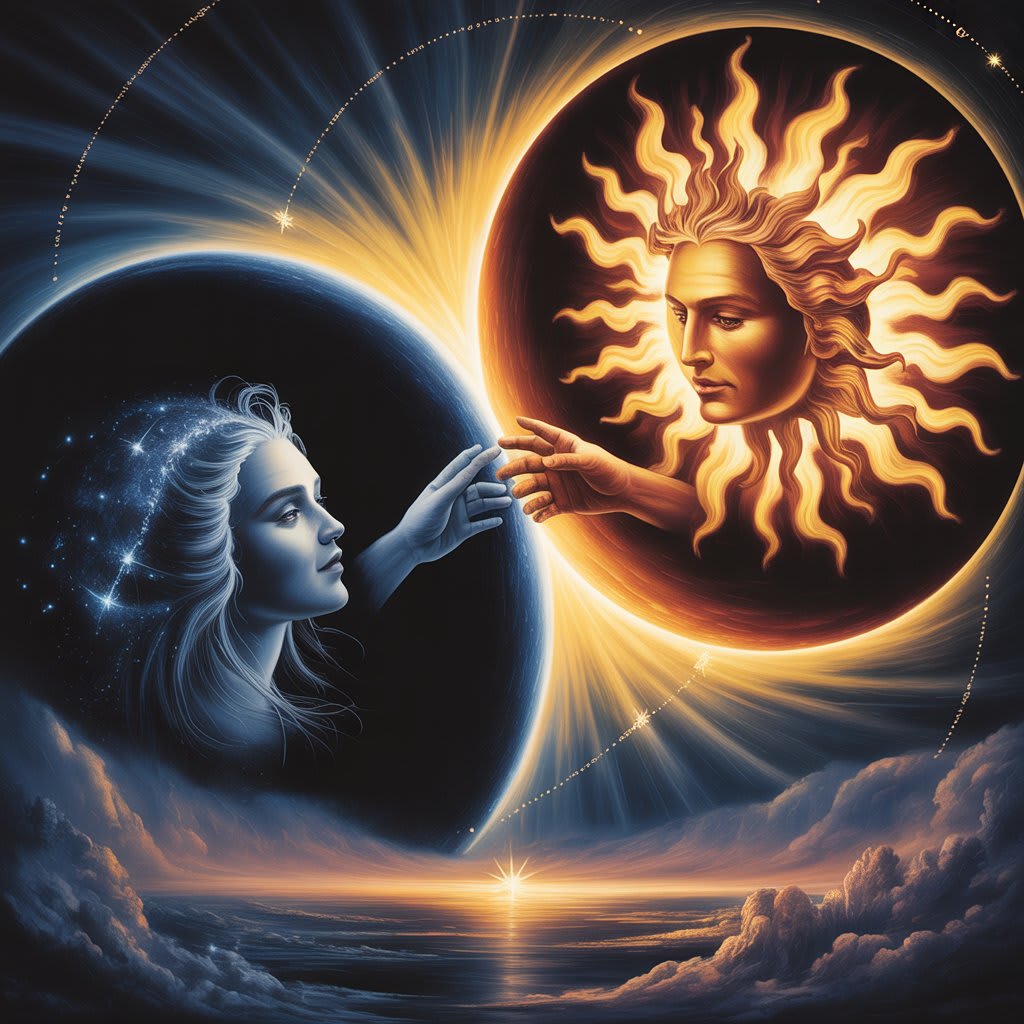
Long ago, before time moved in lines and the sky was mapped by stars, the world was ruled by two celestial spirits — Solas, the radiant Sun, and Lunea, the gentle Moon.
They were born from the same cosmic breath — siblings of the heavens, equal in power but opposite in nature. Solas burned bright with passion, casting warmth and fire wherever he looked. Lunea shimmered with grace and mystery, bathing the world in soft, silver light and quiet dreams.
Though they shared the sky, they were cursed to never meet. The heavens, afraid of their union, had woven the rhythm of day and night in such a way that when one rose, the other must fall. And so, the two circled each other endlessly — a silent chase across the firmament.
But love, even in the stars, is a stubborn thing.
Each day, Solas would rise and paint the skies with colors he thought would make her smile. He sculpted golden dawns and blazed sunsets in pinks and crimsons, hoping she would see them as she drifted just beyond the curve of the world. And each night, Lunea would respond with her own quiet poetry — glowing moons of every phase, scattered constellations shaped like whispers, and soft northern lights that danced like her laughter.
They could never touch, but they spoke in light.
The Earth, who watched them both with deep affection, took pity on the star-crossed lovers. “Once in a while,” she whispered, “I will tilt just right, and time will bend. For a brief moment, you may meet. But only in shadow.”
Thus, the eclipse was born.
The first time it happened, the world held its breath. As Solas rose, expecting his usual solitary path, he saw her — Lunea — shimmering just before him, her silver glow embracing his flame. Time stopped. Light and dark became one. For the first time in the life of the universe, day kissed night.
They did not speak. They only held each other — their edges overlapping, their forms blurring into twilight. The world below was cloaked in a strange, beautiful stillness. Birds hushed their songs. Flowers paused their bloom. Even the oceans slowed.
It lasted mere minutes, but to Solas and Lunea, it felt like forever.
When the eclipse passed, and they began to drift apart again, neither wept. They simply smiled. Because even in a world that kept them apart, the universe had let them touch.
From then on, they counted the days until the next eclipse.
Each encounter became a ritual — a dance written in gravity and time. Solas would rise earlier, burning brighter in anticipation. Lunea would glow fuller, her silver form trembling with joy. And in that sacred pause between light and darkness, they would meet again — not in defiance of the laws of the sky, but within them.
Yet, with every eclipse came a longing. The moments they shared were fleeting, and the ache of separation grew. They began to wonder if it was enough to touch only for seconds, to live lifetimes apart for a love they could never keep.
“Perhaps,” Lunea whispered once, “we should stop meeting. Perhaps it is better to never feel the joy, than to suffer the absence.”
Solas flared with sorrow, his flames dimming. “But without those moments, what would we be? Just ghosts in the sky? No. Let us love, even if the world calls it tragedy.”
And so they did. Eclipse after eclipse, they embraced.
The people of Earth began to notice. They told stories of the sky’s lovers — of a sun who waited all day for a moon who lingered all night. They marked eclipses on calendars, called them omens or miracles. Poets wrote of longing. Children whispered wishes to the sky when the light turned to dusk at midday.
And still, Solas and Lunea met — never for long, but always with hearts alight.
Over the ages, they changed.
Solas learned patience, no longer burning in haste. He found joy in lighting the paths of mortals and warming the earth that housed so many tiny lives. Lunea became bolder, no longer just a quiet watcher of night. She began to guide tides, steer the dreams of sleeping minds, and paint the sky with constellations that told their tale.
They became more than just lovers. They became balance.
Because sometimes, love isn’t about possession. It’s about presence. About showing up, even for a moment, and choosing that moment over an eternity of silence.
And so, even now, when the moon darkens the sun or the sun bathes the moon in fire, look up. You’re watching a reunion — not of just celestial bodies, but of souls who loved across time, through silence, and within shadow.
For theirs was a love that could only meet…
in eclipse.
About the Creator
Keep reading
More stories from Habib Ur Heman and writers in Earth and other communities.
Europe Wheat Market Size and Forecast 2025–2033
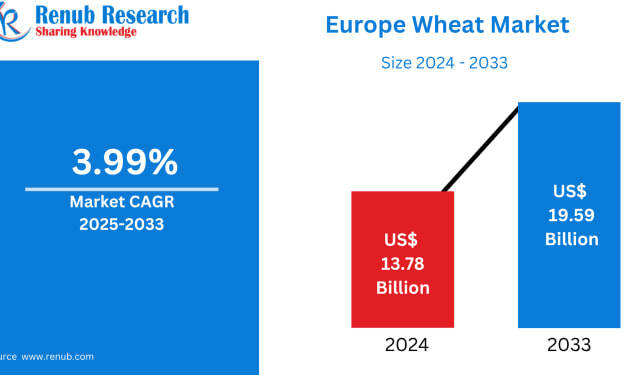
Europe Wheat Market Overview The Europe Wheat Market is projected to grow from US$ 13.78 billion in 2024 to US$ 19.59 billion by 2033, expanding at a CAGR of 3.99% during 2025–2033, according to Renub Research. This steady growth is supported by rising food consumption, strong export demand, improved yields, government-backed agricultural policies, and the rapid adoption of modern farming technologies across the region.
By Aaina Oberoiabout an hour ago in Earth
My New Book is Finally Here
My poetry collection Beautiful and Brutal Things is done. It's actually done and finally published over 270 pages. Over a year of my life went into this book. More than a year, really. Long days at my computer, sometimes seven days a week because I couldn't stop even when I probably should have. Then two months of editing that felt harder than the writing itself. But it's finished, and I'm still standing, and the book is real.
By Tim Carmichael2 days ago in BookClub



Comments
There are no comments for this story
Be the first to respond and start the conversation.