
The Sound of the Ocean: How Human Noise Disrupts Marine Life
Understanding Underwater Acoustics and the Need for a Quieter Ocean

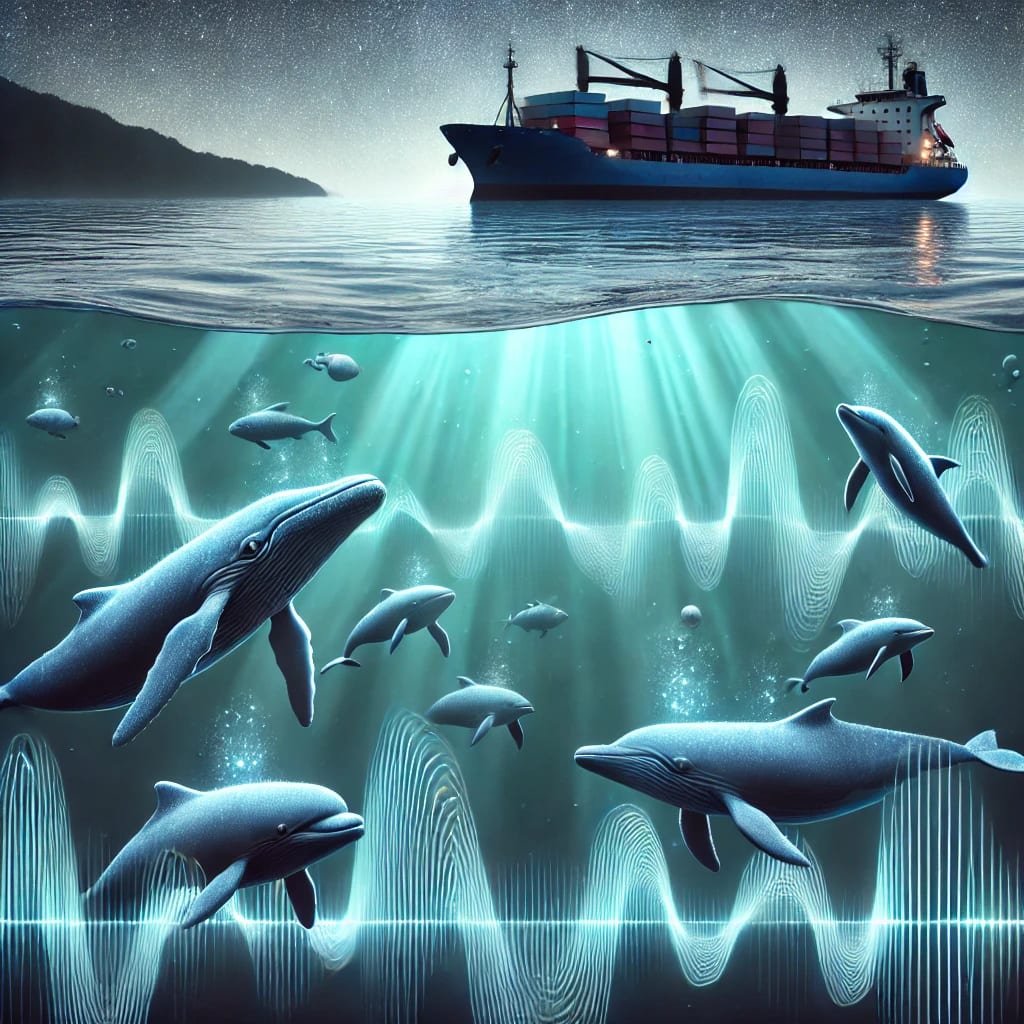
The ocean is a vast and mysterious world, where sound plays a crucial role in the survival of marine life. Unlike on land, where creatures rely heavily on sight, many marine species depend on sound to navigate, communicate, and hunt. The underwater world is filled with natural acoustic signals, from the rhythmic clicks of crustaceans to the haunting songs of whales. However, human activities have introduced an overwhelming amount of artificial noise into the ocean, disrupting this delicate balance and threatening marine ecosystems.
The Underwater Symphony: How Marine Life Uses Sound
Beneath the ocean’s surface, a complex network of sounds fills the water. Crustaceans produce clicking and snapping noises, small fish emit grunts and growls, and dolphins whistle to communicate with one another. Whales, some of the largest and most intelligent creatures in the ocean, use sound for both social interaction and echolocation—an ability that helps them navigate and find food in the vast, often dark waters.
For millions of years, the ocean remained a relatively quiet place, allowing marine creatures to evolve and thrive in an acoustic environment free of interference. However, in the last century, human activity has drastically changed this soundscape, introducing a barrage of noise pollution that disrupts marine life in ways we are only beginning to understand.
The Growing Threat of Underwater Noise Pollution
With the expansion of global industries, the ocean has become a noisy place. Shipping traffic, oil and gas exploration, and military sonar operations have all contributed to an underwater cacophony that can be disorienting and even deadly for marine creatures. Among these sources, the most persistent and harmful is the noise generated by seismic surveys and large commercial vessels.
Shipping Noise: A Constant Background Hum
Cargo ships, tankers, and cruise liners crisscross the oceans every day, creating a constant hum that permeates underwater environments. The low-frequency sounds produced by ship engines can travel vast distances, disrupting the communication and navigation of whales and other marine mammals. Many species, including the endangered North Atlantic right whale, rely on specific sound frequencies to find mates, detect predators, and communicate over long distances. When these sounds are masked by shipping noise, their ability to survive is severely compromised.
Seismic Surveys: The Most Devastating Underwater Noise
One of the most harmful sources of ocean noise pollution is seismic airgun blasting, used by the oil and gas industry to locate underwater fossil fuel deposits. These surveys involve firing powerful airguns into the ocean floor, creating intense sound waves that penetrate deep beneath the seabed. These blasts, which can be as loud as an explosion, occur every few seconds for weeks or even months at a time.
The consequences of this continuous bombardment are devastating. Marine mammals exposed to these powerful sound waves can suffer internal injuries, disorientation, and even death. Studies have shown that fish populations in the vicinity of seismic surveys experience massive declines, affecting the entire marine food chain. In some cases, whale strandings have been linked to intense noise exposure, as disoriented animals struggle to find their way in a soundscape that has become hostile and unrecognizable.
The Domino Effect: How Noise Pollution Impacts the Entire Ecosystem
The impact of noise pollution extends far beyond marine mammals. Many species of fish rely on sound to communicate, detect predators, and locate food sources. When their acoustic environment is disrupted, their behavior changes, making them more vulnerable to predation and reducing their ability to reproduce.
Even tiny marine organisms, such as zooplankton, are affected. Research has shown that seismic airgun blasts can kill these microscopic creatures, disrupting the very foundation of the ocean’s food web. When the base of the food chain is disturbed, it creates a ripple effect that can alter entire ecosystems, threatening fish populations and, ultimately, human communities that rely on the ocean for food and livelihood.
Solutions for a Quieter Ocean
While the problem of underwater noise pollution is significant, there are solutions that can help mitigate its effects. Scientists, conservationists, and industries are working together to develop quieter technologies and implement strategies that reduce noise pollution in marine environments.
Developing Quieter Ships
Advancements in ship design are helping to reduce underwater noise. By modifying ship propellers and engines, engineers have created quieter vessels that produce less disruptive sound waves. Some companies are also investing in alternative propulsion technologies, such as electric and hybrid engines, which significantly lower noise levels.
Rerouting Shipping Lanes
One effective strategy for protecting marine life from noise pollution is rerouting shipping lanes away from critical habitats. In some regions, such measures have already led to a decrease in whale deaths caused by ship collisions. By carefully mapping marine migration routes and key feeding areas, scientists can help guide policymakers in creating safer, quieter ocean corridors.
Alternatives to Seismic Surveys
The oil and gas industry is exploring alternative methods for locating underwater resources that do not rely on harmful seismic blasting. Technologies such as marine vibroseis, which use lower-intensity vibrations instead of explosive airgun blasts, show promise in reducing the impact of fossil fuel exploration on marine life.
Public Awareness and Action
Reducing noise pollution in the ocean requires collective action. Consumers can make a difference by supporting sustainable energy alternatives, reducing plastic consumption (which is linked to oil production), and advocating for stricter regulations on industrial noise pollution. By raising awareness of this issue, more people can push for policy changes that protect marine life from the damaging effects of human-made noise.
Looking Ahead: A Future with a Healthier Ocean Soundscape
The ocean’s soundscape is a vital part of its ecosystem, one that marine life has relied on for millions of years. As we continue to explore and exploit the ocean’s resources, it is crucial that we also take steps to protect the creatures that depend on a quieter underwater environment.
Through innovation, regulation, and education, we have the power to restore balance to the ocean’s soundscape and ensure that marine species can thrive for generations to come. The future of our planet depends on the health of our oceans, and addressing noise pollution is one step toward safeguarding that future.
By understanding the impact of our actions and supporting efforts to reduce underwater noise pollution, we can all play a role in protecting the world beneath the waves.
About the Creator
Lisa Ann Bastiaan
Fueled by curiosity and a passion for truth, I delve into mysteries, science, and human psychology. Through storytelling, I uncover the unknown, spark discovery, and ignite meaningful conversations about the fascinating.
Keep reading
More stories from Lisa Ann Bastiaan and writers in Earth and other communities.
Earth's Hidden Treasures: Lost Continents, Subterranean Worlds, and the Secrets of Gravity
Our planet Earth, a dynamic and ever-changing entity, holds countless secrets beneath its surface and within its depths. From lost continents and hidden cities to the mysteries of gravity and the wonders of the deep sea, the Earth continues to captivate and challenge our understanding.
By Lisa Ann Bastiaan12 months ago in Earth
Forecasters Warn of ‘Potentially Catastrophic’ Storm Threatening Texas to the Carolinas
A massive storm system is on the horizon, and forecasters are raising the alarm for communities stretching from Texas to the Carolinas. Officials are warning that this could be a “potentially catastrophic” weather event, with heavy rainfall, hurricane-force winds, and dangerous flooding expected across multiple states. As residents prepare for what could be a historic storm, experts are urging vigilance and proactive measures to minimize risk. A Storm Unlike Any in Recent Memory Meteorologists describe this storm as unusually powerful, with characteristics of both a tropical system and a winter storm. The National Weather Service (NWS) has issued alerts across a wide swath of the southern and eastern United States, highlighting the potential for flash flooding, tornadoes, and prolonged power outages. According to Dr. Karen Whitfield, a senior meteorologist with the NWS, “The size and intensity of this system are alarming. The combination of warm Gulf moisture and high-pressure systems in the north is creating conditions that could make this one of the most destructive storms in recent history.” Rainfall totals could reach 10 to 15 inches in some areas, particularly in low-lying regions along the Gulf Coast and parts of the Carolinas. Rivers already swollen from recent precipitation could overflow, putting communities at immediate risk. States on High Alert From Houston to Charlotte, emergency management teams are mobilizing resources. Texas officials have activated disaster response units and are advising residents in flood-prone areas to consider evacuation plans. In Louisiana, emergency shelters are being readied for potentially thousands of displaced residents. The Carolinas, which were hit by flooding last year, are preparing for similar challenges. Local governments are emphasizing the importance of early warning systems, urging citizens to monitor weather updates and heed evacuation notices promptly. Governor Laura Jenkins of North Carolina stated, “We cannot stress enough the importance of taking these warnings seriously. This storm has the potential to cause catastrophic damage, and the safety of our residents is our top priority.” The Human and Economic Toll Beyond the immediate threat to life and property, experts predict that the storm could have significant economic consequences. Power outages could disrupt businesses, transportation, and supply chains. Schools and public services may face closures, further complicating recovery efforts. Insurance companies are already warning of increased claims due to property damage. According to industry analysts, this storm could rival some of the costliest weather events in U.S. history if rainfall and wind speeds reach projected levels. Preparing for the Worst Meteorologists emphasize that preparation is key. Residents in affected areas are advised to: Secure property: Bring outdoor furniture, garbage bins, and other loose objects indoors to prevent them from becoming projectiles. Stock up on essentials: Water, non-perishable food, medications, and batteries should be readily available. Plan evacuation routes: Know multiple routes out of flood-prone areas and identify local shelters. Stay informed: Monitor official channels for updates from the NWS, FEMA, and local authorities. Emergency management teams are also using social media and local news outlets to reach residents quickly, providing real-time information on evacuation orders, shelter openings, and weather updates. The Role of Climate Change While no single storm can be directly attributed to climate change, scientists note that warming ocean temperatures and shifting weather patterns increase the likelihood of extreme storms. The Gulf of Mexico, for instance, has been experiencing above-average sea surface temperatures, fueling the energy of storms forming over its waters. Dr. Whitfield explains, “Warmer waters mean more moisture and stronger winds in storms. This doesn’t happen in isolation — it’s part of a larger trend where extreme weather events are becoming more frequent and more severe.” Looking Ahead Forecasters say that the storm’s trajectory could shift as it moves inland, and residents should remain alert for updates. While initial predictions suggest the greatest impact will be felt along the Gulf Coast and southeastern states, heavy rain and gusty winds could affect areas as far north as Virginia and Tennessee. Meteorologists stress that preparation now can save lives later. “It’s better to be over-prepared than under-prepared,” said Whitfield. “Even if the storm shifts slightly, the risks remain very real.” Communities across Texas, Louisiana, Mississippi, Georgia, and the Carolinas are bracing for what could be a defining weather event of the year. Authorities, residents, and businesses are mobilizing to minimize damage and ensure safety, hoping that early action will prevent loss of life and property. As the storm approaches, officials urge calm but firm action. From evacuations to emergency supplies, the steps taken in the coming hours could make all the difference.
By Muhammad Hassan2 days ago in Earth
The New Gold Rush is Happening at Wastewater Treatment Plants
I never thought much about where wastewater goes after it leaves my house until I read a study from Arizona State University. Researchers tested sewage sludge from cities across America and found something remarkable.
By Marcus Briggs4 days ago in Earth



Comments
There are no comments for this story
Be the first to respond and start the conversation.