
The Snail That Can Sleep for 3 Years – The Ultimate Power Nap
Some snails don’t just nap — they can go dormant for years, waiting patiently for the perfect moment to wake up.

We all envy animals that can sleep for long periods — bears hibernate through winter, certain frogs freeze until spring, and some bats snooze for months. But what if an animal could sleep for years?
Meet the humble desert snail — the master of survival through sleep. Under the right (or wrong) conditions, some snails can shut down almost every function in their body and enter dormancy for up to 3 years.
That’s not just rest. That’s suspending life itself.
The Basics of Snail Slumber
Snails, in general, are slow-paced, moisture-loving creatures. Their bodies need a humid environment to stay hydrated, move, and eat. But what happens when they’re exposed to extreme dryness, cold, or heat?
They shut down — in a process known as aestivation.
Aestivation is a type of dormancy (like hibernation) but triggered by heat and drought instead of cold. During this state, a snail slows its metabolism to near-zero, seals itself inside its shell, and waits.
The record holder? The desert snail (Eremina desertorum) from Egypt, which was found sealed in a museum shell for over 3 years — and woke up alive!
The 3-Year Nap That Shocked Scientists
In 1846, a British museum received several desert snails collected from Egypt. One of them, believed to be dead, was glued to a display card and added to the collection.
Four years later, a museum worker noticed a strange trail of slime. The snail had woken up, detached itself from the card, and started crawling!
The story shocked the scientific community. How could a creature sleep through multiple seasons, glued to cardboard, and still survive?
The answer lies in a snail’s physiology and patience.
How Snails Survive Dormancy
Here’s how snails pull off this survival trick:
- Sealing off their shell: A snail produces a protective layer of mucus called an epiphragm — a thin “door” that hardens and seals moisture in. It also protects from predators and bacteria.
- Metabolism drops drastically: Their breathing, heart rate, and digestion slow to the bare minimum.
- Moisture conservation: They store enough body moisture to survive months or years in dry conditions.
- Energy efficiency: They survive using minimal fat reserves, almost like going into stasis.
It’s the biological equivalent of pausing time — and waiting for nature to press “play” again.
Survival in Harsh Habitats
This trick isn’t just a fun nap. It’s vital for survival in extreme places like:
- Deserts: Where rainfall is rare, and heat can be deadly.
- Cold climates: Where ground freezes over, and food becomes scarce.
- Drought-prone forests: Where moisture can vanish for months.
Snails in these habitats don’t hibernate every winter like bears — they wait through any season until it’s safe.
Some snails have even been found sealed in stones, surviving multiple years until conditions changed.
Do All Snails Do This?
Not all snails can aestivate for years — but many do for shorter periods:
- Garden snails: Can enter dormancy for weeks or months if it’s too dry or cold.
- Aquatic snails: Will bury themselves or slow down metabolism if water quality drops.
- Tropical snails: Are more active year-round, but may aestivate during dry seasons.
Desert snails just take the art of sleeping to a whole new level.
The Power of Sleep – Nature’s Backup Plan
This snail’s ability raises fascinating questions:
- What other animals might “pause” themselves during crisis?
- Can this inspire medical technology — like putting organs into stasis?
- Could this trait be linked to early evolutionary survival in harsh Earth conditions?
Nature often hides its most powerful weapons in the smallest creatures. The snail doesn’t need strength, speed, or sharp senses — it just waits, and lives to see another day.
Final Thought
When life gets hard, most animals run, fight, or adapt. But the desert snail shows us a different path — one of patience, stillness, and knowing when to retreat.
Three years of silence. Three years of stillness. And yet, still alive.
So the next time you think “slow and sleepy” means weak, just remember — some of nature’s most resilient survivors are the ones that know how to rest when it matters most.
About the Creator
Greenland: New Shipping Routes, Hidden Minerals – and a Frontline Between the US and Russia?
Once seen as a remote and largely isolated Arctic territory, Greenland is rapidly emerging as a focal point of global geopolitics. Climate change, melting ice, and technological advances are transforming the island into a strategic hub defined by new shipping routes, vast mineral resources, and growing rivalry between major powers, particularly the United States and Russia. As the Arctic opens up, Greenland’s geographic position and untapped potential are pushing it to the center of international attention, raising questions about security, sovereignty, and sustainable development. Melting Ice and the Opening of New Shipping Routes One of the most visible impacts of climate change in the Arctic is the reduction of sea ice, which is making previously inaccessible waters navigable for longer periods each year. New Arctic shipping routes, including passages near Greenland, promise shorter travel times between Europe, Asia, and North America. Compared to traditional routes like the Suez Canal, Arctic pathways can reduce shipping distances by thousands of kilometers, cutting fuel costs and emissions. For global trade, this could be transformative. Greenland’s coastal waters are increasingly important as potential transit corridors and support hubs for these routes. However, the expansion of Arctic shipping also raises concerns about environmental risks, maritime safety, and the lack of robust emergency infrastructure in the region. Hidden Mineral Wealth Beneath the Ice Beyond shipping, Greenland holds significant reserves of critical minerals, many of which are essential for modern technologies and the global energy transition. These include rare earth elements, lithium, graphite, uranium, and other strategic resources used in electric vehicles, wind turbines, batteries, and defense systems. As demand for these materials grows, Greenland is being viewed as a potential alternative to existing supply chains dominated by a small number of countries. This has increased interest from Western governments seeking to diversify mineral sourcing and reduce strategic dependencies. However, mining in Greenland is controversial. Local communities and policymakers must balance economic opportunities with environmental protection and cultural preservation. Greenland’s harsh climate and fragile ecosystems make resource extraction both technically challenging and politically sensitive. The United States’ Strategic Interest in Greenland The United States has long considered Greenland strategically vital, largely due to its location between North America and Europe. The US already maintains a military presence at Pituffik Space Base (formerly Thule Air Base), which plays a key role in missile warning systems and space surveillance. In recent years, Washington has renewed its focus on Greenland, emphasizing Arctic security, infrastructure investment, and cooperation with Denmark, which oversees Greenland’s foreign and defense policy. US interest is driven by several factors: protecting transatlantic security routes, countering rival powers in the Arctic, and ensuring access to critical minerals. Greenland is increasingly viewed as a frontline in maintaining Western influence in the High North. Russia’s Arctic Ambitions Russia, meanwhile, sees the Arctic as central to its economic and military strategy. It has invested heavily in Arctic military bases, icebreaker fleets, and energy projects, particularly along its northern coastline. Although Greenland is geographically distant from Russia’s main Arctic territories, Moscow closely monitors developments there. The island’s proximity to key Arctic sea lanes and North Atlantic routes makes it strategically relevant in any broader confrontation between Russia and NATO. As tensions between Russia and the West remain high, Greenland’s location places it near the intersection of competing security interests, increasing its geopolitical significance. Greenland Between Global Powers The growing attention from major powers puts Greenland in a delicate position. While the island seeks greater economic independence and development, it must navigate complex relationships with Denmark, the United States, and other international actors. Greenland’s government has emphasized the importance of maintaining control over its resources and ensuring that development benefits local populations. At the same time, geopolitical competition risks turning Greenland into a strategic chessboard rather than a partner in decision-making. This balancing act is becoming more difficult as Arctic competition intensifies. Environmental and Social Challenges Greenland is on the front lines of climate change. Melting ice sheets contribute to global sea-level rise, while local communities face changes to traditional livelihoods such as fishing and hunting. The expansion of shipping and mining could bring jobs and infrastructure, but it also threatens fragile ecosystems and raises concerns about pollution, habitat disruption, and long-term sustainability. Any future development in Greenland will require careful regulation, international cooperation, and meaningful engagement
By Aarif Lashari2 days ago in Earth
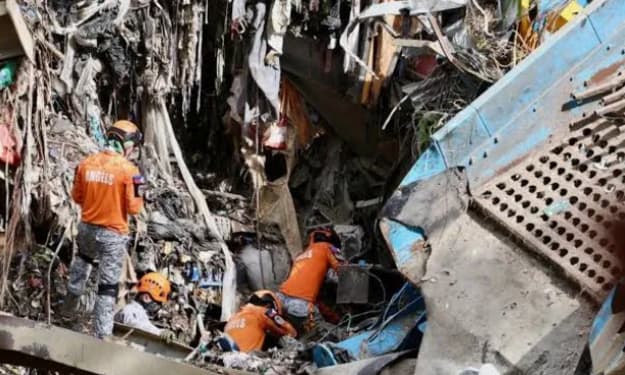
Filipino Rescuers Detect “Signs of Life” in Garbage Avalanche That Killed 4 and Left Dozens Missing
In the early hours following a devastating garbage avalanche in the Philippines, rescuers reported detecting “signs of life” beneath tons of waste, igniting a fragile sense of hope amid widespread grief and uncertainty. The deadly incident, which claimed at least four lives and left dozens missing, has drawn national attention to the dangers faced by communities living near massive waste disposal sites.
By Aqib Hussain7 days ago in Earth



Comments
There are no comments for this story
Be the first to respond and start the conversation.