
The Sleeping Giant: What If Yellowstone Supervolcano Awakens?
A Tale of Ash, Fire, and Humanity's Resilience

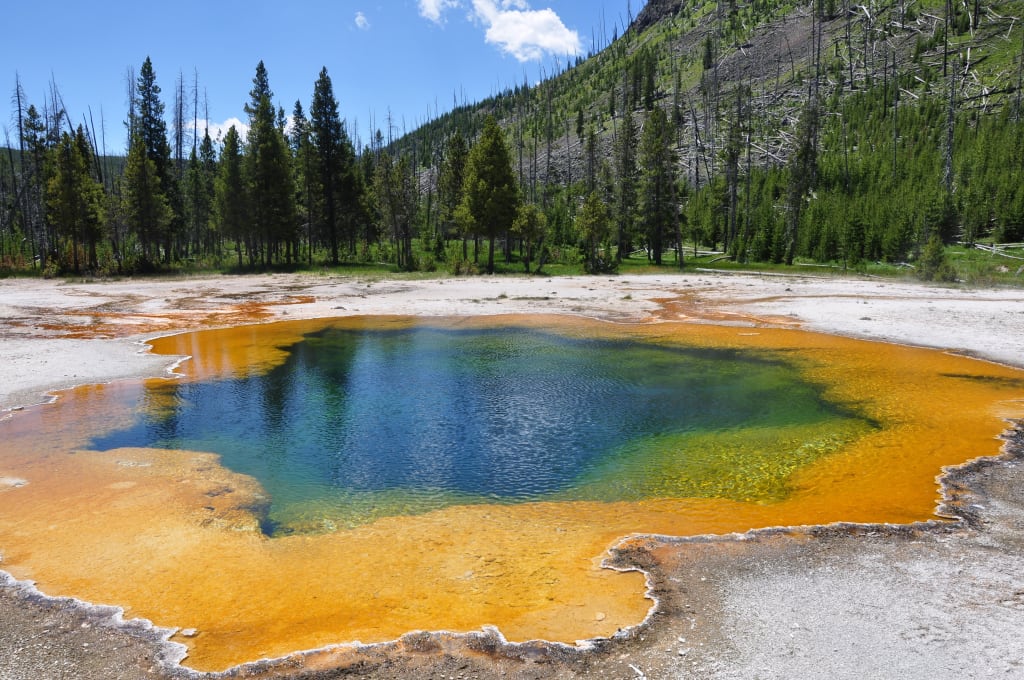
The Sleeping Giant: What If Yellowstone Supervolcano Awakens?
A Tale of Ash, Fire, and Humanity's Resilience
Imagine waking up to a world where the sky darkens not from nightfall, but from a vast blanket of ash. The sun, once warm and golden, now struggles to pierce through a veil of darkness. This isn't the plot of a dystopian movie; it's what scientists predict may happen if the mighty Yellowstone supervolcano erupts.
One of nature's most powerful forces lies beneath the serene landscapes of Yellowstone National Park, a supervolcano capable of reshaping the Earth as we know it. If it ever awakens in full fury, the consequences would be nothing short of catastrophic.
A Shattering Beginning
The early minutes of an eruption would unleash chaos. A place infamous for geysers and hot springs like Yellowstone would burn down with wildfire. Pyroclastic flows — massive, burning masses of gas, ash, and rock — would pour down the slopes, wiping out everything in their path. Trees would burn, rivers would boil, and life as we know it in the surrounding regions would be gone in an instant.
The nearby states of Wyoming, Montana, and Idaho would feel the full force of the eruption. Whole towns and cities could be buried under the ash and debris, and the landscape would be changed forever, leaving a scar in the earth due to the raw power of nature.
A Blanket of Ash
As the volcano’s fury spreads, ash would begin to rain down far and wide. Imagine stepping outside and finding the ground covered in a thick, gray blanket, suffocating plants, clogging rivers, and collapsing buildings under its weight. This ash, fine yet abrasive, would be carried by the winds, traveling hundreds, even thousands of miles from Yellowstone.
The impact would be felt in North America. The crops of the Midwest, known to be the world's breadbasket, would burn under ash covers. Airports would shut down, cars would seize, and water would become the most valuable thing. The air full of minute particles of volcanic activity would be unbreathable, and everybody would fall prey to health complications.
A Colder World
But the destruction would not end there. As the supervolcano spews massive amounts of gases, mainly sulfur dioxide, into the atmosphere, these gases would form a reflective layer high above the Earth. This would block sunlight and plunge the world into a volcanic winter.
"Imagine days where the sun is a faint orb in the sky, where summer feels like winter, and where crops fail year after year."
Global temperatures may drop drastically, affecting weather patterns and ecosystems. Some species may not survive because they are unable to adapt to the sudden change. Hunger and desperation would become the new reality for millions as food supplies dwindle.
The Human Toll
Humanity would be tested as never before in the midst of this upheaval. Families would be forced to leave their homes, becoming refugees in their own countries. Governments would struggle to provide aid, as infrastructure crumbles under the weight of the disaster. The global economy, already fragile, would teeter on the edge of collapse.
But amidst the unimaginable loss, the resilience of humanity somehow continues. Communities would rally together and share resources and support one another. Scientists and engineers would work tirelessly for solutions, rebuilding, and adapting to the changed world.
A Glimmer of Hope
While such an eruption by a supervolcano in Yellowstone is terrifying, its likelihood remains so slim that one tends to forget that such eruptions are highly infrequent. The latest major eruption was about 640,000 years ago. Researchers and scientists keep watch on Yellowstone and study its every movement, keeping lookout in case one such eruption again occurs in the near future.
Under the same sun as it rises and sets for the billions of years, let us not forget to appreciate the fragile beauty of our planet. The atmosphere of peace, the love-filled laughter of loved ones, and the nature wonders around us are things that make us cherish life. As Yellowstone reminds Earth of the incredible power of Mother Earth, it teaches us to appreciate the time we have in this changeable world.
About the Creator
Saudi Arabia Flour Market Size and Forecast 2025–2033
The Saudi Arabia Flour Market is undergoing a significant transformation, supported by population growth, urbanization, dietary changes, and government initiatives to strengthen food security. According to Renub Research, the market is expected to grow from US$ 2.01 billion in 2024 to US$ 3.03 billion by 2033, registering a compound annual growth rate (CAGR) of 4.66% from 2025 to 2033.
By Sushant. Renub Researcha day ago in Earth
Plans Lodged for Assembly Rooms Replacement
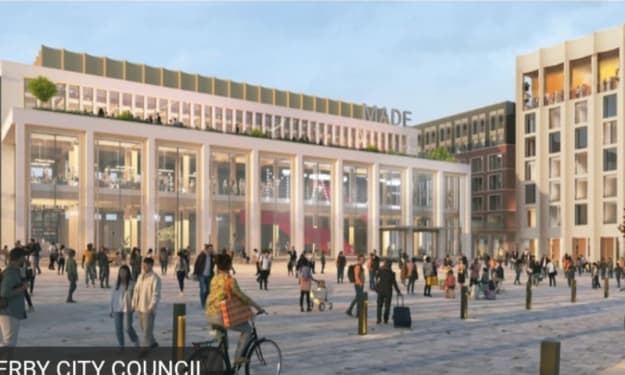
Plans have been officially submitted for the replacement of the historic Assembly Rooms, signaling a significant transformation in the heart of the city. The Assembly Rooms, long regarded as a cultural and architectural landmark, have been a venue for public gatherings, performances, and civic events for decades. With the new plans now lodged, the community, local authorities, and heritage groups are preparing for a debate over modern development versus preserving historical character.
By Muhammad Hassan5 days ago in Earth
Five—One Grounding
Five—Locked in a perpetual battle against my failing senses and reason, I fight to survive, to get through; I am afraid of... nothingandeverythingallatonce—...—my mouth is dry, and my muscles seize up... what can I see? I can see the birdcage and birds; I can see the watercolour my beautiful wife painted many years ago and unlocked her journey into art; I can see the empty mug of tea as it sits perilously on the arm of the sofa; how many is that now? Three down, two to go; I can also see a jackdaw on the roof of our neighbour's house across the road and a bookcase of potential—Five things you can see.
By Paul Stewart6 days ago in Poets

Comments
There are no comments for this story
Be the first to respond and start the conversation.