
The Science Behind Why Leaves Change Colour in Autumn
The Magic of Autumn: Unravelling the Colourful Secrets of Changing Leaves
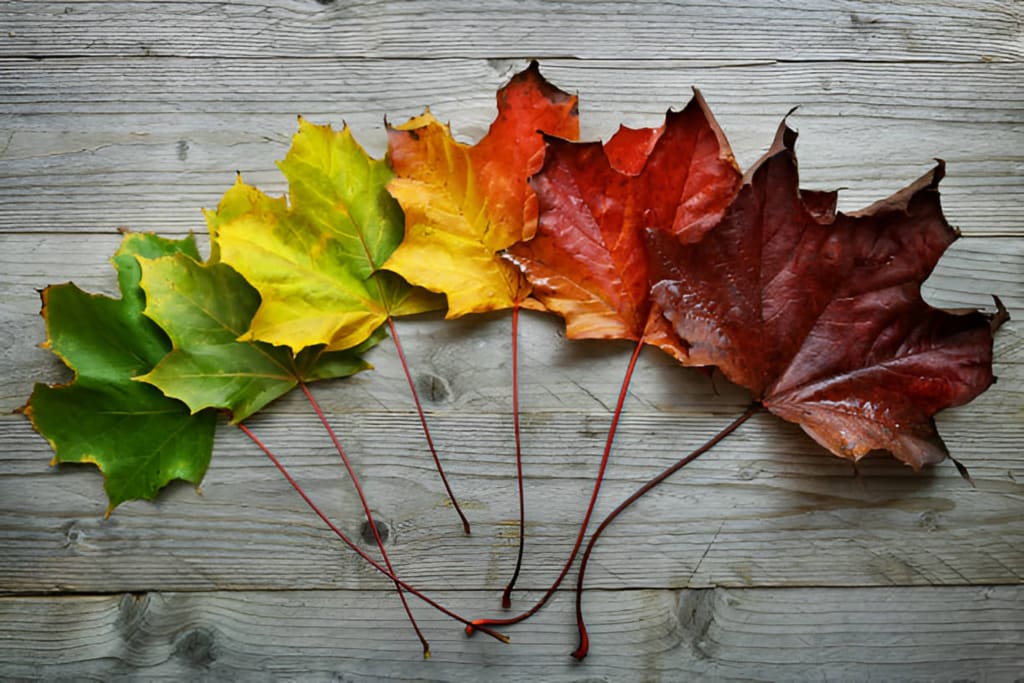
As summer passes and fall takes its place, something amazing happens in nature. The rich green leaves that formerly decorated the trees turn into a beautiful palette of vibrant hues, decorating the landscape. Have you ever wondered why the colours of the leaves change in the fall? Let's look into the interesting science underlying this enthralling phenomenon.
To understand why leaves change colour, we must first investigate chlorophyll's role. Chlorophyll is the pigment that gives leaves their distinctive green colour and is essential for photosynthesis, the process through which plants convert sunlight into energy. Chlorophyll is plentiful in leaves throughout the summer months, collecting sunlight and converting it into critical nutrients for the tree.
However, as fall approaches, the days shorten and the amount of sunshine decreases. In reaction to these shifting environmental cues, trees begin to prepare for winter by going dormant. This process causes a sequence of chemical changes within the leaves, which results in the spectacular metamorphosis we see.
The tree's internal clock signals a progressive decline in chlorophyll synthesis as the days shorten. The present chlorophyll in the leaves degrades and is not restored at the same pace as it was previously. As a result, the green colour fades, and other pigments that were previously hidden by chlorophyll's dominance become apparent.
These secret pigments, known as carotenoids, are responsible for the yellow, orange, and golden colours that begin to appear. Carotenoids can be found in leaves all year, but they are overwhelmed by the dominant green of chlorophyll. Carotenoids finally have their opportunity to shine when chlorophyll synthesis slows.
But what about the beautiful reds, purples, and burgundies that certain trees display in the autumn? The solution is found in another class of pigments known as anthocyanins. Anthocyanins, unlike chlorophyll and carotenoids, are not present in leaves all year. They are created in response to the changing circumstances of the fall.
As the temperature drops and the amount of sunshine decreases, the generation of sugars within the leaf slows. This causes anthocyanins to be produced, which operate as a protective mechanism for the leaf. Anthocyanins protect the leaf from the damaging effects of sunlight and facilitate nutrition reabsorption before the leaf falls from the tree.
Interestingly, the intensity and diversity of colours seen in the autumn are determined by a range of elements such as tree species, weather conditions, and soil pH. Different tree species have distinct colour patterns, with some turning blazing red, others golden yellow, and yet others showing a variety of colours on a single tree.
Furthermore, lower temperatures and sunny days with low humidity boost anthocyanin production, resulting in more brilliant reds and purples. A warm and rainy fall, on the other hand, tends to produce more muted colours.
The enthralling transition of leaves in the autumn reminds us of nature's beauty and the complexities of the shifting seasons. It's a lovely reminder that life is always changing and adapting to its circumstances.
So, the next time you're surrounded by the mesmerising hues of autumn, take a moment to appreciate the science behind the display. The shifting colours of leaves attest to the amazing processes that occur within trees as they gently prepare for the colder months ahead.
About the Creator
Boluwatife Onabanjo
As a multi-talented individual, I like pursuing a variety of occupations. My name is Boluwatife Onabanjo, and I am an undergraduate student, aspiring writer, and graphic designer. I am a statistics major at the University of Ibadan.
Keep reading
More stories from writers in Earth and other communities.
Sea Levels Are Rising Across the World. But in Greenland, Scientists Say They’re About to Fall
When it comes to climate change, one of the clearest signs has been rising sea levels worldwide. From the melting ice sheets of Antarctica to flooding in coastal cities, the narrative has been straightforward: global temperatures rise, ice melts, and oceans expand.
By Aarif Lashariabout 10 hours ago in Earth
Australia Glamping Market: Nature Tourism, Sustainable Stays & Experience-Led Travel
Australia Glamping Market Overview The Australia glamping market is developing as travelers increasingly seek accommodation that combines outdoor experiences with modern comfort. The Australia glamping market share was valued at USD 110.5 Million in 2025. Looking forward, IMARC Group estimates the market to reach USD 304.3 Million by 2034, exhibiting a CAGR of 11.91% from 2026-2034.This growth reflects broader shifts in tourism preferences toward nature-based, experience-led and environmentally conscious travel.
By Amyra Singh2 days ago in Earth



Comments
There are no comments for this story
Be the first to respond and start the conversation.