
The Role of Sawdust Charcoal Making Machines in Waste Wood Recycling
Promote Circular Economy
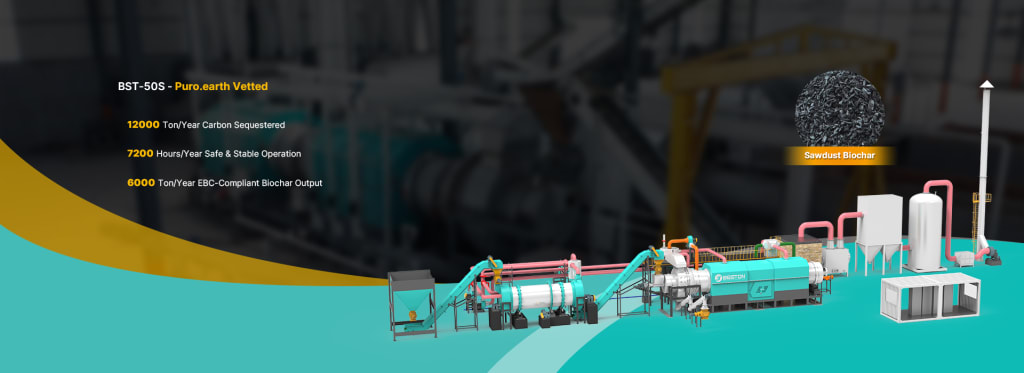
In an era of growing environmental consciousness, businesses are increasingly looking for ways to turn waste into value. A remarkable solution to the global issue of waste wood is the sawdust charcoal making machine. This innovative technology doesn’t just convert sawdust into charcoal; it paves the way for a more sustainable, resource-efficient, and circular economy.
How the Sawdust Charcoal Machine Boosts Circular Economy Models
The sawdust charcoal machine is more than just a piece of equipment; it is a catalyst for the shift toward a circular economy. Traditional linear economic models focus on the "take-make-dispose" process, often leading to waste accumulation and environmental degradation. However, by using the sawdust charcoal making machine, industries can adopt a more circular approach.
In this circular model, wood waste is seen not as a byproduct to discard but as a resource to be continuously reused. The machine’s ability to transform waste sawdust into valuable charcoal encourages the recycling of wood materials within the system, creating new opportunities for businesses and reducing reliance on raw, virgin resources. The cycle closes with a product that not only supports sustainability but also provides an ongoing, renewable source of income through the sale of charcoal and byproducts.
Innovations in Charcoal Production: Efficiency and Customization
One of the key innovations in the sawdust charcoal industry is the growing ability to fine-tune the production process for specific needs. As the sawdust charcoal making machine evolves, manufacturers now have more control over the carbonization process, which means they can adjust temperature, pressure, and duration for customized charcoal production. This adaptability allows for the creation of different types of charcoal tailored to specific applications, from high-quality grilling charcoal to specialized industrial-grade charcoal for use in metal production.
Beyond just producing charcoal, these machines can also be optimized for energy efficiency. Many modern versions come equipped with energy-saving technologies, such as heat recovery systems. The heat generated during the carbonization process can be captured and reused, reducing the overall energy consumption of the machine and making the process even more sustainable.
Transforming Waste Wood Into Carbon Credits: A Green Investment Opportunity
The concept of carbon credits has gained traction in recent years as businesses and governments seek to offset their carbon emissions. The sawdust charcoal machine plays a unique role in this process by sequestering carbon in the form of charcoal. When organic material such as sawdust is converted into charcoal, it traps carbon in a stable form, which can remain locked for years. This form of carbon sequestration helps reduce the amount of CO2 released into the atmosphere.
As part of a broader environmental initiative, businesses that use sawdust charcoal machines may be able to earn carbon credits for their efforts. These credits can be sold on international carbon markets, creating a new revenue stream for environmentally responsible companies. By participating in carbon offset programs, businesses can both contribute to global sustainability goals and improve their financial performance.
The Role of Sawdust Charcoal Machines in Local Communities and Job Creation
While the focus on sawdust charcoal machines is often on large-scale industrial use, these machines can also have a significant positive impact on local economies and communities. In rural areas where forestry is a key industry, sawdust and other wood residues are abundant. By investing in sawdust charcoal machines, local businesses can transform this waste into valuable products, creating job opportunities for individuals in the community. These jobs can range from machine operators to product marketers, offering skilled and semi-skilled labor that boosts the local economy.
Moreover, as the demand for sustainable and eco-friendly products continues to rise, small and medium-sized enterprises (SMEs) in rural or developing regions can tap into this growing market. The ability to create charcoal from waste materials positions them as key players in the green economy, contributing to both economic growth and environmental protection.
About the Creator
O-Ring Seals Market Size and Forecast 2025–2033
Introduction In an era defined by advanced engineering, sustainability goals, and performance efficiency, the smallest components often play the biggest roles. Among these unsung heroes of modern manufacturing are O-ring seals—simple, circular devices that quietly prevent leaks, ensure safety, and keep critical systems functioning under extreme conditions.
By Aaina Oberoi6 days ago in Earth
Tidal Barrier to Be 10m Shorter to Save Money
Rethinking Flood Protection in Somerset If you live near the coast, the threat of flooding isn’t just news — it’s a reality you can feel. That’s the situation in Bridgwater, Somerset, a historic market town near the Bristol Channel. For years, plans have been underway to build a tidal barrier to protect homes, businesses, and livelihoods from storm surges. Now, new updates reveal the barrier will be about 10 metres shorter than originally planned, a decision aimed at reducing costs while still keeping the town safe. This announcement has sparked conversations about engineering, budgets, and how communities adapt to climate challenges. Why the Barrier Is Being Shortened The Bridgwater Tidal Barrier was initially designed to be a high-profile flood defence, protecting thousands of properties from tidal surges that travel up the River Parrett. But after a recent design efficiency review, engineers concluded the barrier could be slightly shorter without compromising safety. Reducing the barrier by 10 metres lowers construction complexity, saves money, and reduces long-term maintenance costs. The Environment Agency and local authorities say this approach allows the project to move forward on time and on budget, ensuring the community gets protection sooner rather than later. The Cost Factor Public infrastructure projects like this don’t happen in a vacuum. Rising inflation, global supply chain disruptions, and labor shortages have increased costs for large-scale projects. Officials argue that the revised design is a responsible compromise: it balances cost savings with safety. Somerset Council leaders have welcomed the decision, noting that managing costs wisely helps the project reach completion without compromising protection for residents. Community Voices and Concerns Local engagement has been a key part of the project. Residents have attended consultations and drop-in sessions to see the updated plans and ask questions. Some community members appreciate the cost savings and faster timeline. Others worry whether a shorter barrier will be as effective against future extreme weather events. Questions include: Will the barrier remain strong against increasingly unpredictable storms? Does reducing the height limit future adaptability as climate impacts grow? What effect might it have on local ecosystems and fish habitats? These are valid concerns, reflecting how communities are increasingly involved in climate adaptation decisions. Engineering Flood Defence Today Tidal barriers are not new — Britain has relied on them for decades. London’s Thames Barrier, for instance, has protected the capital since the 1980s. But today, rising sea levels and more frequent storms mean engineers must balance safety, cost, and environmental impact carefully. In Bridgwater, officials say the revised barrier will still protect against 1-in-200-year tidal events. It’s designed to provide robust safety now while remaining adaptable for the future. The Human Side of Flood Protection It’s easy to get lost in numbers and metres, but behind the design decisions are real people. Residents depend on reliable flood protection to feel secure in their homes and communities. For families, businesses, and local services, knowing a barrier is being built — even a slightly shorter one — provides peace of mind. It’s not just a structure; it’s a symbol of resilience and preparedness. Next Steps for the Barrier The Bridgwater project is still under construction, with the revised design undergoing final refinements. Once completed, the tidal barrier will provide long-term protection for thousands of properties and critical infrastructure in Somerset. Officials emphasize that the shortened design does not compromise safety. If anything, staying on budget ensures the project is completed faster, meaning protection arrives sooner for the community. A Lesson in Climate Adaptation The story of the Bridgwater Tidal Barrier is more than engineering or economics. It’s about how communities respond to climate risks and how governments make tough choices balancing safety, cost, and sustainability. The barrier being 10 metres shorter may seem small on paper, but it reflects a larger truth: infrastructure planning today is as much about community engagement, adaptability, and long-term resilience as it is about concrete and steel. By keeping people involved and making informed, cost-effective decisions, Somerset shows how towns can adapt to climate change without sacrificing safety. Conclusion The Bridgwater Tidal Barrier demonstrates that infrastructure projects in the 21st century must adapt to multiple pressures: climate change, financial constraints, and community expectations. While the barrier is slightly shorter than originally planned, it remains a critical line of defence against flooding. More importantly, it highlights the importance of public involvement, transparency, and strategic planning in building a resilient community. For Bridgwater residents, the message is clear: the tide may rise, storms may come, but with smart planning and community engagement, the town will be ready
By Muhammad Hassan3 days ago in Earth


Comments
There are no comments for this story
Be the first to respond and start the conversation.