
The Role of Climate Change in Natural Disasters
Understanding the Unseen Threat

In the quiet town of Willow brook, nestled amidst rolling hills and flanked by a gentle river, life had always been predictable. Families had lived there for generations, their homes and dreams firmly rooted in the comforting embrace of nature. The river that meandered through the town had been a source of solace, its rhythmic flow a reminder of the constancy of life.
But one summer, everything changed. The sun, once a benevolent guardian, bore down relentlessly, scorching the earth. The river, once gentle, began to swell ominously, its waters dark and menacing. Willow brook, like many places across the world, was about to confront the relentless and unseen threat of climate change.
Part 1: The Calm Before the Storm
The people of Willow brook had always prided themselves on their close-knit community. Children played by the riverbanks while elders shared stories on the porches of their weathered homes. It was a life they had known and cherished, a life they believed was eternal.
But as the months passed, the river began to change. Its waters grew warmer and murkier. Fish, once abundant, dwindled in number. The elders, who had seen many summers come and go, began to murmur about the changing climate.
Martha, a schoolteacher in Willow brook, noticed these subtle shifts. She had always been attuned to the natural world, instilling her love for it in her students. She decided to teach them about climate change, hoping to make them aware of the unseen threat lurking in their midst.
As Martha explained the science behind climate change, she saw the spark of understanding in her students' eyes. They realized that the world they had taken for granted was rapidly changing, and they wanted to do something about it.
Part 2: The Gathering Storm
Summer turned into autumn, and the river's water level continued to rise. It was no longer the tranquil friend they had known. Instead, it became a restless giant, seething with pent-up energy. The townspeople watched with growing unease as the riverbanks eroded, homes teetered on the brink, and the water inched closer to their beloved town.
The weather forecasts were no longer predictable. Hurricane warnings became frequent, and the townspeople, once strangers to such turmoil, were thrust into a relentless battle with the elements. The climate change that Martha had taught her students about was no longer just a subject in the classroom—it was an imminent danger.
Part 3: A Community United
As the first raindrops fell from the ominous clouds of an approaching hurricane, the people of Willow brook mobilized. They remembered the lessons Martha had imparted, and they realized that their survival depended on their unity.
Neighbors helped each other fortify their homes, stacking sandbags to hold back the encroaching waters. The children, once carefree by the river, helped their elders carry out this urgent task. It was a community's collective determination to protect their way of life.
Amidst the chaos and uncertainty, Martha's students emerged as leaders. They organized cleanup efforts, distributed supplies, and offered solace to those in distress. Their youthful energy and resilience inspired the entire town to stand strong in the face of the unseen threat that was climate change.
Part 4: Hope Amidst Adversity
The hurricane hit Willow brook with a force that tested the town's resolve. Homes were damaged, streets were flooded, and the river raged with a fury that seemed almost vengeful. But the people of Willowbrook did not yield. They had learned that the unseen threat of climate change was not invincible when faced with a united community.
In the aftermath of the storm, as they began the arduous process of rebuilding, the people of Willow brook understood that their beloved town could never return to what it once was. Climate change had left an indelible mark. However, they also realized that they could adapt, grow, and find hope amidst adversity.
Martha's students, now young adults, continued their environmental advocacy, working to mitigate the effects of climate change and protect their town's fragile ecosystem. Willow brook became a symbol of resilience and community spirit, a place where people had come together to understand and confront the unseen threat that had altered their lives forever.
Conclusion: Understanding and Confronting the Unseen Threat
Willow brook's story is not unique. Communities across the world are facing the relentless and unseen threat of climate change. It is a threat that cannot be ignored or denied, and the story of Willow brook serves as a reminder that understanding and unity are the keys to resilience in the face of this challenge.
As the people of Willow brook continue to rebuild and adapt, they hold onto the hope that their story will inspire others to take action. Climate change may be an unseen threat, but the power of human determination and community solidarity can shine through even the darkest of storms.
About the Creator
Keep reading
More stories from Habeeb Comrade and writers in Earth and other communities.
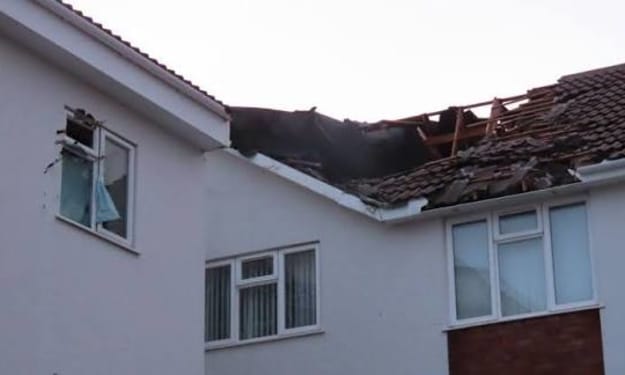
Five Remain Displaced After Roof Damaged in Storm
Five people remain displaced after a powerful storm tore through a residential neighborhood, severely damaging the roof of a family home and forcing emergency services to declare the property unsafe. The incident occurred late in the evening as heavy rain and strong winds swept across the area, leaving behind structural damage that residents say happened within minutes.
By Fiaz Ahmed about 2 hours ago in Earth
Philippines Pharmaceutical Market 2026: Healthcare Access, Local Manufacturing & Treatment Demand
Philippines Pharmaceutical Market Overview The Philippines pharmaceutical market is experiencing steady growth as rising healthcare needs, expanding access to medicines and increasing public and private healthcare investment reshape the country’s medical landscape. Pharmaceuticals play a central role in treating acute and chronic conditions, supporting preventive care and improving overall quality of life. The Philippines pharmaceutical market growth reached USD 3.36 Billion in 2025. Looking forward, the market is expected to reach USD 3.91 Billion by 2034, exhibiting a growth rate (CAGR) of 1.71% during 2026-2034. This growth reflects population expansion, greater health awareness and gradual strengthening of domestic manufacturing capabilities.
By Manisha Dixit5 days ago in Earth
Feelings Never Die
It is Valentine's Day again, and it bought back memories that were over fifty years old. It bought me back to 1971, and I woke up and I knew my baby was due today. I was big and pregnant, and I felt like I was about to burst wide open. Imagine my surprise when the doctor told my I had a due date of February 14. I couldn't believe it, and since my baby was due today, I felt I could indulge myself a bit. I had gained a lot of weight, and chocolate was on the no-no list, but I had came to the end of this pregnancy, and I hoped it would be okay, after all I would deliver this baby today. So I walked across the street to the grocery story, and bought myself, a peppermint patty, covered in chocolate, my favorite. Me and my Valentine's baby would enjoy it together.
By Susan Payton4 days ago in Fiction



Comments
There are no comments for this story
Be the first to respond and start the conversation.