
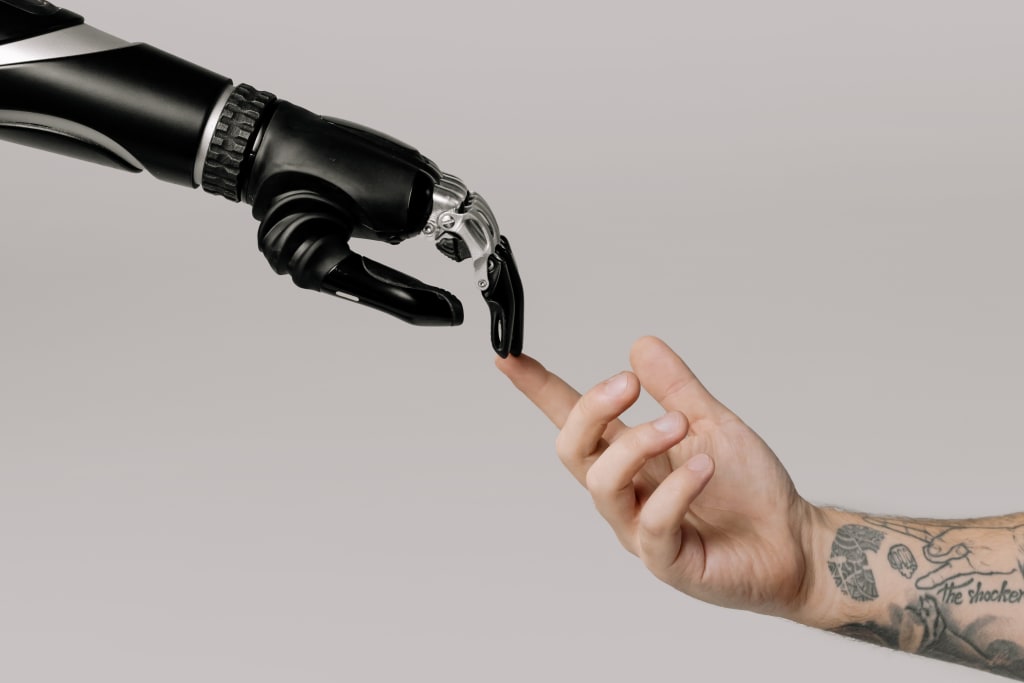
The Role of AI in Healthcare
Hello and welcome, dear readers, to a fascinating journey into the world of healthcare and artificial intelligence. Today, we'll explore how AI, the marvel of modern technology, is revolutionizing medical diagnosis and transforming the way we approach patient care. So, sit back, relax, and let's delve into this exciting topic together.
A Gentle Introduction to AI in Healthcare
Artificial Intelligence, or AI, is a branch of computer science that enables machines to simulate human-like intelligence. In recent years, AI has made tremendous strides, and its integration into healthcare has been nothing short of remarkable. By analyzing vast amounts of data, AI algorithms can detect patterns, identify anomalies, and make predictions with extraordinary accuracy. This newfound ability holds enormous potential for revolutionizing medical diagnosis, offering a ray of hope for improving patient outcomes and reducing diagnostic errors.
AI as a Diagnostic Assistant
Imagine a world where doctors have an incredibly knowledgeable and tireless assistant—a virtual counterpart that can analyze medical data quickly and precisely. That's precisely the role AI is playing in healthcare. AI-powered diagnostic tools can process medical images, such as X-rays, MRIs, and CT scans, with remarkable speed and accuracy. This assists healthcare professionals in identifying diseases like cancer, fractures, and other conditions more efficiently.
Improving Medical Imaging
Medical imaging is a critical aspect of modern medicine, helping clinicians visualize internal structures and identify abnormalities. However, the interpretation of complex medical images can be challenging, and sometimes, even the keenest human eyes may miss subtle signs of disease. This is where AI shines. By training on vast datasets of medical images, AI algorithms can detect even the most minute changes, helping physicians make more accurate and timely diagnoses.
Early Detection of Diseases
One of the most promising applications of AI in healthcare is its role in early disease detection. Early detection can be a game-changer, as it allows for timely intervention and better treatment outcomes. AI-driven algorithms can analyse patient data, including medical history, lab results, and lifestyle factors, to predict the risk of developing certain diseases. By identifying high-risk individuals, physicians can implement preventive measures and monitor patients more closely.
The Power of AI in Pathology
Pathology, the study of diseases at the cellular level, plays a crucial role in diagnosing cancers and other illnesses. AI algorithms, with their ability to analyse vast amounts of pathological data, have the potential to enhance diagnostic accuracy. They can assist pathologists in detecting abnormalities and even categorizing cancers based on genetic markers, leading to more precise and personalized treatment plans.
Speeding Up Diagnoses and Treatment Plans
In the world of medicine, time is of the essence. AI can significantly speed up the diagnostic process, providing doctors with critical insights in a fraction of the time it would take with traditional methods. For time-sensitive conditions like strokes and heart attacks, rapid diagnosis is paramount to saving lives and preventing further complications. AI's ability to process data swiftly can make a life-saving difference.
Reducing Diagnostic Errors
Diagnostic errors can have grave consequences for patients. According to studies, they are a leading cause of medical malpractice claims. AI, with its consistent and unbiased analysis, has the potential to reduce diagnostic errors by providing additional insights to healthcare professionals. By acting as a second set of eyes, AI can help doctors consider all possibilities and make more informed decisions.
Challenges and Considerations
As with any technological advancement, there are challenges and considerations in implementing AI in healthcare. The integration of AI requires robust data privacy and security measures to protect patient information. Additionally, AI should always be viewed as a complementary tool to human expertise rather than a replacement. The human touch and intuition of healthcare professionals remain indispensable.
A Promising Future
The future of AI in healthcare is incredibly promising. As technology continues to advance, AI algorithms will become even more sophisticated, enabling them to tackle complex medical challenges with greater accuracy. As AI learns from more medical cases and experiences, its diagnostic capabilities will undoubtedly improve, shaping a brighter and healthier future for us all.
Conclusion
Ladies and gentlemen, we've reached the end of our exploration into the role of AI in healthcare. AI's integration into medical diagnosis is indeed a marvel of modern science. By supporting healthcare professionals, AI has the potential to revolutionize patient care and significantly impact medical outcomes. As AI continues to evolve, it is essential to embrace its potential while ensuring ethical considerations and maintaining the human touch in healthcare. With the power of AI and the compassion of healthcare professionals working hand in hand, we can embark on a journey toward a healthier and more vibrant future. Thank you for joining me on this enlightening adventure, and until next time, stay curious and keep exploring the wonders of our ever-advancing world.
About the Creator
Top Australian Writers’ Festival Cancelled After Palestinian Author Barred
One of Australia’s most respected literary festivals has been cancelled following a fierce backlash over the decision to bar a Palestinian author from participating. What began as a programming dispute quickly escalated into a national debate about free speech, cultural inclusion, and political pressure in the arts. The cancellation has sent shockwaves through Australia’s literary community, raising urgent questions about whose voices are allowed on public platforms and at what cost.
By Aarif Lashari6 days ago in Earth
The Trans Youth Athletes in the US Fighting for Their Rights: ‘Playing Is an Act of Resistance’
Across the United States, sports have become an unexpected front line in the fight over transgender rights. For many trans youth athletes, simply stepping onto a field, track, or court is no longer just about competition—it is an act of resistance. As state legislatures debate and pass laws restricting transgender participation in school sports, young athletes are finding themselves at the center of a national culture war that reaches far beyond the locker room.
By Aarif Lashari6 days ago in Earth
How, Too
Many people wonder how, too. You are not alone, and I am an expert. I will teach you how, too! First, you need to remit a small application fee and fill out an application describing the nature of your financial situation and how often payments will be made, as this will have great bearing on how well I teach you how, too.
By Harper Lewis3 days ago in Fiction




Comments
There are no comments for this story
Be the first to respond and start the conversation.