
The Resplendent Quetzal: A Living Jewel of the Cloud Forests
A Jewel of the Cloud Forest That Shimmers Through History and Myth

In the mist-veiled canopies of Central America’s highland cloud forests, an iridescent flash of emerald and crimson signals the presence of a rare marvel — the Resplendent Quetzal (Pharomachrus mocinno). This magnificent bird is not only a visual spectacle but also a bearer of stories from ancient civilizations and a vital thread in the forest's ecological tapestry.
A Living Gem Among the Trees
- Unforgettable Plumage: The Resplendent Quetzal boasts metallic green feathers that shimmer with hints of blue and turquoise, complemented by a bright red breast. Under sunlight, the colors seem to change, thanks to microscopic structures in the feathers that refract light — a phenomenon called structural coloration.
- Long-tailed Males: During mating season, males develop striking twin tail feathers that can stretch over 60 cm (24 inches). These feathers trail like ribbons through the misty canopy, making the male quetzal one of the most mesmerizing sights in nature.
- Cloud Forest Habitat: Native to the cloud forests of Guatemala, Costa Rica, Honduras, El Salvador, Nicaragua, and Panama, quetzals rely on cool, moist forests filled with mossy trees and wild fruit. They nest in decaying trunks, excavating shallow hollows with their beaks.
A Delicate Role in the Forest Ecosystem
- Frugivore with a Favorite Snack: The quetzal’s diet consists mostly of fruit, especially wild avocados. It swallows these small fruits whole and later regurgitates the seeds, helping to reforest the very ecosystem it inhabits. This seed dispersal role is vital in maintaining cloud forest biodiversity.
- Occasional Insectivore: While fruit is its main food, quetzals sometimes feed on insects, lizards, or small frogs, especially during the breeding season to provide extra protein for their chicks.
- Elusive and Quiet: Despite its bright colors, the quetzal is surprisingly hard to spot. It is shy, often motionless for long periods, and rarely makes loud calls. It prefers remote highlands far from human settlements, which adds to its mystique among birdwatchers and ecotourists.
Conservation Challenges
- Near Threatened: Although not critically endangered, the Resplendent Quetzal is listed as Near Threatened by the IUCN. Habitat loss due to deforestation and climate change is the greatest threat to its survival.
- Protected Areas and Ecotourism: Countries like Costa Rica and Guatemala have established protected zones such as the Monteverde Cloud Forest Reserve and the Biotopo del Quetzal to conserve the species and its habitat. Ecotourism centered around birdwatching also contributes to funding conservation efforts.
- Nest Competition: Loss of old trees means fewer nesting sites. The quetzal depends on tree cavities, which are also sought after by other species like toucans and squirrels. This makes conservation of mature forests even more crucial.
Final Thoughts
The Resplendent Quetzal is a bird that bridges the natural and mythical worlds. With feathers like sunlight caught in leaves, and a legacy carved into ancient stone, it stands as a symbol of nature’s elegance and fragility. To see one in the wild is to witness a whisper of magic — a fleeting glimpse of Earth’s storytelling spirit. Protecting it means protecting not just a bird, but a living legend whose beauty reminds us that some wonders still glide freely through the forests.
In a time where environmental crises make headlines daily, the Resplendent Quetzal offers a vision of hope. It tells us that beauty and biodiversity still exist in untouched corners of the world — and that our role is to ensure they remain for generations to come. Conservation is not just a duty; it is a way of keeping the wonder alive.
Have you ever seen a Resplendent Quetzal in the wild, or is it on your dream list? Share your thoughts below and let’s celebrate this feathered marvel together.
About the Creator
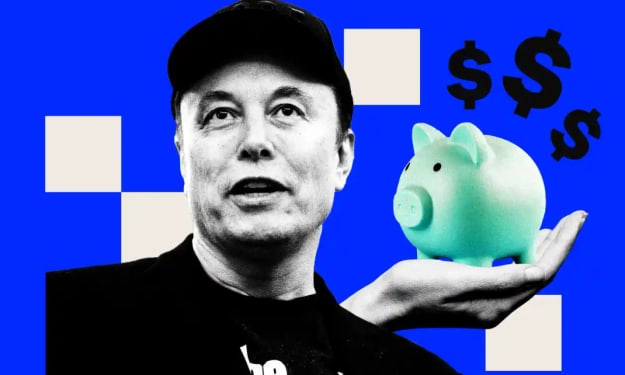
Elon Musk Says Retirement Savings “Won’t Matter” in 20 Years—Here’s What Experts Think
Recently, Elon Musk sparked a heated debate on social media with a bold claim: in 20 years, traditional retirement savings “won’t matter.” The Tesla and SpaceX CEO suggested that the way people think about money and retirement today might be completely obsolete in a couple of decades. As usual, Musk’s statements are equal parts provocative and visionary, leaving many wondering whether they should rethink their financial plans entirely. To get clarity, we reached out to seven personal finance and AI experts to hear their thoughts on Musk’s prediction. Their insights provide a mix of caution, optimism, and futuristic thinking. 1. The Case for Obsolescence: AI and Automation AI strategist Dr. Karen Liu believes Musk isn’t exaggerating when he talks about the diminishing importance of retirement savings. “If AI and automation continue at the current pace, many traditional jobs could disappear,” she explains. “By 2046, people might earn income from AI-driven ventures, digital assets, or royalties rather than a 9-to-5 paycheck. In that case, the way we save for retirement could indeed look very different.” She emphasizes that new financial models might emerge, such as universal basic income (UBI) or AI-managed wealth portfolios, making conventional retirement accounts less critical. “People might no longer need 401(k)s or IRAs in the same way we do now,” she adds. 2. The Human Factor: Some Things Don’t Change Personal finance advisor Marcus Bell takes a more conservative view. “Even if the economy changes drastically, money management skills won’t be irrelevant,” he says. “Musk may be right that retirement savings as we know them may evolve, but having a financial cushion will always matter. Emergencies, healthcare costs, and life changes won’t disappear.” Bell suggests a hybrid approach: continue contributing to traditional retirement accounts while exploring alternative investments like digital currencies, AI-managed funds, or entrepreneurial ventures. 3. Cryptocurrency and the Digital Asset Revolution Crypto expert Priya Desai sees Musk’s comment as a nod toward the rise of digital assets. “By 2046, much of personal wealth may reside in cryptocurrencies, tokenized real estate, and NFTs rather than bank accounts or pensions,” she says. Desai believes that blockchain technology could redefine ownership and wealth accumulation, making traditional retirement savings less central. However, she cautions: “Digital assets are highly volatile. While they may replace some retirement vehicles, they aren’t a guaranteed substitute. Diversification will remain crucial.” 4. AI-Powered Wealth Management AI entrepreneur Rohan Kapoor points out that AI itself could make traditional retirement planning almost obsolete. “Imagine AI systems that continuously optimize your investments, taxes, and spending in real-time,” he says. “If AI handles wealth accumulation more efficiently than humans, you may not need to manually save and plan decades in advance.” Kapoor predicts that by 2046, AI advisors could create personalized financial lifelines that automatically adjust for inflation, market changes, and lifestyle goals. In this scenario, traditional 401(k)s might feel outdated. 5. The Social Safety Net Factor Economist Dr. Elise Morgan reminds us that social and political structures will also play a role. “Even if technology changes how wealth is accumulated, government programs like Social Security, healthcare, or UBI will shape retirement,” she explains. “Musk’s statement assumes a high-tech, highly automated economy, which is just one possible scenario.” Morgan urges caution: relying solely on futuristic predictions could be risky. Traditional savings may still act as a fallback if economic or technological disruptions fail to deliver as Musk anticipates. 6. Mindset and Wealth Beyond Money Financial psychologist Sandra Liu emphasizes that wealth isn’t only monetary. “Even if retirement accounts lose their traditional meaning, financial literacy, resourcefulness, and the ability to leverage technology will remain critical skills,” she says. “Musk’s prediction is more about mindset than accounts. People who can adapt, innovate, and use technology to generate income will thrive regardless of conventional savings.” 7. Preparing for the Future, Not Panicking Finally, futurist Jared Thompson encourages a pragmatic approach: “Don’t panic or abandon your retirement plan just because Elon Musk said so. Think of it as a signal to diversify—invest in tech, learn AI skills, and explore new income streams.” Thompson suggests a “layered strategy”: keep some traditional retirement savings while experimenting with AI-driven investment platforms, cryptocurrencies, and entrepreneurial projects. What Does This Mean for You? Musk’s prediction may sound extreme, but the expert opinions reveal a spectrum of possibilities. Here’s a practical takeaway: Keep saving, but diversify: Don’t abandon retirement accounts, but explore AI-driven investments, crypto, or digital assets. Invest in skills: AI, coding, and tech literacy may be as valuable as cash reserves in 20 years. Embrace flexibility: Financial plans should be adaptable to rapid technological and societal changes. Mind the basics: Emergency funds, debt management, and smart spending remain essential regardless of tech trends. In short, Musk’s warning isn’t necessarily a call to abandon traditional retirement planning—it’s a reminder that the future of money is changing rapidly. Those who combine conventional strategies with an eye on emerging technologies may be the ones who truly thrive in 2046. Conclusion: Elon Musk’s claim that retirement savings “won’t matter” in 20 years is provocative, but it opens an important conversation about the intersection of finance, technology, and the future of work. While some experts see it as a harbinger of radical change, others stress prudence and flexibility. Either way, the message is clear: the next two decades will demand both financial savvy and tech literacy. The question isn’t whether retirement savings will disappear—it’s whether you’ll adapt to the evolving financial landscape.
By Muhammad Hassan4 days ago in Earth
Things you don't know about Africa
Africa: What You Probably Didn’t Know Article No. 1671 Tuesday, 25 February 2020 By Wardah Baloch In terms of land area, Africa is the second-largest continent in the world. It covers nearly 22 percent of the world’s total landmass and about 6 percent of the Earth’s total surface area. Only Asia is larger than Africa in size.
By Sudais Zakwan5 days ago in Earth



Comments
There are no comments for this story
Be the first to respond and start the conversation.