
The Power of Peace: Gandhi’s Nonviolent Movement and Its Global Legacy
Most revolutions in history were won with guns, wars, and violence. But Mahatma Gandhi showed the world another way. Instead of fighting with weapons, he used peace, truth, and courage. His idea of nonviolence (known as ahimsa) gave India freedom from British rule and inspired people around the world to fight for justice without bloodshed.

Introduction: A Different Kind of Freedom Fight
Most revolutions in history were won with guns, wars, and violence. But Mahatma Gandhi showed the world another way. Instead of fighting with weapons, he used peace, truth, and courage. His idea of nonviolence (known as ahimsa) gave India freedom from British rule and inspired people around the world to fight for justice without bloodshed.
Gandhi proved that peace is not weakness—it is real strength. His story is not only India’s story, but a lesson for the whole world.
India Under British Rule
When Gandhi was born in 1869, India was under British control. The British took India’s wealth, imposed heavy taxes, and treated Indians as second-class citizens. Many Indians were poor and powerless. Some had tried to fight the British with violence in the past, but those uprisings were crushed with great cruelty.
Gandhi believed there was a better way. He studied law in London, but his real transformation happened in South Africa, where he faced racial discrimination. Once, he was thrown out of a train for refusing to leave the “whites-only” compartment, even though he had a valid ticket. This humiliation changed his life. He decided to fight injustice—but without anger or violence.
The Birth of Nonviolence: Satyagraha
In South Africa, Gandhi developed a new method of struggle called satyagraha, which means “truth force.” Instead of meeting hatred with hatred, he taught people to resist oppression through peaceful protests, boycotts, and refusing to cooperate with unjust laws.
When he returned to India in 1915, Gandhi brought this philosophy with him. He encouraged ordinary people—farmers, workers, women, and students—to join the fight for independence. His idea was simple but powerful: the British could not rule if Indians refused to obey them peacefully.
Major Movements Led by Gandhi
The Non-Cooperation Movement (1920–1922
Gandhi asked Indians to stop using British goods, leave British schools, and refuse government jobs. Millions joined the movement. For the first time, the British Empire saw the strength of united, peaceful resistance.
The Salt March (1930)
One of Gandhi’s most famous acts of protest was the Salt March. The British had made it illegal for Indians to collect their own salt and forced them to buy heavily taxed salt from the government. Gandhi walked 240 miles to the Arabian Sea with thousands of followers. There, he picked up a lump of salt from the sand, breaking the British law in a simple but powerful way. The whole world watched, and Gandhi’s peaceful defiance became a symbol of freedom.
The Quit India Movement (1942)
During World War II, Gandhi demanded that the British leave India immediately. This movement was met with arrests and violence, but it showed the world that Indians would no longer accept foreign rule. Just a few years later, in 1947, India achieved independence—without a full-scale war.
Gandhi’s Global Impact
Gandhi’s ideas did not stay in India. They spread across the world and inspired many leaders and movements:
Martin Luther King Jr. in the United States
In the 1950s and 1960s, Dr. King used Gandhi’s methods to fight racial segregation and discrimination. Peaceful marches, sit-ins, and boycotts became powerful tools in the American Civil Rights Movement.
Nelson Mandela in South Africa
Mandela and other leaders fighting apartheid were deeply influenced by Gandhi’s example. While their struggle combined both peaceful and armed resistance, Gandhi’s philosophy gave them a moral foundation.
Other Peace Movements Worldwide
From Cesar Chavez fighting for farmworkers’ rights in America, to the Dalai Lama promoting peace in Tibet, Gandhi’s teachings have continued to inspire people seeking justice without violence.
Why Nonviolence Worked
Many people wondered how nonviolence could defeat a powerful empire. The answer lies in the moral strength of the movement. Violence often creates more violence, but nonviolence wins sympathy and support. When peaceful protesters faced beatings, jail, or death with dignity, the world began to see the injustice of British rule.
Gandhi believed that by refusing to hate, the oppressed could touch the conscience of their oppressors. His method did not just win India’s independence—it changed how the world thought about resistance.
Gandhi’s Death and Legacy
In 1948, just months after India’s independence, Gandhi was assassinated by a man who disagreed with his vision of peace. Yet his ideas did not die with him. Today, Gandhi is remembered as a symbol of peace and moral courage. His birthday, October 2nd, is celebrated worldwide as the International Day of Non-Violence.
Conclusion: The Lasting Power of Peace
Mahatma Gandhi’s life showed that true strength does not come from weapons, but from truth, patience, and courage. His nonviolent movement freed India and inspired generations of leaders across the globe.
Even today, when the world faces wars, divisions, and injustice, Gandhi’s message is clear: peace is more powerful than violence, and truth is stronger than fear.
The power of peace that Gandhi proved continues to guide humanity, reminding us that lasting change can only be built on compassion and nonviolence.
About the Creator
Md Abul Kasem
Dr. Md. Abul Kasem, homeopathic physician & writer, shares thought-provoking stories on history, society & leadership. Author of “অযোগ্য ও লোভী নেতৃত্বের কারণে বাংলাদেশ ব্যর্থ”, he inspires change through truth & awareness.
Keep reading
More stories from Md Abul Kasem and writers in Earth and other communities.
The Lost City of Panam Nagar: Secrets of Bengal’s Past
Introduction Nestled in the heart of Sonargaon, just 27 kilometers from Dhaka, lies Panam Nagar—a ghostly town that once flourished as a hub of trade, culture, and aristocracy. Today, its crumbling mansions, moss-covered walls, and silent streets whisper stories of a glorious past and a mysterious downfall. Often called the “Lost City of Bengal,” Panam Nagar is not only a historical treasure but also a living reminder of how time, greed, and neglect can erase entire civilizations from the map.
By Md Abul Kasem5 months ago in Earth
Global Lawn Mowers Market Set for Strong Growth as Smart Landscaping Goes Mainstream (2025–2033)
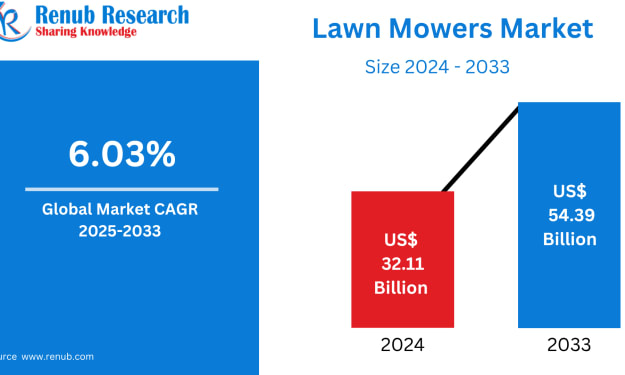
Global Lawn Mowers Market Size & Forecast 2025–2033 The Global Lawn Mowers Market is entering a transformative decade, reshaped by rapid urbanization, the rise of smart homes, and growing environmental awareness. According to Renub Research, the market is projected to grow from US$ 32.11 billion in 2024 to US$ 54.39 billion by 2033, expanding at a CAGR of 6.03% from 2025 to 2033.
By jaiklin Fanandisha day ago in Earth
Homeowners Don’t Want to Move: The Big Deal About Shrinking Backyards
In neighborhoods across the country, a subtle but growing trend is taking root: homeowners aren’t moving, and it’s not just because of the housing market. Many are staying put because their backyards—once spaces for relaxation, gardening, and family fun—are shrinking, either physically due to new development or symbolically as life priorities shift. What may seem like a minor detail—an ordinary backyard—is, for many, a defining feature of home life. Losing it can change how people live, play, and even feel about their communities. This shift has consequences for families, urban planning, and even the way cities are designed. It also sheds light on why homeowners are willing to compromise on size, style, or even location rather than give up their outdoor space. Why Backyards Matter More Than Ever Backyards are more than just patches of grass. They are extensions of our living space, providing: Personal outdoor retreats for reading, gardening, or hosting friends. Safe spaces for children and pets to play. Social hubs for barbecues, birthdays, and neighborhood gatherings. Mental and physical health benefits, including fresh air, sunlight, and exercise. For families who have invested years into landscaping, planting trees, or building decks and patios, the backyard is an emotional asset. Moving to a new home often means losing these personal touches—and many homeowners aren’t willing to take that step. “Backyards are part of our identity,” says Laura Jennings, a landscape designer in suburban Chicago. “People have memories tied to them—first steps, garden harvests, family barbecues. That’s why so many homeowners are staying put, even if it’s tempting to relocate for a bigger house or a better neighborhood.” The Trend of Shrinking Yards Urban densification and suburban development have slowly eaten into traditional backyard space. In many cities, large lots are being replaced with townhomes, duplexes, or small-lot single-family homes. Even in suburban neighborhoods, new constructions often prioritize indoor square footage over outdoor space. The shrinking backyard trend has several effects: Less room for recreation: Families may struggle to fit a swing set, pool, or garden into a smaller yard. Increased desire to stay put: Homeowners prefer maintaining a familiar outdoor space rather than trading it for a slightly larger indoor area. Higher emotional attachment: As yards become more limited, the significance of every tree, patch of grass, or vegetable garden grows. For many, the choice isn’t just about square footage—it’s about quality of life. Homeowners Are Making Trade-Offs As a result, more homeowners are staying in place longer, even if it means: Skipping a bigger kitchen or extra bedroom. Living in a less “trendy” neighborhood. Paying more in maintenance or property taxes to keep a cherished yard intact. Some have embraced innovative backyard solutions to maximize smaller spaces: Vertical gardens and container planting. Multi-functional patios that serve as dining, lounging, and play areas. Creative landscaping, including raised beds, pergolas, and tiny ponds. These adaptations allow homeowners to maintain the sense of space and enjoyment they’ve built over years without relocating. Emotional and Social Dimensions Beyond practical reasons, the backyard has a symbolic meaning. It represents: Continuity and stability: Homeowners see staying put as preserving a lifestyle. Family history: Many yards hold stories—graduations, summer afternoons, first bike rides. Community connection: Long-term residents know neighbors, local schools, and nearby amenities. Moving often means giving up these ties. A survey by the National Association of Home Builders found that over 60% of homeowners aged 35–55 preferred staying in their current homes, citing yard size and outdoor enjoyment as key factors. For these individuals, giving up a backyard is not a small inconvenience—it’s a major life decision. The Impact on Neighborhoods and Cities The trend of staying put also affects broader urban and suburban planning. Fewer homeowners moving means: Less turnover in neighborhoods, which can reduce housing market fluidity. Pressure on developers to include quality outdoor space in new builds. Greater demand for parks and community green spaces, as private yards shrink. Urban planners and developers are noticing the importance of outdoor space in retention and satisfaction metrics. Homes with usable yards, green roofs, or communal gardens often have higher value and attract long-term residents. The Future of Backyard Living As city lots shrink and suburban sprawl continues, homeowners are adapting: Smaller, highly curated gardens instead of sprawling lawns. Multi-functional backyards designed for work, play, and entertainment. Investment in outdoor amenities such as fire pits, decks, or small pools. Some communities are exploring shared backyard concepts, like community gardens and pocket parks, to supplement shrinking private spaces. While these aren’t a complete replacement for personal yards, they provide social and environmental benefits and may encourage homeowners to stay in their homes longer. Conclusion: More Than Grass and Trees Shrinking backyards might seem like a minor design issue, but for homeowners, it’s deeply tied to lifestyle, family life, and personal identity. The reluctance to move is not just a reaction to the housing market; it reflects an emotional, social, and practical connection to outdoor space that indoor square footage alone can’t replace. As urban density grows and lot sizes shrink, the importance of backyards will continue to shape homeowner decisions, neighborhood design, and community dynamics. Families are showing that a yard is not just grass and trees—it’s a place of memory, freedom, and connection. In a world where real estate trends often prioritize indoor luxury, the backyard remains a powerful symbol of home, anchoring families to the places they love—and keeping many from moving at all
By Muhammad Hassana day ago in Earth



Comments
There are no comments for this story
Be the first to respond and start the conversation.