
The Power of Education: Illustrate the transformative effect of educating communities about climate change and empowering them to make a difference.
"Seeds of Change"

In the small coastal town of Seaview, a group of diverse individuals find their lives intertwined by a common passion for the environment and a desire to combat climate change. "Seeds of Change" follows their emotional journey as they discover the transformative power of education and work together to empower their community. Meet our main characters, each with their unique backgrounds and motivations. There's Maya, a passionate young environmental science student; David, a disillusioned fisherman seeking purpose; Sarah, a dedicated schoolteacher; and Jackson, a retired engineer with a love for nature.
A Wake-Up Call: A catastrophic storm hits Seaview, causing severe damage and raising awareness about the impact of climate change. Maya, inspired by her studies, decides to educate the community about the urgent need for action.
Maya's Mission: Maya organizes a series of educational workshops, inviting residents to learn about climate change, its effects on the environment, and the importance of sustainable practices. Skepticism and apathy prevail initially, but a few curious individuals start to show interest. Building Connections: Maya meets David, a fisherman struggling to cope with dwindling fish populations. She empathizes with his plight and convinces him to attend one of her workshops. Sarah, the schoolteacher, also joins, recognizing the significance of educating the younger generation.
The Power of Knowledge: Through captivating presentations, videos, and discussions, Maya helps participants grasp the gravity of climate change. Emotions run high as they learn about the potential consequences and realize their personal responsibility in protecting the planet.
Shifting Perspectives: David, Sarah, and Jackson experience a transformation in their thinking. David becomes an advocate for sustainable fishing practices, Sarah incorporates environmental lessons into her classroom, and Jackson starts a community garden to promote local food production and reduce carbon emissions. Community Empowerment: Inspired by Maya's passion, more people in Seaview join the movement. The workshops gain momentum, attracting residents from all walks of life who are eager to make a difference. The community becomes a hub of knowledge-sharing and innovation.
Overcoming Challenges: The newfound unity faces obstacles as they encounter resistance from industries reluctant to change. However, the group's determination and resilience fuel their efforts, leading to collaborations with local businesses and policymakers.
The changes in Seaview begin to spread to neighboring towns and beyond. The success of Maya's workshops inspires other communities to launch similar educational initiatives, creating a network of empowered individuals ready to take action against climate change.
Hope for the Future: "Seeds of Change" concludes with a sense of hope as Seaview becomes a model for sustainable practices. The town's efforts have a measurable impact, showing that education can indeed transform communities and pave the way for a more sustainable and resilient "Seeds of Change" serves as a reminder that education is a catalyst for positive transformation. It highlights the emotional journey of the characters as they evolve from passive bystanders to active agents of change, ultimately inspiring others to join the cause and work towards a greener world. Government Responsibility: Climate Change and the Ozone Layer
Climate change and the depletion of the ozone layer are global challenges that require collective action from both individuals and governments. While governments play a crucial role in implementing policies and regulations, individuals also have a significant responsibility to contribute to the solution. Let's explore the roles and responsibilities of both individuals and governments in addressing climate change and protecting the ozone layer.
Individual Responsibility:
Conscious Consumption: Individuals have the power to make sustainable choices in their daily lives. By opting for energy-efficient appliances, reducing water consumption, practicing recycling and composting, and adopting eco-friendly transportation methods, individuals can significantly reduce their carbon footprint and contribute to mitigating climate change.
Energy Conservation: Conserving energy at the individual level through practices such as turning off lights when not in use, using natural light whenever possible, and properly insulating homes can have a significant impact on reducing greenhouse gas emissions.
Sustainable Transport: Choosing public transportation, carpooling, cycling, or walking instead of using private vehicles helps reduce carbon emissions. Electric or hybrid vehicles are also an eco-friendly option for those who need private transportation.
Responsible Consumption: Supporting sustainable and ethical businesses, choosing locally sourced products, and reducing waste by avoiding single-use plastics and unnecessary packaging can contribute to reducing carbon emissions and protecting the environment.Awareness and Education: Individuals can educate themselves about climate change and the ozone layer through reliable sources of information. By sharing their knowledge with others, raising awareness, and engaging in conversations, individuals can influence positive change within their social circles and communities.
Government Responsibility:
Policy and Regulation: Governments play a crucial role in enacting policies and regulations to address climate change and protect the ozone layer. This includes setting emission reduction targets, promoting renewable energy sources, incentivizing sustainable practices, and enforcing environmental regulations.
International Cooperation: Governments need to collaborate on a global scale to tackle climate change effectively. Participating in international agreements like the Paris Agreement and working together to set emission reduction goals and share best practices can help address the issue collectively.
Investment in Renewable Energy: Governments can encourage the transition to renewable energy by providing incentives for the development and adoption of clean technologies. This includes investing in research and development, promoting renewable energy infrastructure, and offering financial support to renewable energy projects.
Sustainable Agriculture and Land Use: Governments can implement policies that promote sustainable agricultural practices, such as organic farming and regenerative agriculture. They can also protect forests and other natural ecosystems from deforestation and degradation, as healthy ecosystems play a vital role in carbon sequestration.
Education and Public Awareness: Governments have a responsibility to educate the public about climate change and the importance of protecting the ozone layer. This can be done through educational campaigns, incorporating environmental topics into school curricula, and raising public awareness through media and public outreach initiatives.
Both individuals and governments have a crucial role to play in addressing climate change and protecting the ozone layer. While individuals can make sustainable choices in their daily lives and influence those around them, governments have the power to enact policies, provide incentives, and create a supportive framework for sustainable practices. By working together, individuals and governments can contribute to a more sustainable and resilient future for our planet.
Reg
About the Creator
Keep reading
More stories from Donnie Harker and writers in Earth and other communities.
Vibrant City Life in South Africa: Exploring Cape Town and Johannesburg
South Africa, a country known for its breathtaking natural beauty and rich cultural heritage, also offers vibrant city experiences that are sure to captivate visitors. Two cities, in particular, stand out for their cosmopolitan flair, cultural diversity, and dynamic atmospheres: Cape Town and Johannesburg. Cape Town, nestled between the iconic Table Mountain and the Atlantic Ocean, is a vibrant city boasting a combination of stunning landmarks, trendy neighborhoods, and a thriving arts scene. Johannesburg, often referred to as the "City of Gold," is the economic heart of South Africa, offering a bustling urban environment, world-class shopping opportunities, and a vibrant nightlife. This article will delve into the vibrant city life of Cape Town and Johannesburg, exploring their unique characteristics, must-visit attractions, cultural experiences, and the allure that makes them top destinations for tourists .Table Mountain a symbol of Cape Town and one of the New Seven Wonders of Nature.
By Donnie Harker3 years ago in History
Global Lawn Mowers Market Set for Strong Growth as Smart Landscaping Goes Mainstream (2025–2033)
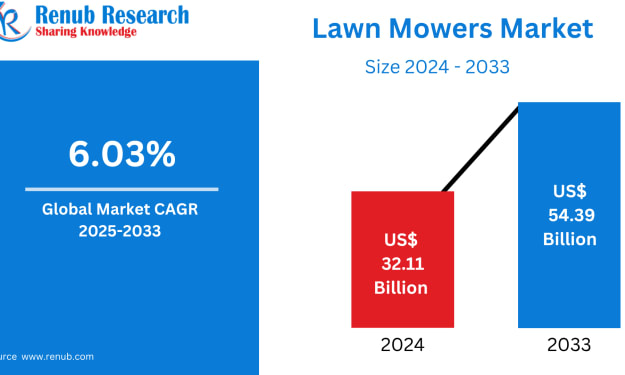
Global Lawn Mowers Market Size & Forecast 2025–2033 The Global Lawn Mowers Market is entering a transformative decade, reshaped by rapid urbanization, the rise of smart homes, and growing environmental awareness. According to Renub Research, the market is projected to grow from US$ 32.11 billion in 2024 to US$ 54.39 billion by 2033, expanding at a CAGR of 6.03% from 2025 to 2033.
By jaiklin Fanandishabout 10 hours ago in Earth
Homeowners Don’t Want to Move: The Big Deal About Shrinking Backyards
In neighborhoods across the country, a subtle but growing trend is taking root: homeowners aren’t moving, and it’s not just because of the housing market. Many are staying put because their backyards—once spaces for relaxation, gardening, and family fun—are shrinking, either physically due to new development or symbolically as life priorities shift. What may seem like a minor detail—an ordinary backyard—is, for many, a defining feature of home life. Losing it can change how people live, play, and even feel about their communities. This shift has consequences for families, urban planning, and even the way cities are designed. It also sheds light on why homeowners are willing to compromise on size, style, or even location rather than give up their outdoor space. Why Backyards Matter More Than Ever Backyards are more than just patches of grass. They are extensions of our living space, providing: Personal outdoor retreats for reading, gardening, or hosting friends. Safe spaces for children and pets to play. Social hubs for barbecues, birthdays, and neighborhood gatherings. Mental and physical health benefits, including fresh air, sunlight, and exercise. For families who have invested years into landscaping, planting trees, or building decks and patios, the backyard is an emotional asset. Moving to a new home often means losing these personal touches—and many homeowners aren’t willing to take that step. “Backyards are part of our identity,” says Laura Jennings, a landscape designer in suburban Chicago. “People have memories tied to them—first steps, garden harvests, family barbecues. That’s why so many homeowners are staying put, even if it’s tempting to relocate for a bigger house or a better neighborhood.” The Trend of Shrinking Yards Urban densification and suburban development have slowly eaten into traditional backyard space. In many cities, large lots are being replaced with townhomes, duplexes, or small-lot single-family homes. Even in suburban neighborhoods, new constructions often prioritize indoor square footage over outdoor space. The shrinking backyard trend has several effects: Less room for recreation: Families may struggle to fit a swing set, pool, or garden into a smaller yard. Increased desire to stay put: Homeowners prefer maintaining a familiar outdoor space rather than trading it for a slightly larger indoor area. Higher emotional attachment: As yards become more limited, the significance of every tree, patch of grass, or vegetable garden grows. For many, the choice isn’t just about square footage—it’s about quality of life. Homeowners Are Making Trade-Offs As a result, more homeowners are staying in place longer, even if it means: Skipping a bigger kitchen or extra bedroom. Living in a less “trendy” neighborhood. Paying more in maintenance or property taxes to keep a cherished yard intact. Some have embraced innovative backyard solutions to maximize smaller spaces: Vertical gardens and container planting. Multi-functional patios that serve as dining, lounging, and play areas. Creative landscaping, including raised beds, pergolas, and tiny ponds. These adaptations allow homeowners to maintain the sense of space and enjoyment they’ve built over years without relocating. Emotional and Social Dimensions Beyond practical reasons, the backyard has a symbolic meaning. It represents: Continuity and stability: Homeowners see staying put as preserving a lifestyle. Family history: Many yards hold stories—graduations, summer afternoons, first bike rides. Community connection: Long-term residents know neighbors, local schools, and nearby amenities. Moving often means giving up these ties. A survey by the National Association of Home Builders found that over 60% of homeowners aged 35–55 preferred staying in their current homes, citing yard size and outdoor enjoyment as key factors. For these individuals, giving up a backyard is not a small inconvenience—it’s a major life decision. The Impact on Neighborhoods and Cities The trend of staying put also affects broader urban and suburban planning. Fewer homeowners moving means: Less turnover in neighborhoods, which can reduce housing market fluidity. Pressure on developers to include quality outdoor space in new builds. Greater demand for parks and community green spaces, as private yards shrink. Urban planners and developers are noticing the importance of outdoor space in retention and satisfaction metrics. Homes with usable yards, green roofs, or communal gardens often have higher value and attract long-term residents. The Future of Backyard Living As city lots shrink and suburban sprawl continues, homeowners are adapting: Smaller, highly curated gardens instead of sprawling lawns. Multi-functional backyards designed for work, play, and entertainment. Investment in outdoor amenities such as fire pits, decks, or small pools. Some communities are exploring shared backyard concepts, like community gardens and pocket parks, to supplement shrinking private spaces. While these aren’t a complete replacement for personal yards, they provide social and environmental benefits and may encourage homeowners to stay in their homes longer. Conclusion: More Than Grass and Trees Shrinking backyards might seem like a minor design issue, but for homeowners, it’s deeply tied to lifestyle, family life, and personal identity. The reluctance to move is not just a reaction to the housing market; it reflects an emotional, social, and practical connection to outdoor space that indoor square footage alone can’t replace. As urban density grows and lot sizes shrink, the importance of backyards will continue to shape homeowner decisions, neighborhood design, and community dynamics. Families are showing that a yard is not just grass and trees—it’s a place of memory, freedom, and connection. In a world where real estate trends often prioritize indoor luxury, the backyard remains a powerful symbol of home, anchoring families to the places they love—and keeping many from moving at all
By Muhammad Hassanabout 11 hours ago in Earth



Comments
There are no comments for this story
Be the first to respond and start the conversation.