
The Ongoing Struggle: Understanding the Palestinian-Israeli Conflict
Gaza War

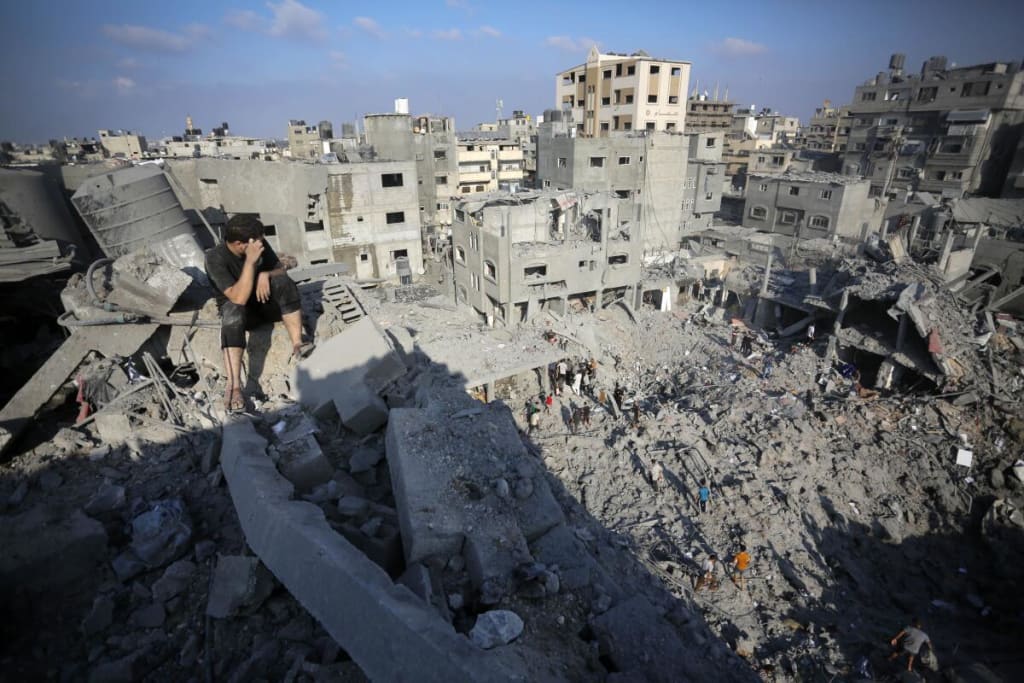
Introduction:
The Palestinian-Israeli conflict is a long-standing and deeply rooted geopolitical issue that has captivated the world's attention for decades. Stemming from historical, religious, and territorial disputes, this conflict has left an indelible mark on the Middle East, with countless lives affected on both sides. In this article, we will explore the historical context, key players, and the current state of affairs in the Palestinian-Israeli conflict.
Historical Background:
To understand the complexity of the Palestinian-Israeli conflict, one must delve into its historical roots. The dispute can be traced back to the late 19th century, when nationalist movements gained momentum in the Ottoman-ruled Palestine. With the fall of the Ottoman Empire after World War I, the League of Nations granted Britain the mandate to govern Palestine.
The United Nations' 1947 partition plan proposed the creation of separate Jewish and Arab states, with Jerusalem as an international city. The establishment of the State of Israel in 1948 was met with resistance from Arab nations, leading to the first Arab-Israeli war. This event marked the beginning of a protracted conflict characterized by territorial disputes, refugee crises, and competing national aspirations.
Key Issues:
Territorial Disputes:
The heart of the conflict lies in competing claims over territory. The borders established in 1948 were a source of contention, and subsequent wars in 1967 and 1973 further shaped the landscape. The West Bank, Gaza Strip, and East Jerusalem are focal points of dispute, with Israel maintaining control over these territories, which are considered by Palestinians as part of their future state.
Refugee Crisis:
The creation of Israel resulted in a significant refugee crisis, with hundreds of thousands of Palestinians displaced from their homes. The right of return for Palestinian refugees remains a contentious issue, contributing to ongoing tensions.
Jerusalem:
The status of Jerusalem is a critical and sensitive matter. Both Israelis and Palestinians claim Jerusalem as their capital, and its significance in Judaism, Christianity, and Islam adds layers of complexity to negotiations.
Key Players:
State of Israel:
Established in 1948, Israel is a key player in the conflict. It has faced challenges to its legitimacy from neighboring Arab nations and has prioritized security concerns in its policies.
Palestinian Authority (PA):
The PA was established as part of the Oslo Accords in the 1990s, aiming to govern parts of the West Bank and Gaza Strip. However, internal divisions, particularly between Fatah and Hamas, have hindered cohesive governance.
Hamas:
Formed in 1987, Hamas emerged as a significant player in Palestinian politics. Labeled a terrorist organization by some nations, Hamas controls the Gaza Strip and has engaged in armed resistance against Israel.
International Community:
The involvement of the international community, including the United Nations, the United States, and the European Union, has been instrumental in peace efforts. However, differing perspectives on the conflict often hinder cohesive diplomatic solutions.
Current State of Affairs:
As of the most recent developments, the Palestinian-Israeli conflict remains in a state of flux. Ongoing violence, sporadic clashes, and diplomatic impasses characterize the situation, making the prospects for a lasting resolution seem elusive.
Gaza-Israel Tensions:
The Gaza Strip, controlled by Hamas, has witnessed periodic escalations of violence with Israel. Conflicts, such as the ones in 2008-2009, 2012, and 2014, have resulted in significant casualties and destruction. Efforts to maintain a ceasefire often prove temporary, and the humanitarian situation in Gaza remains dire.
West Bank Settlements:
The expansion of Israeli settlements in the West Bank continues to be a major obstacle to peace. The construction of settlements, considered illegal under international law, undermines the establishment of a contiguous Palestinian state.
Diplomatic Challenges:
International diplomatic efforts, including those led by the United States, have faced numerous challenges. Divergent views on key issues such as borders, refugees, and the status of Jerusalem persist, making it difficult to achieve a comprehensive peace agreement.
Humanitarian Concerns:
The conflict has resulted in significant humanitarian challenges, including the plight of Palestinian refugees, restrictions on movement in the West Bank, and economic hardships. The situation has been exacerbated by the periodic escalations of violence and military operations.
Conclusion:
The Palestinian-Israeli conflict is a multifaceted and deeply entrenched geopolitical issue that requires nuanced and comprehensive solutions. While historical grievances continue to fuel animosities, the quest for a just and lasting peace remains essential for the well-being of both Israelis and Palestinians.
International efforts, including diplomatic initiatives, must persist in addressing the core issues of borders, refugees, Jerusalem, and security concerns. Dialogue and mutual understanding are paramount, as the cycle of violence has proven to be detrimental to the aspirations and livelihoods of those caught in the crossfire.
In the pursuit of a lasting resolution, acknowledging the legitimate rights and aspirations of both Israelis and Palestinians is crucial. The complexities of the conflict demand a commitment to diplomacy, compromise, and a shared vision for a peaceful coexistence that respects the dignity and rights of all involved parties.
About the Creator
Keep reading
More stories from Mubashir Mubin and writers in Earth and other communities.
Grand Theft Auto VI: The Next Evolution in Open-World Gaming
Introduction: As the gaming industry continues to push the boundaries of innovation, one of the most anticipated releases on the horizon is Grand Theft Auto VI (GTA 6). Rockstar Games, the renowned developer behind the GTA series, has set a high standard for open-world gaming, and fans around the world are eagerly awaiting the next installment. In this article, we'll explore the expectations, speculations, and potential features that could make GTA 6 a groundbreaking addition to the franchise.
By Mubashir Mubin2 years ago in Gamers
Sacred Words in a City of War
The night sky over the Gaza City was never truly dark anymore. Even after sunset, the horizon glowed faintly with the light of distant fires and explosions. Buildings that once held families, laughter, and ordinary life had become broken shadows of concrete and dust.
By Truth words 7 days ago in Earth
Writing To Succeed
If you want to find something that will help readers find your writing, possibly expand your audience, and maybe even get you noticed for other things, then you’re not alone. But how can you get it done in a world full of want-to-be writers? Look less at what you’re writing now, and more at what other writers have used to boost their views and reads.
By Jason Ray Morton 5 days ago in Writers



Comments
There are no comments for this story
Be the first to respond and start the conversation.